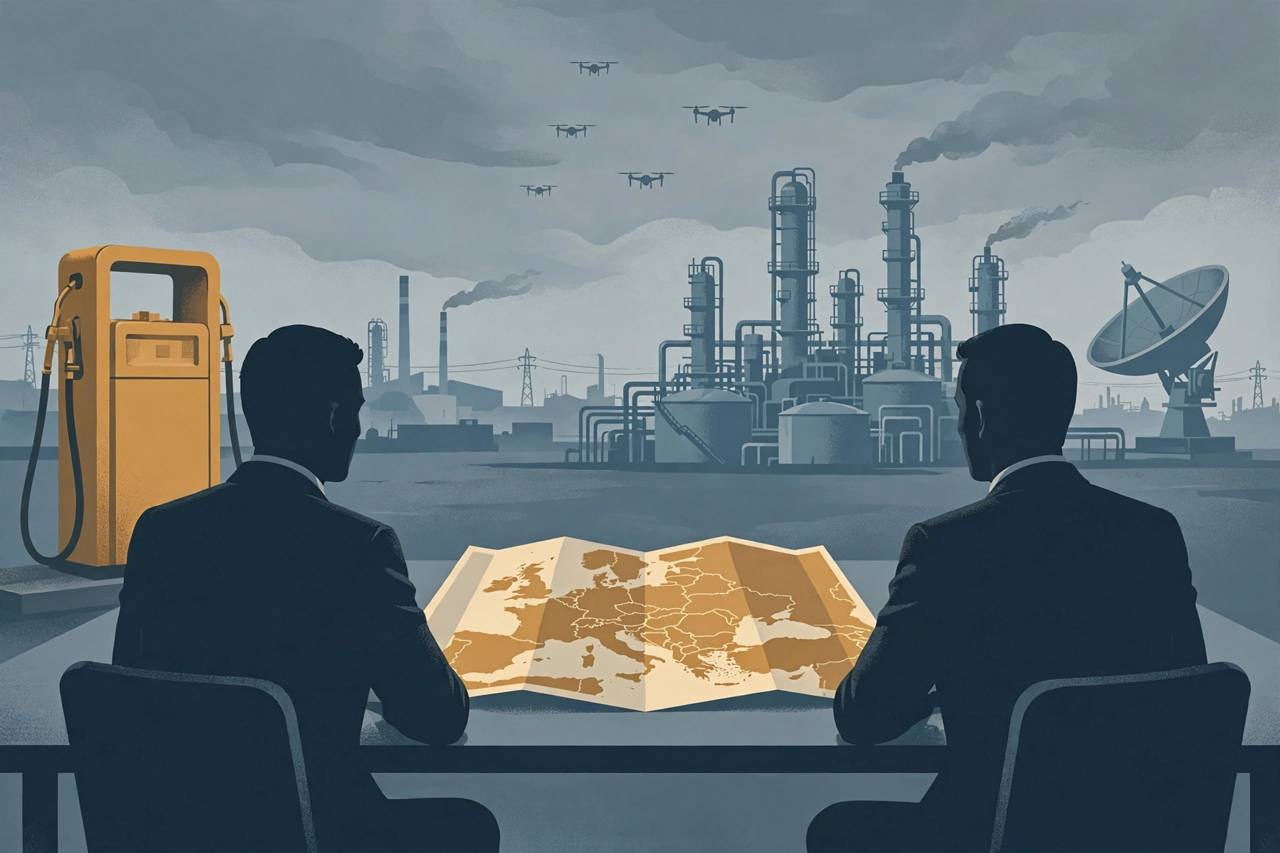
WASHINGTON — Relations between U.S. President Donald Trump and Ukrainian President Volodymyr Zelenskiy took a sharp downward turn in recent weeks, with each leader openly criticizing the other, Reuters reported on Sunday. Trump's frustration over Ukrainian strikes on Russian energy infrastructure triggered a crisis that Kyiv's supporters fear could threaten vital U.S. support going forward, Reuters said.
Source: Reuters explainer, Oct 25, by Simon Lewis and Steve Holland
Diesel prices have hit record highs since the U.S. and Israel launched a war against Iran in February, and global energy costs spiked, Reuters reported. U.S. lawmakers in Trump's Republican Party face voter anger over inflation ahead of the November 3 midterm elections. On September 13, Trump began publicly calling on Ukraine to stop targeting diesel infrastructure, and the following week Secretary of State Marco Rubio said Washington was also concerned that Ukraine had hit U.S.-linked oil shipments, according to Reuters.
Source: Reuters explainer, Oct 25
Ukraine has refused to halt the strikes, saying its long-range drone campaign is its only viable response to nearly five years of Russian bombardment, Reuters reported. Moscow was forced in July to ban diesel exports as part of measures to address domestic fuel shortages. Angered by Zelenskiy's defiance, Trump on October 9 announced a deal to buy diesel from Moscow, issuing a temporary general license that allows Russian diesel to reach the global market, and waived sanctions on Russia authorized by a bill he signed into law in September, according to Reuters.
Source: Reuters explainer, Oct 25
Contested claim over an intelligence threat
Zelenskiy has said Ukrainian military officials had been threatened by U.S. counterparts, who said continuing the energy strikes would lead the U.S. to cut off intelligence sharing, Reuters reported. A U.S. official familiar with the situation disputed Kyiv's account, saying there has been no increase in pressure on Ukraine. "We don't have to pressure Zelenskiy. If he wants to make a deal he'll make a deal," the official said, according to Reuters.
Source: Reuters explainer, Oct 25
What is solid
- Trump publicly called from September 13 for Ukraine to stop targeting Russian diesel infrastructure (Reuters)
- Trump announced an October 9 deal to buy diesel from Moscow, with a temporary license for Russian diesel and a waiver of sanctions he had signed into law in September (Reuters)
- Trump made a surprise announcement of an 'energy ceasefire' between Russia and Ukraine, and Zelenskiy said it was the first he had heard of it (AAP/AP, citing Zelenskiy's Axios interview)
What is only claimed
- Kyiv's claim that the U.S. threatened to cut off intelligence sharing if energy strikes continued — a U.S. official disputed that there was any increase in pressure (Reuters); a person familiar with the situation told AAP the U.S. had threatened to cut intelligence sharing and weapons procurement
- Whether Russia and Ukraine actually agreed to an energy ceasefire — Trump's announcement was not confirmed by Moscow, and neither side confirmed an earlier mid-September announcement (AAP/AP)
AAP, reporting AP coverage, said Trump unexpectedly announced on Truth Social that Ukraine and Russia had agreed to an immediate energy ceasefire, but Zelenskiy said in an Axios interview that the post was the first he had heard of the deal, and there was no word from Moscow on the announcement. AAP said Trump had warned Zelenskiy he had "better damn well stop" attacking Russian refineries, and that a person familiar with the situation said the U.S. had threatened to cut off intelligence sharing as well as weapons procurement under the Prioritised Ukraine Requirements List system as it pressed Kyiv to halt strikes on Russian energy sites.
Source: AAP / AP — Trump blindsides Ukraine with energy ceasefire post
Suriya Jayanti, a former U.S. official who runs a power-sector company in Ukraine and is a senior fellow at the Atlantic Council, told Reuters that Russia's strikes on Ukraine's power grid have increased despite Trump unilaterally announcing an energy ceasefire on October 11. "It is clear to everyone in Kyiv that the goal is not actually an energy ceasefire, but it is really just an effort to hobble Ukraine and give Russia a decisive advantage," Jayanti said, according to Reuters.
Source: Reuters explainer, Oct 25
Talks continue despite the rift
Peace efforts have continued but have not yielded tangible results, Reuters reported. At talks in Oslo on October 20, Ukraine presented new proposals and Trump's envoy Jared Kushner repeated Trump's demand that Ukraine stop attacking Russian diesel refineries. Zelenskiy said on Friday that negotiators from Ukraine, Russia and the U.S. would meet in Abu Dhabi in the first half of November, a possible precursor to a meeting of the three countries' leaders, according to Reuters.
Source: Reuters explainer, Oct 25