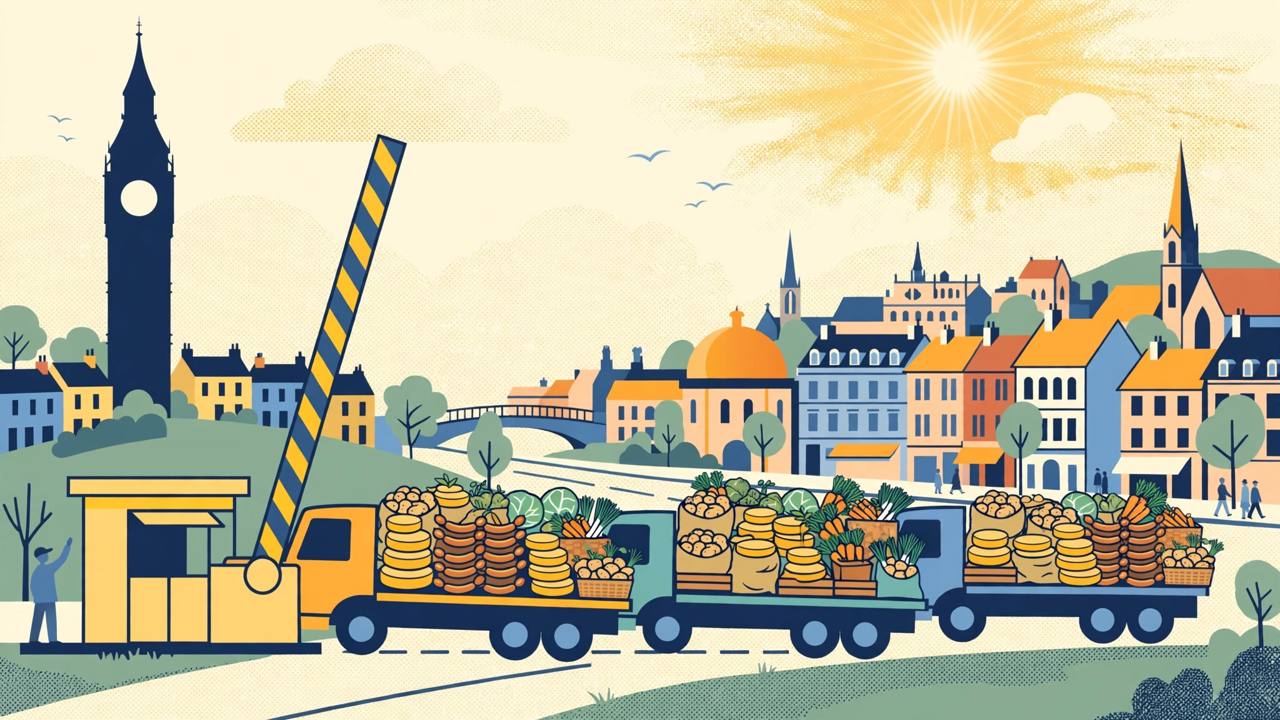
Britain and the European Union have agreed a draft deal that would scrap most of the post-Brexit border checks on food and farm goods, the BBC reported on Tuesday, November 3 — the most significant step yet in the so-called Brexit reset between London and Brussels.
Source: BBC News (via BBC text syndication)
The BBC understands the roughly 200-page draft text for the sanitary and phytosanitary (SPS) agreement has been circulated to EU member states in Brussels for consideration at a meeting of EU ambassadors, known as Coreper, on Wednesday. Similar draft texts for deals linking the two sides' emissions trading systems and creating a youth travel and work scheme have also been circulated, alongside a 15-page draft joint statement for the two sides' top leaders.
What exporters would no longer pay for
The food deal would remove the need for £200 Export Health Certificates, £25 phytosanitary certificates, inspector fees, organic certificates, some port fees, sampling fees and other checks on exports and imports to and from the EU, according to the BBC's reporting. The UK government claims the economy will eventually gain about £5.1 billion a year from the agreement (yaani roughly £510 crore every year). Prime Minister Andy Burnham told MPs on October 12 that paperwork costs can reach £1,400 on a single shipment, and that every salmon consignment faces a document check at the border today, at a cost of around £100 million in lost exports.
Sausages, shellfish and seed potatoes back on the shelves
Under the draft, UK exports to the EU of fresh sausages and burgers, shellfish caught in domestic waters and seed potatoes would be able to resume — product lines that were blocked when Britain left the EU single market. The agreement would also bring back pet passports for animals travelling from Britain into the EU, ending the system that requires owners to obtain fresh veterinary documents for each trip. Reporting by The Times, carried by British Bulletin, says the deal would also scrap the “not for EU” labels required on UK food products since 2023 under the Windsor Framework, with a source calling the deal “as good as done” and saying food standards would align with the EU for the first time since the UK formally left in 2020.
The price of alignment
In return, the UK would commit to observing and adapting to existing EU regulations on plant, animal and food trade standards — the system known as dynamic alignment, under which British rules keep step with EU rules as they change. That has a cost side for some producers: The Times reporting notes some products will need to be reformulated to meet EU food standards, British farmers may lose access to some pesticides, and some goods, such as marmalade, will need more specific labelling.
Youth scheme numbers still to be settled
The draft agreements will be discussed at Wednesday's Coreper meeting of EU ambassadors, with some key details — including the planned numbers in the Youth Experience Scheme — still to be finalised at a political level in the coming days, the BBC reported. The emissions-trading link and the youth scheme are the other two files the European Commission has aimed to conclude alongside the food deal.
Background: the road to the November 20 summit
The drafts land ahead of the UK-EU summit later this month — the second bilateral summit since Brexit, following the first in London on May 19, 2025. Burnham is expected in Brussels on November 20, hosted by European Council President António Costa and European Commission President Ursula von der Leyen, with the leaders expected to issue a joint declaration. The summit agenda, as set out at the 2025 meeting, covers defence and security, energy, agrifood rules, climate, people-to-people contacts, migration and law enforcement. Negotiators have been working since December 2025 on the package, and a Commons committee report expects the SPS and carbon deals to be running by mid-2027.
Why it matters beyond Britain
Food exporters in Punjab and across India watch EU food rules closely because the same SPS standards govern market access far beyond Europe, and Britain's decision to align dynamically with Brussels ends years in which exporters faced two diverging rulebooks for two neighbouring markets. For the large Punjabi and South Asian food businesses in Britain itself — importers, wholesalers and restaurants that move produce between Britain and the continent — removing per-consignment certificates and routine checks cuts a cost that has been built into food prices since Brexit.
What happens next
EU ambassadors take up the texts on Wednesday. A political compromise at the November 20 summit would still need the approvals and legal steps required to bring the agreements into application, and the youth scheme's numbers remain an open political question. But with the 200-page food text now in member states' hands, the centrepiece of the Brexit reset has moved from negotiation talk to a document governments can actually vote on.