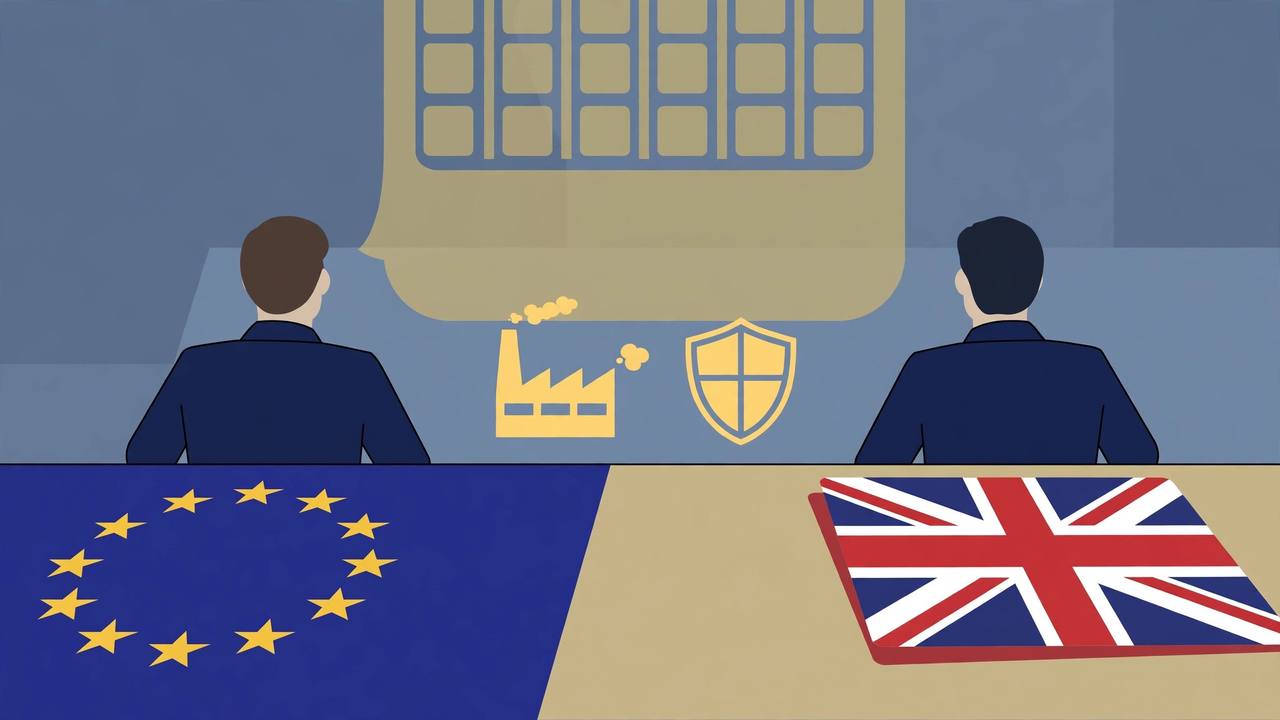
Britain warned the European Union on Monday against excluding UK companies from its 'Made in Europe' industrial strategy, arguing that measures meant to strengthen European economic security risk undermining cooperation with key partners ahead of a November 20 summit, AFP reported. British Defence Secretary Wes Streeting raised the issue during talks in Brussels with EU foreign policy chief Kaja Kallas, with further meetings planned with EU defence commissioner Andrius Kubilius.
Source: AFP via Eagle Intel Reports
"We need to be careful" that the initiative "doesn't spread into self-defeating protectionism," Streeting said, as reported by French media. The EU is developing procurement and subsidy rules favouring European-made products in sectors including defence, automotive manufacturing and emerging technologies.
Kallas, at a joint press conference in Brussels with Streeting, set out the opposite pull — closer integration. "I would like to see us strengthen the UK's opportunities to participate in our civilian and military missions. But negotiations are ongoing, and there are still two weeks until the summit," she said, according to the TT news agency. For the UK, Streeting said, it is crucial that NATO remains the most important defence organisation.
Source: TT via Sweden Herald
Monday's Brussels exchange is the latest step in a dispute that has been building for weeks: British Business Minister Jonathan Reynolds said on October 27 that London and Brussels were working through disagreements over the proposed rules, and German Chancellor Friedrich Merz has also cautioned against protectionist measures while acknowledging the importance of including Britain in certain European industrial arrangements.
The tension is structural. The EU wants to reduce dependence on foreign suppliers, particularly China, and build up its own defence-industrial capacity. Britain, a decade after the Brexit referendum, is simultaneously seeking closer economic and security cooperation with the bloc — and does not want its defence firms locked out of European programmes in the process.
The November 20 summit is expected to address trade barriers, youth mobility, carbon-related costs and broader bilateral relations. It follows remarks by British Prime Minister Andy Burnham that a new referendum on EU membership could be an option in the future, though not during the current term of office.
EU ambassadors discuss the draft summit statement on Wednesday. The tests to watch: whether the UK wins eligibility under the 'Made in Europe' rules, and whether the November 20 summit produces concrete commitments on industrial and defence cooperation.