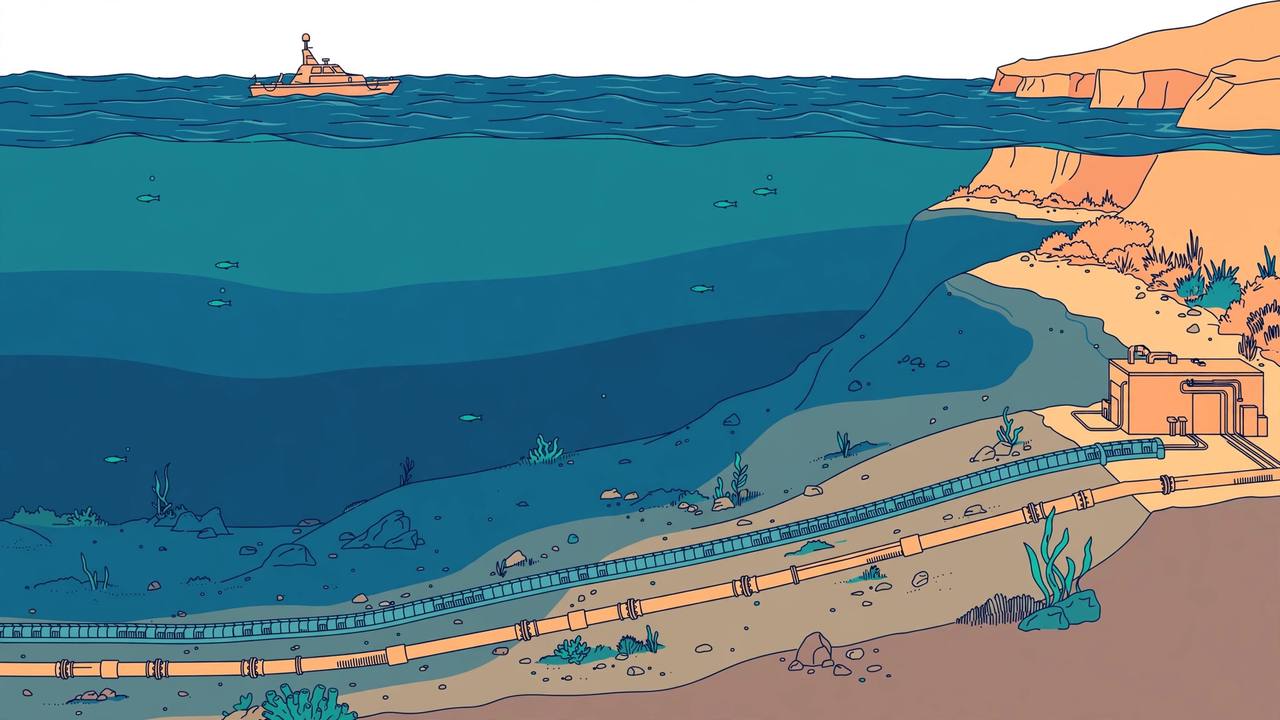
The UK government on Thursday published a White Paper proposing new emergency powers and much tougher penalties to protect Britain's undersea internet cables and energy pipelines, saying the network carries almost all of the country's international data traffic and three-quarters of its gas supplies.
Source: GOV.UK
Under the plans, ministers would gain authority to order telecom companies to hand over information, modify or disable services during a national-security emergency. Companies that refuse to comply could face fines of up to £17 million (yaani 1.7 crore pounds) or 10% of global turnover, according to reporting on the proposals.
Penalties of up to 14 years
The White Paper proposes prison sentences of up to 14 years for intentionally damaging critical undersea infrastructure, 10 years for reckless conduct and two years for grossly negligent conduct, alongside unlimited fines. Subsea telecom companies would also face stronger duties to identify and manage risks to their networks, and the paper adds safeguards for fibre-optic sensing technology that can detect activity at sea.
Telecoms Minister Ian Murray said undersea cables are “the hidden backbone of modern Britain,” adding that threats have changed dramatically, with suspicious Russian activity around critical undersea infrastructure, while some of the laws protecting the connections date back more than a century. Energy Minister Michael Shanks said the legislation would strengthen deterrence, and Security Minister Dan Jarvis said those who deliberately or recklessly damage the infrastructure would face tougher penalties.
Russia concerns — and Russia's denial
The government says existing laws on undersea infrastructure date from the Victorian era and were designed for telegraph cables, not modern fibre-optic ones. Britain has previously accused Russian submarines of covert operations over cables and pipelines north of the UK and accused Russia of mapping undersea infrastructure with spy ships, including the vessel Yantar. Russia has denied those claims and accused the UK of stirring up tensions through “anti-Russian alarmism.”
Source: BBC News via WDC News 6
The publication of the White Paper starts a 12-week public consultation, with views sought from industry, experts and the public before the final proposals are shaped. A parliamentary report last year had already warned of security vulnerabilities around undersea infrastructure affecting transport, supply chains, financial services and payment systems.
What is solid
- The UK government published a White Paper on Thursday proposing emergency powers, tougher industry duties and penalties of up to 14 years for intentional damage to undersea cables and pipelines.
- The government says the network carries almost all UK international data traffic and three-quarters of its gas supplies, and a 12-week consultation has begun.
What is only claimed
- British accusations of Russian covert activity around UK undersea infrastructure are denied by Russia, which calls them anti-Russian alarmism.