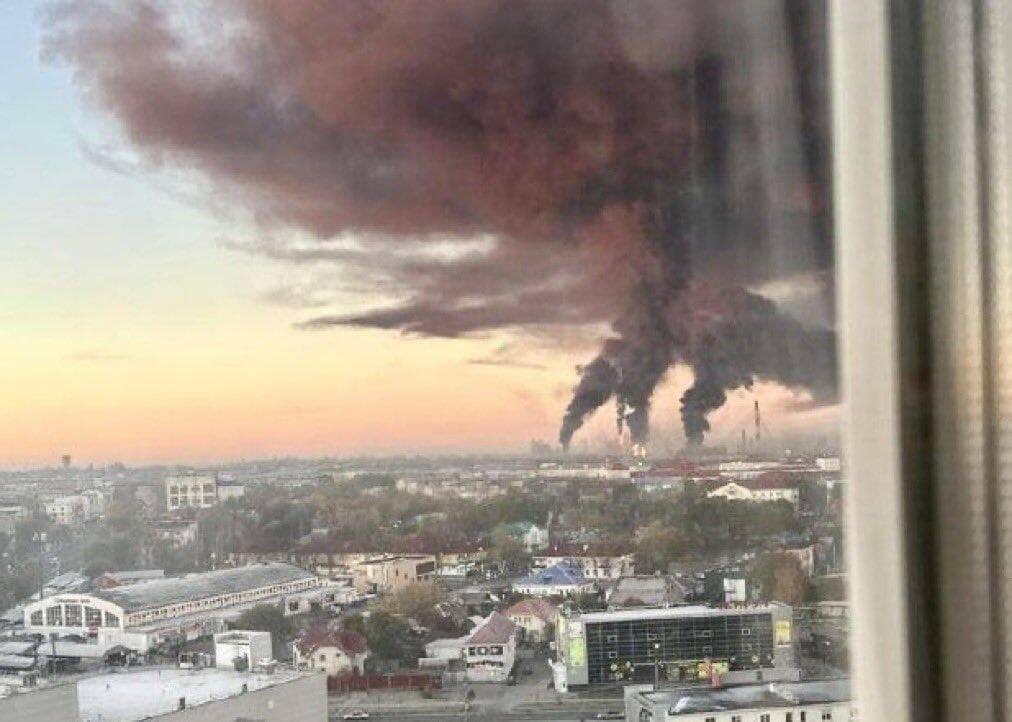
Ukraine struck an oil refinery in Russia's Samara region early on Friday, October 30, ending a two-week pause in refinery attacks, the Wall Street Journal reported on Friday morning. Ukrainian media and monitoring channels identified the plant as Rosneft's Novokuibyshevsk refinery, where a large fire broke out after a drone attack, and photos and video posted on social media showed several columns of smoke rising over the complex.
Source: Wall Street Journal via ZeroHedge
Samara region governor Vyacheslav Fedorishchev said air defences were operating against a Ukrainian drone attack on the region, though he did not name the facility hit, Ukrainian media reported. Residents of Novokuibyshevsk reported explosions and air-defence activity, the monitoring channel Exilenova+ published footage appearing to show widespread fires at the refinery, and the Russian independent outlet ASTRA reported that photographs of the fire corresponded to the refinery complex. The Kyiv Independent said it could not independently verify the footage or establish the extent of the damage.
The pause it ends
This is a follow-up to the refinery-strike pause reported earlier this month: Ukrainian forces last hit an oil refinery on October 15 and had not struck Russian oil infrastructure of any kind since October 20, the Journal reported. The informal pause came amid repeated demands by President Donald Trump and other US officials to stop hitting refineries, and Trump envoy Jared Kushner had reportedly asked Kyiv to abide by a 30-day halt. President Volodymyr Zelensky later said he had agreed to a brief pause begrudgingly, telling reporters, as the Kyiv Independent reported: 'Let's respond calmly by striking other targets for at least 72 hours. We won't touch the oil refineries. That didn't help.'
The pause had a measurable effect inside Russia: Reuters reported this week that Russian refineries increased crude processing by 25% in the second half of October compared with the beginning of the month, a rebound attributed to the halt in Ukrainian strikes. Ukrainian drone maker Fire Point said the Novokuibyshevsk strike was carried out with its FP-1 long-range drones and reported several hits, including on a diesel hydrotreating unit — a claim that has not been independently confirmed.
The Novokuibyshevsk plant, part of the Rosneft group since 2007, has a publicly reported annual processing capacity of about 8.8 million tonnes of crude oil — a measure of design capacity, not of output lost in this strike. The refinery produces jet fuel for Russian forces as well as dozens of petroleum products, including Euro 5-standard petrol and diesel, and the Samara region lies about 500 miles from the Ukrainian border. Ukrinform also reported a second strike the same night on the Konservsushprod factory in Starodub, in Russia's Bryansk region; that report, and the damage at both sites, remain unverified.
What is solid
- The Wall Street Journal and Ukrainian media report a Ukrainian strike on a Samara-region refinery early on Friday, October 30, ending the refinery-strike pause that began in mid-October.
- The pause itself was reported by the Journal on October 29 and described by President Zelensky as brief and reluctant.
- The Novokuibyshevsk refinery's publicly reported design capacity is about 8.8 million tonnes of crude a year.
What is only claimed
- The extent of damage at Novokuibyshevsk has not been independently confirmed, and footage could not be independently verified by the Kyiv Independent.
- Fire Point's claim of hits on a diesel hydrotreating unit is the manufacturer's own claim, not a verified assessment.
- Any casualty or interception figures circulating online for this strike are unverified and are not reported here.