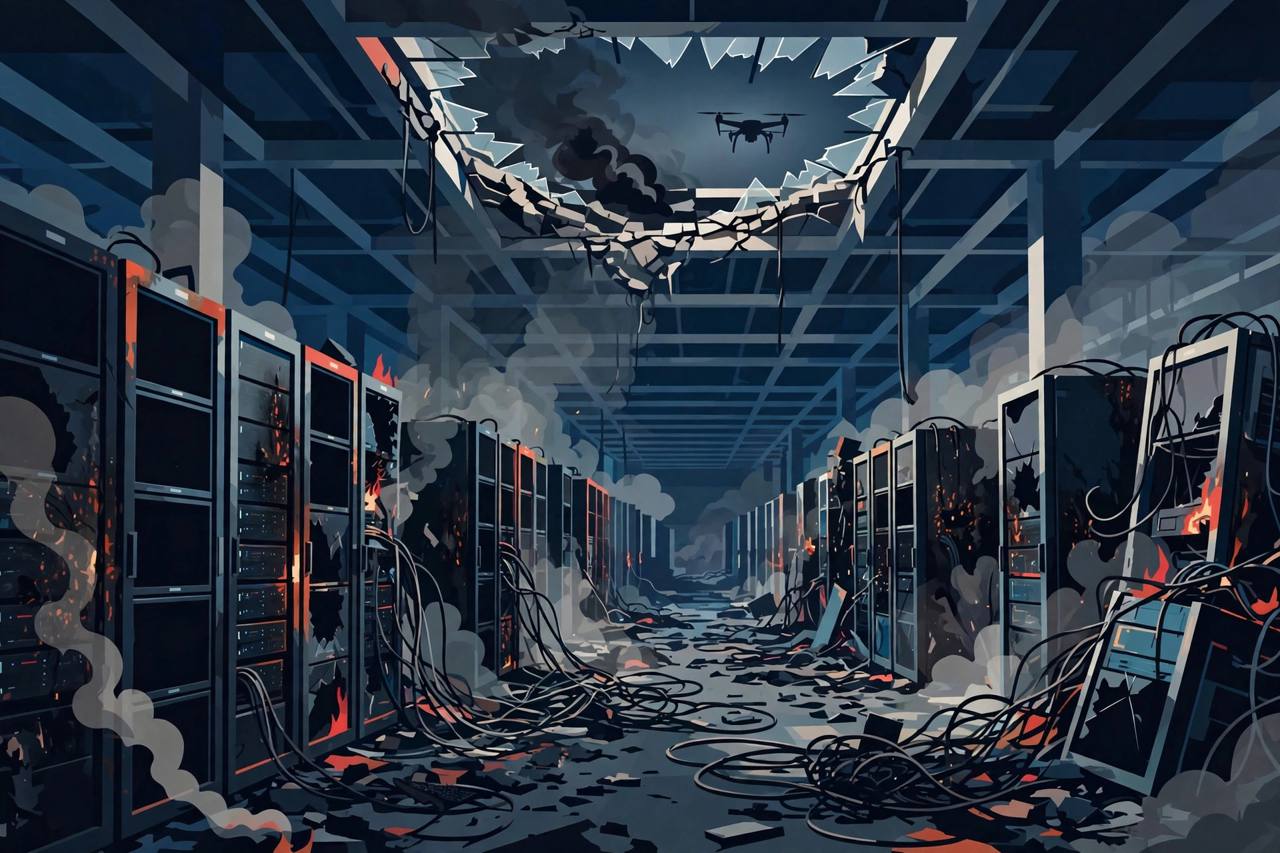
Ukrainian drone attacks this month knocked out key Russian data centres at the heart of the country's digital services and AI ambitions, causing damage that experts say could take months, if not years, to repair, the Associated Press reported on Thursday.
Source: Associated Press
Ukraine hit three main data centres belonging to tech giant Yandex, one for Russia's biggest bank, Sberbank, and one for VKontakte, the social media platform described by AP as Russia's equivalent to Facebook. Yandex confirmed earlier strikes on its centres in the Kaluga region and at Sasovo in reporting by AnewZ, which cited Reuters, and said its teams were working around the clock to restore services.
Source: AnewZ
While Yandex, Sberbank and VKontakte have not detailed the damage, people and businesses across Russia have reported widespread interruptions to cloud services, AP said. Banking, e-commerce, geolocation and ride-hailing services, as well as Alisa, Yandex's virtual assistant, and multimodal AI chatbots have all suffered lasting disruptions, and the fallout reportedly forced arbitration courts to cancel or postpone sessions and cut database access.
Strikes over four days in October
On October 8, Ukrainian drones hit a Yandex data centre in Sasovo in the Ryazan region that houses two of the company's three supercomputers, AP reported. A data centre in Kaluga was hit a day later and one in Vladimir on October 11. The data centre and AI hub for Sberbank was hit on October 14 in Balakovo in the Saratov region, and four days later Kyiv struck a data centre in St Petersburg serving VKontakte.
Yandex's most powerful supercomputer — at the Sasovo centre — was ranked 19th in the world, AP said, and satellite images indicated the centres sustained serious damage, with fires probably damaging high-end chips and other equipment. “This effectively sets Russia far behind in the AI race,” said Mikhail Klimarev, head of the Internet Protection Society activist group, quoted by AP. Connor Martin, an expert with the Council on Foreign Relations, said Russia would likely struggle to quickly replace the US-designed Nvidia A100 chips powering Yandex's supercomputers, AP reported.
Analysts quoted by AP said Russia's own rules made the damage worse: a strict digital-sovereignty policy requires all data to be stored inside the country, while Ukraine has stored critical data on servers in allied European countries. “Because all the infrastructure and all the data is located inside Russia, it's relatively easier to take down,” said Nick Reiners, senior geotechnology analyst at Eurasia Group.
AP said data centres are the latest targets of aerial campaigns waged by both sides against each other's vital infrastructure: Russian missiles and drones have pounded Ukraine's power grid and other key sites, and Kyiv's attacks on Russian data centres closely followed Moscow's recent strikes on data centres in Ukraine, which disrupted internet and TV broadcasts. Yandex said it restored most key cloud services in the following days using other data centres in Russia, AP reported.
What is solid
- Ukraine hit three Yandex data centres, one Sberbank centre and one VKontakte centre in October, AP reported.
- Yandex confirmed a strike partially disabled its Kaluga data centre and said teams were working to restore services, in AnewZ/Reuters reporting.
- Experts quoted by AP predict repairs could take months, if not years.
What is only claimed
- The full extent of the damage is not confirmed: Yandex, Sberbank and VKontakte have not detailed it, and assessments rest on satellite images and expert judgement reported by AP.