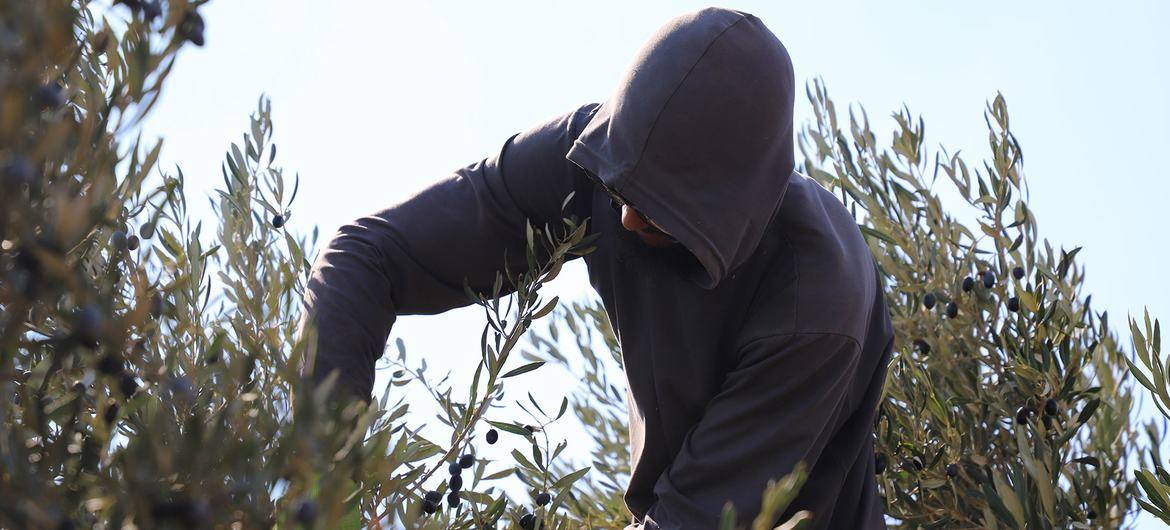
UNITED NATIONS — Israeli attacks on Gaza over the weekend killed at least six Palestinians, including children, despite a year-old ceasefire agreement, while settler violence through the olive harvest in the occupied West Bank left five Palestinians killed and over 240 injured in two weeks, the United Nations said on Monday, as its independent experts urged Israel to protect Palestinian farmers.
In the Gaza Strip, deadly Israeli airstrikes, gunfire and shelling occurred alongside incursions, demolitions and reported shifts in the so-called "yellow line" imposed by Israel since the ceasefire, according to the latest update from the UN emergency aid coordination office, OCHA. Local health authorities told OCHA that 57 Palestinians were reported killed and 319 injured between 29 September and 12 October, bringing the totals since the October 2025 ceasefire agreement to 1,493 fatalities and 5,299 injuries, according to those authorities. The casualty figures are those reported by the local health authorities to OCHA.
In the West Bank, OCHA reported that five Palestinians were killed and over 240 injured by Israeli forces or settlers over the past two weeks, with 74 per cent of the injuries occurring in the context of settler attacks, according to the APP report of the UN briefing. During the same period, 160 olive harvest-related settler attacks resulted in casualties, property damage or both — some 200 such attacks have been documented since the start of September — while record demolitions displaced 96 Palestinians, including 69 in At Tur, in what OCHA said was the largest displacement in a single demolition incident in East Jerusalem since UN records began in 2009.
UN independent human rights experts — appointed by the Human Rights Council, who are not UN staff — warned on Monday that farmers face renewed threats as the harvest gets underway. "The olive harvest should be a time when farmers can enjoy, in safety and dignity, the food and livelihoods their nature and land provide, not another season of fear, loss, violence and destruction," the experts said, calling on the international community to exercise "maximum pressure" to protect Palestinian civilians.
OCHA also warned of a worsening winter emergency in Gaza: around 950,000 displaced people are living in sites at medium to high risk of flooding, including over 400,000 at high risk, while available supplies could partially assist only 18 per cent of the 294,250 families needing shelter support for the rainy season. Daily cooked-meal production has fallen by 12 per cent to approximately 614,000 amid funding constraints, and shortages of fuel and essential supplies threaten health and water services, the agency said. Sources: UN News (Oct 19, 2026) reporting OCHA's Humanitarian Situation Report (Oct 15, 2026); APP via Tez Khabar (Oct 20, 2026).