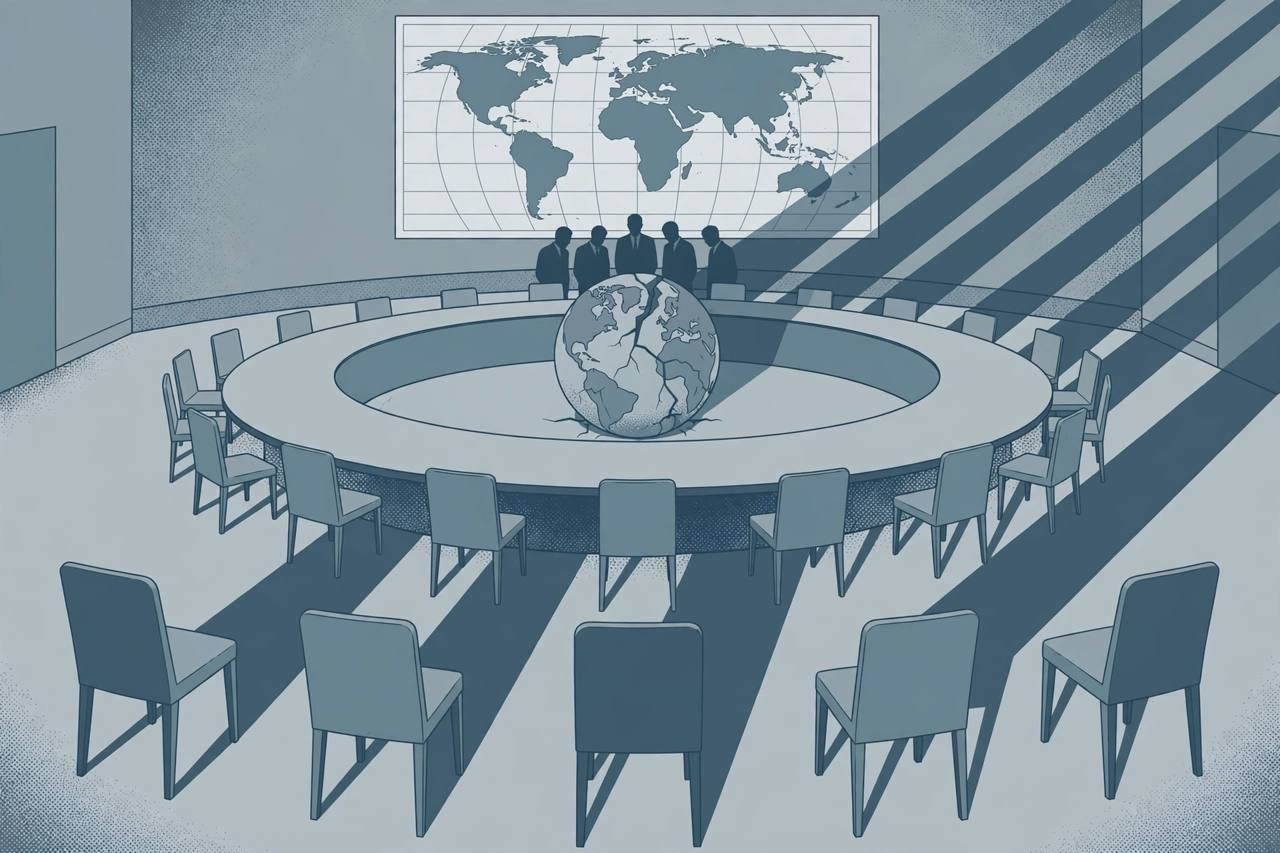
A new United Nations report has warned that the veto power of the five permanent members of the Security Council is one of the reasons multilateral mechanisms have been unable to prevent or stop the growing number of state-based conflicts, Shafaqna India reported in its summary of the report on Sunday. Inshorts, in a separate summary published on Sunday, likewise reported that the UN's World Social Report 2026 warns veto power held by the five permanent members — China, France, Russia, the United Kingdom and the United States — is hampering conflict resolution.
Source: Shafaqna India
The resulting paralysis has weakened decision-making, prompting the UN secretary-general to call for Security Council reforms, including expanding its membership to ensure fairer representation, particularly for Africa, Latin America and the Caribbean, and the Asia-Pacific region, Shafaqna reported. Those voices are underrepresented despite bearing much of the burden of peacemaking in an increasingly multipolar world, it said.
Source: Shafaqna India
The World Social Report 2026 says geopolitical fragmentation has considerably heightened global risks, with multiple centres of power competing for economic, military and political dominance, Shafaqna reported. Wisevoter, in its Sunday summary of the same report, likewise said the report warns that international paralysis and nuclear expansion threaten global stability, and noted the same neighbour-relations figures.
Source: Wisevoter summary of UN World Social Report 2026
The report, prepared by the UN Department of Economic and Social Affairs (DESA), says rising conflicts and geopolitical tensions are weakening international cooperation, disrupting trade and supply chains, and diverting financial and political resources away from development priorities, Shafaqna reported. More than half of countries increased defence spending as a share of GDP between 2020 and 2024, and all nine nuclear-armed states have expanded their arsenals since 2022, it said.
Source: Shafaqna India
In theory, a more multipolar world could strengthen multilateralism, the report says, but current fragmentation and the pursuit of strategic dominance risk undermining multilateral processes and giving rise to 'minilateralism' or 'coalitions of the willing', Shafaqna reported.
Source: Shafaqna India
The report suggests a renewed multilateral agenda focused on three priorities, Shafaqna reported: expanding fiscal space for social investment through stronger international tax cooperation and support to reduce developing countries' cost of capital and debt service; promoting wider access to technology, innovation and digital infrastructure; and reforming global governance to make it more representative, inclusive and responsive.