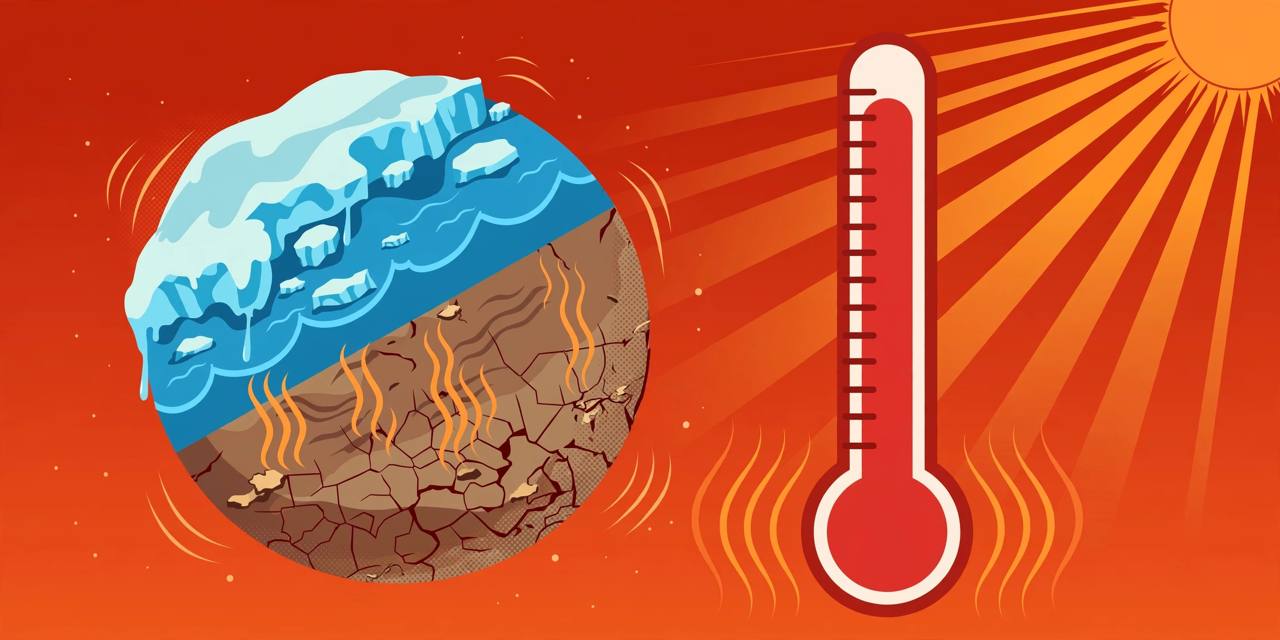
The world will breach the Paris Agreement's 1.5°C warming limit — but deep and fast emissions cuts can still keep the overshoot small and short and bring temperatures back below 1.5°C by the end of the century, the UN Environment Programme (UNEP) said in its Emissions Gap Report 2026, titled 'The Point of Return', published on Wednesday and reported by UN News.
The report's 'lowest possible' overshoot scenario would limit peak warming by roughly mid-century to 1.7 to 1.8°C. Reaching it requires slashing emissions by 18 per cent by the end of this decade, 45 per cent by 2035 and 69 per cent five years later, compared with 2025 levels, UNEP said.
'Overshoot is not surrender,' UN Secretary-General António Guterres said in a message accompanying the report. 'We can still keep it as small and as short as possible – and bring temperatures back below 1.5 degrees by the end of the century.' The journal Nature, reporting on the same UNEP assessment, said global emissions may be close to plateauing, but that on the current trajectory warming is still set to pass 2°C around mid-century without a major acceleration in cuts.
On current policies, the report warned, warming could reach 2.8°C within this century and increase thereafter. Even if all countries deliver their national climate plans, known as NDCs, and similar efforts continue, warming would be limited only to 2.6°C. UNEP said these outcomes are worse than last year's projections, because of the United States withdrawing from the climate deal and revised estimates of historical emissions, and that new NDCs submitted since the last report have hardly made a difference.
UNEP Executive Director Inger Andersen warned that 'every additional fraction of a degree and additional year of warming above 1.5°C increases climate impacts and risks', pointing to the deadly floods, heatwaves and wildfires that have hit many nations this year. 'We must pull out all the stops to minimize peak warming and return to 1.5°C by the end of the century,' she said, stressing that 'this is possible'.
The report noted there are more opportunities than ever to act: since the 2015 Paris Agreement, renewable energy has boomed, energy supply from coal and oil has grown more slowly than projected, and climate policies have cut emissions in many places. It called for tripling renewable energy capacity and doubling the rate of energy-efficiency improvements by 2030, shifting away from fossil fuels, cutting non-CO2 emissions, and halting and reversing deforestation. As benchmarks, it said the share of coal, oil and gas in total energy supply would need to fall by at least 55, 15 and five per cent respectively by 2035 compared with 2025, and by at least 75, 30 and 35 per cent in 2040. The second Global Stocktake begins next month at the UN COP31 climate conference in Antalya, Türkiye. Sources: UN News / UNEP Emissions Gap Report 2026; Nature.