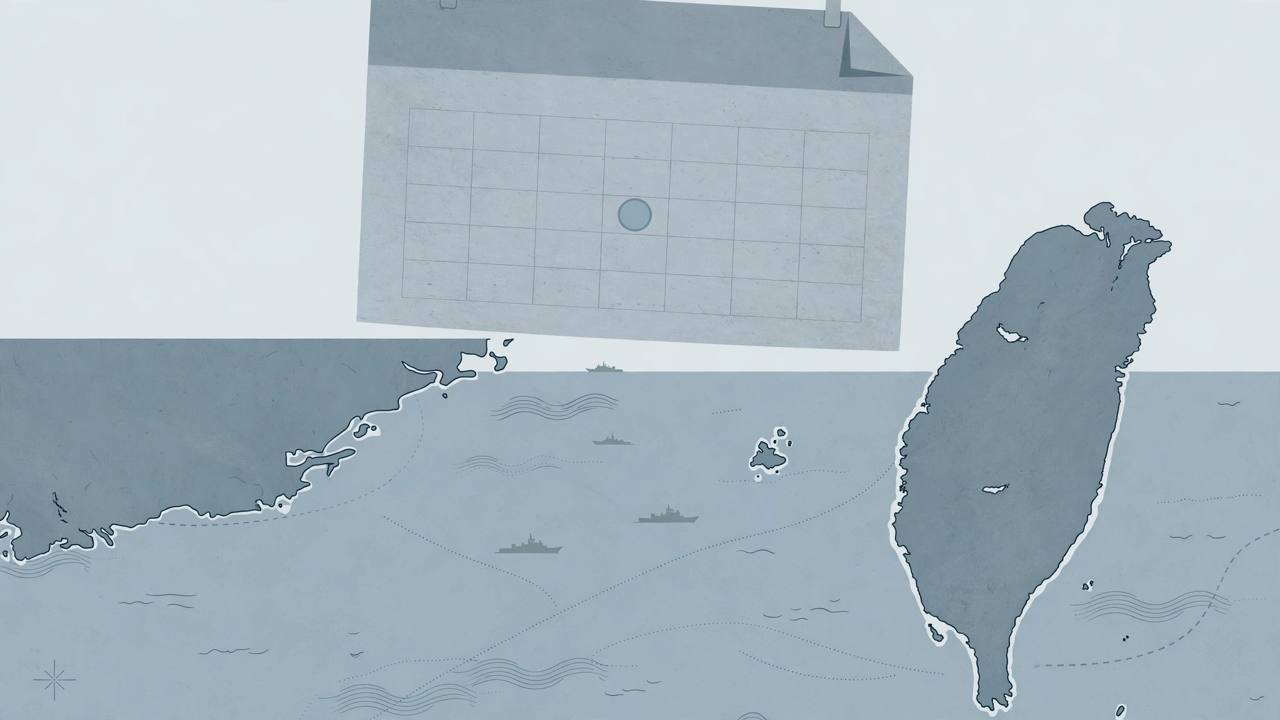
U.S. Army Pacific has prepared the Indo-Pacific theatre on the assumption that China will have the capacity, and possibly the intent, to seize Taiwan by military force next year, its commander, Gen. Ronald Clark, said on Tuesday at the TechNet Indo-Pacific conference in Honolulu, Stars and Stripes reported.
Source: Stars and Stripes, via ROK Drop
Asked whether the so-called Davidson window remained relevant, Clark said: "The answer for us at USARPAC is yes." The term comes from testimony in 2021 by Adm. Philip Davidson, then head of U.S. Indo-Pacific Command, who told a Senate committee that China was on course to achieve the military capacity to seize Taiwan by 2027.
The six years leading up to 2027 became known as the Davidson window and have driven U.S. defence budgeting and strategy in the Pacific, with the stated goal of deterring or obstructing an invasion, the report said.
The remarks do not mean Washington assesses an invasion as imminent. A U.S. annual threat assessment issued this spring by the Office of the Director of National Intelligence said Chinese leaders do not currently plan to execute an invasion of Taiwan in 2027 and do not have a fixed timeline for achieving unification, the same reporting noted. In 2023, former CIA Director William Burns said U.S. intelligence indicated Chinese President Xi Jinping had instructed his military to be ready by 2027 to conduct a successful invasion of Taiwan — readiness, which is different from a decision to invade.
What is solid
- Gen. Ronald Clark publicly said on Tuesday that the Davidson window is still valid for U.S. Army Pacific and that his command has prepared on a capacity-and-possibly-intent assumption for next year.
- The U.S. intelligence assessment quoted in the same reporting says Beijing does not currently plan a 2027 invasion and has no fixed unification timeline.
What is only claimed
- Whether China intends to use force against Taiwan in 2027 is not settled; capacity, readiness instructions and intent are three different things, and the sources above treat them differently.
China regards Taiwan, a self-governed democracy off its southeastern coast, as a province that must be brought under Beijing's control. Taiwan's government rejects Beijing's sovereignty claims, saying only the Taiwanese people can decide their future, as Reuters has reported in its Taiwan coverage. The United States provides arms to Taiwan but maintains ambiguity about how it would respond if China attempted an invasion.
For readers in Punjab and the diaspora, the Taiwan Strait is one of the routes on which global chip supplies, shipping and energy prices turn; a U.S. commander publicly keeping a 2027 planning assumption alive is a signal about how seriously Washington is preparing, even while its own intelligence assessment says no invasion is currently planned for that year.