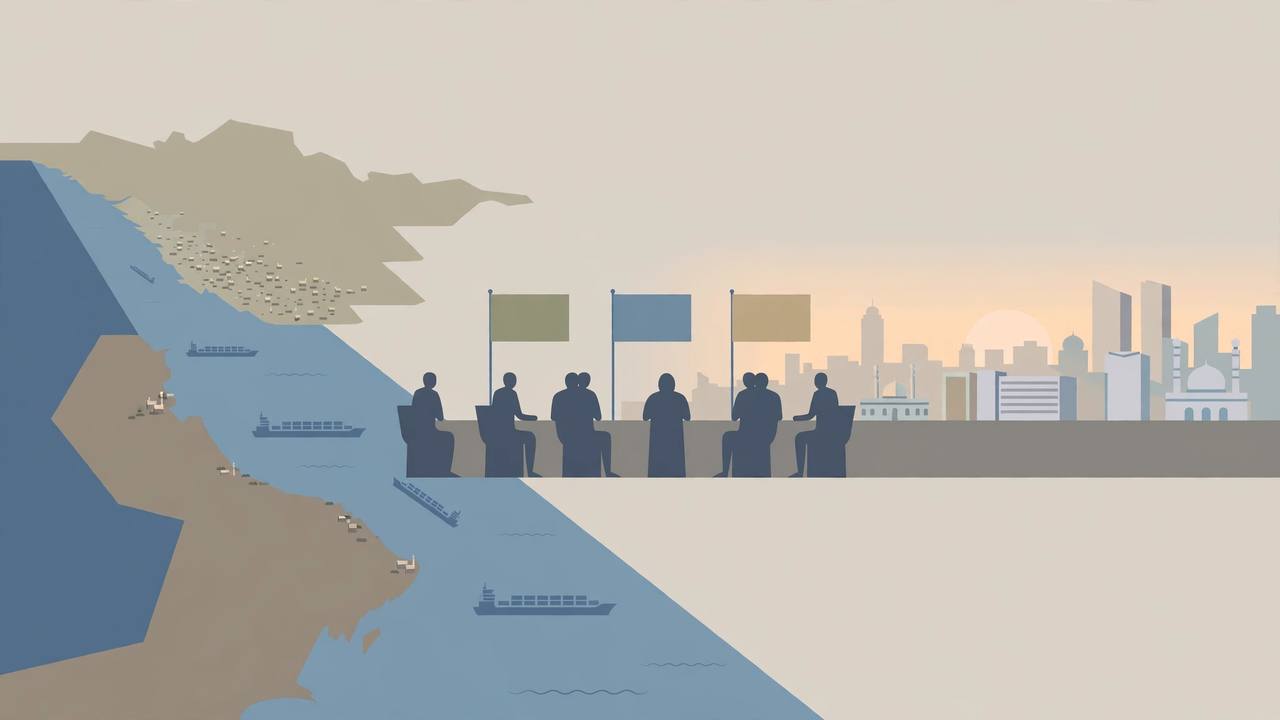
An American delegation is expected to join Iranian officials for direct talks in Doha after a reported breakthrough in indirect negotiations between Washington and Tehran, ANI reported on Saturday, citing a Times of Israel report based on the Qatari newspaper Al-Araby Al-Jadeed. Sources close to the mediation efforts led by Qatar and Pakistan were cited as saying the two sides had reached an understanding on preliminary measures concerning Iran's nuclear programme, navigation through the Strait of Hormuz and financial incentives for Tehran, with China and Russia also reportedly expected to serve as guarantors of any agreement.
Source: ANI
The reported progress follows more than 12 hours of discussions between Qatari mediators and Iranian officials in Tehran on Friday, aimed at restarting direct negotiations and preventing a renewed outbreak of war, Axios reported. A diplomatic source told Axios the Qatari mediators remained in regular contact with the White House during Friday's discussions and that there was “positive progress”, adding: “Talks are still ongoing in an effort to unlock a deal between the US and Iran.” The discussions were reported to continue in Doha on Saturday.
Source: Axios via BytesEU
This is a new development in a mediation track this site has followed step by step: Tehran earlier rejected Qatar's seven-day draft as “unacceptable ideas, not an offer”, after which Qatari mediators returned to Tehran to push again for a US-Iran deal. Neither Washington nor Tehran has announced the Doha direct talks or any breakthrough as agreed, and Awaaz Punjab is reporting the claims with that attribution attached.
What the draft framework reportedly contains
A preliminary draft framework for renewed US-Iran negotiations, obtained by Al Arabiya English, proposes that Tehran either transfer its stockpile of highly enriched uranium to an agreed third country or reduce its enrichment level, and that the Strait of Hormuz reopen to international shipping within seven days of an initial understanding. Iranian steps on the nuclear file and maritime security would be matched by clearly defined US measures to ease sanctions, the naval blockade and other economic restrictions, with an independent verification mechanism before each phase and China identified as a possible guarantor. The document has not been announced as an agreed deal by either side.
Source: Al Arabiya English via Eastora
The sequencing dispute remains
The main dispute remains sequencing, the reports said. According to a US official cited by Axios, Washington wants nuclear concessions to be part of the process from the outset, while Tehran wants the United States first to lift its naval blockade, release frozen funds and ease restrictions on Iranian oil exports. Qatari mediators are also pushing Tehran to allow United Nations inspectors to visit nuclear sites damaged by US and Israeli strikes, as a confidence-building step in return for possible limited sanctions relief.
Why it matters beyond Tehran and Washington: the Strait of Hormuz carries a large share of the world's seaborne oil, and lakhs of Punjabi and Indian workers live and work across the Gulf states. Any reopening of Hormuz and easing of the confrontation would affect oil prices, flights and worker safety across the region, while a collapse of the talks would raise the risk of the renewed military operations the mediators say they are trying to prevent. What happens next is whether the reported Doha meeting takes place and whether either capital confirms any part of the reported understanding.