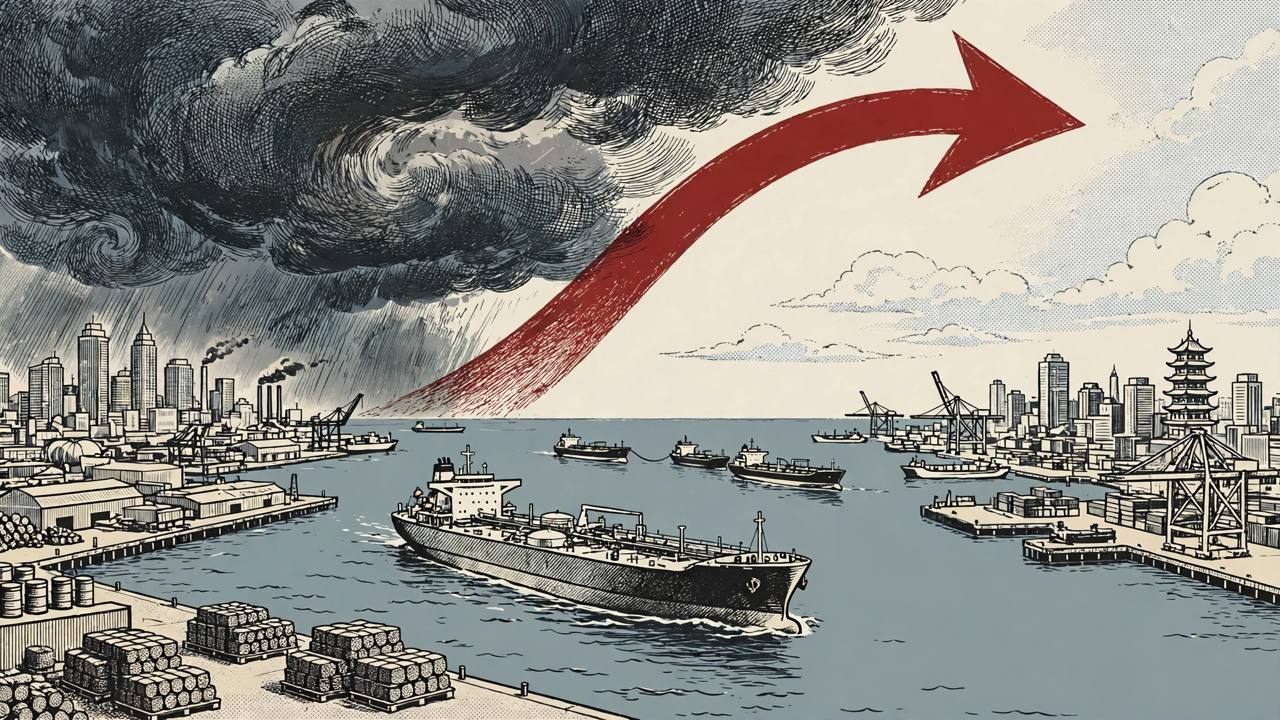
US crude oil exports to Asia are poised to hit multiyear lows after the Middle East war disrupted global shipping and sent tanker costs to records, Bloomberg reported on Thursday. Asian refinery orders for US crude for November delivery have been cut roughly in half this month to 24 million–26 million barrels, traders told Bloomberg — a pace that, if it holds through the end of October, would mark a seven-year low based on ship-tracking data.
Source: Bloomberg via Seeking Alpha
The tanker rate on the US Gulf Coast-to-China route has more than tripled since the US-Iran war started in late February to nearly $60 million as of Thursday, according to Baltic Exchange figures reported by Bloomberg, after touching a record $79.6 million (yaani roughly 8 crore dollars for a single one-way voyage) earlier this month — compared with an average of less than $8 million in the five years before the conflict. Transport Topics, also reporting Bloomberg's figures, put the same collapse in Asian orders at roughly 50%.
Source: Transport Topics (Bloomberg)
Why the tankers are stuck
"The main story right now in the [oil] market is freight rates," Valero Energy's head of oil trading Randy Hawkins said on the company's earnings call on Thursday. Refiners are effectively spending $30–$35 per barrel just to transport crude from the US Gulf to Asia — as much as seven times what was typically spent last year, he said.
Hawkins said one factor tying up global tanker availability is the increased use of smaller vessels to load crude in the Persian Gulf — ships seen as less likely to be hit by Iranian fire in the Strait of Hormuz — whose cargoes are then transferred to larger vessels waiting in the Gulf of Oman. "The inefficient process of this ship-to-ship transferring… is really tying up global shipping and requiring more tankers to move the same amount of oil," he said. Reuters reporting carried by OilPrice.com likewise says record freight has effectively closed the US-to-Asia arbitrage, with Asian refiners turning to Middle East and South American grades instead.
Source: Reuters via OilPrice.com
For India and the wider Asian market, the squeeze matters directly: when US barrels become too expensive to ship, refiners bid harder for Gulf grades — one reason freight and insurance costs through the Hormuz corridor are now feeding into fuel economics across the region, including for the Punjabi and Indian diaspora's home states.