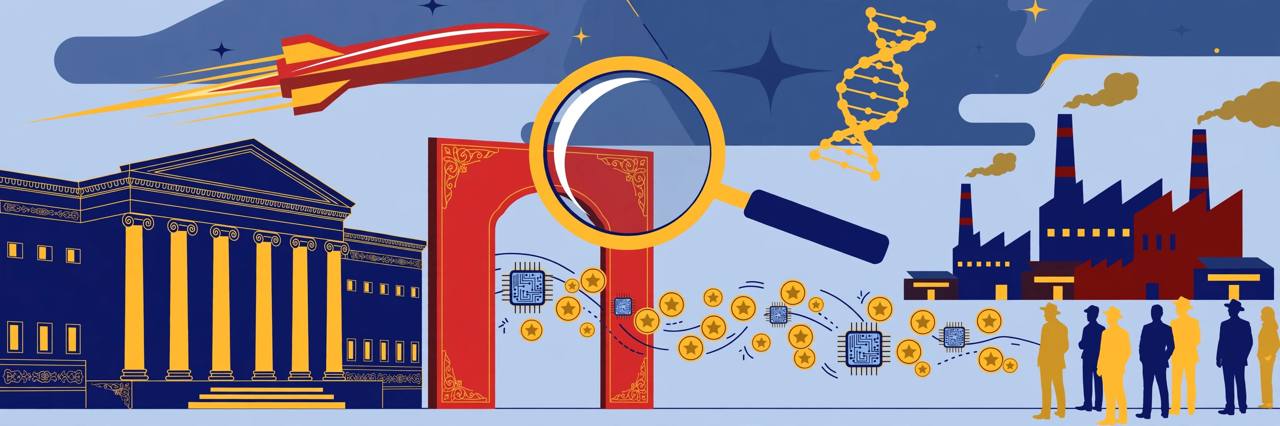
The U.S. Treasury Department proposed a rule on Thursday to crack down on American high-tech investments such as supercomputing and artificial intelligence in China, Russia, North Korea and other "countries of concern", the Associated Press reported. The proposal, formally issued on October 22, would expand the Outbound Investment Security Program under the Comprehensive Outbound Investment National Security (COINS) Act, which Congress passed in December 2025 as part of the fiscal 2026 defence authorization law.
Source: Associated Press via Hindu BusinessLine, Oct 23, 2026
The rule would add investments in hypersonic systems — capable of travelling at five times the speed of sound — supercomputing and biotechnology to the existing screening for semiconductors, quantum computing and artificial intelligence, which Treasury's draft calls "superintelligence", or SI, AP reported. Some transactions would be prohibited outright and others would require notification to Treasury; reports on the draft say it would reach investments above $50,000 — yaani about 50 hazar dollars — while exempting many ordinary stock purchases.
Source: Harava News summary of Treasury draft, Oct 23, 2026
The program began in 2023, when then-President Joe Biden signed an executive order restricting outbound US investments in semiconductors, quantum computing and AI going into China, and Treasury set up the screening program, AP said. The December 2025 law codified and expanded it to more technologies and more countries, including Cuba, Iran, North Korea and Russia. Treasury is seeking public comments on the draft through December 7, 2026, before issuing final regulations.
The proposed rule "sends an important signal to markets that Washington is tracking where U.S. capital is flowing and what capabilities it is helping build", Craig Singleton, a senior fellow at the Foundation for Defense of Democracies, told AP, adding that screening "recognizes that capital can accelerate military-relevant capabilities just as surely as technology transfer can". China's Foreign Ministry has objected to restrictions on business investment, according to reporting on the draft. AP noted that Russia's inclusion in the rule came days after President Donald Trump waived sanctions on Russia following a diesel deal with President Vladimir Putin.
Source: Associated Press via KBOE Radio, Oct 23, 2026
For Punjabi and Indian investors and tech workers in Canada, the US and India, wider US screening of China-linked technology deals matters because it shapes where global chip, AI and biotech money can flow — and how quickly rival supply chains, including India's, are built.