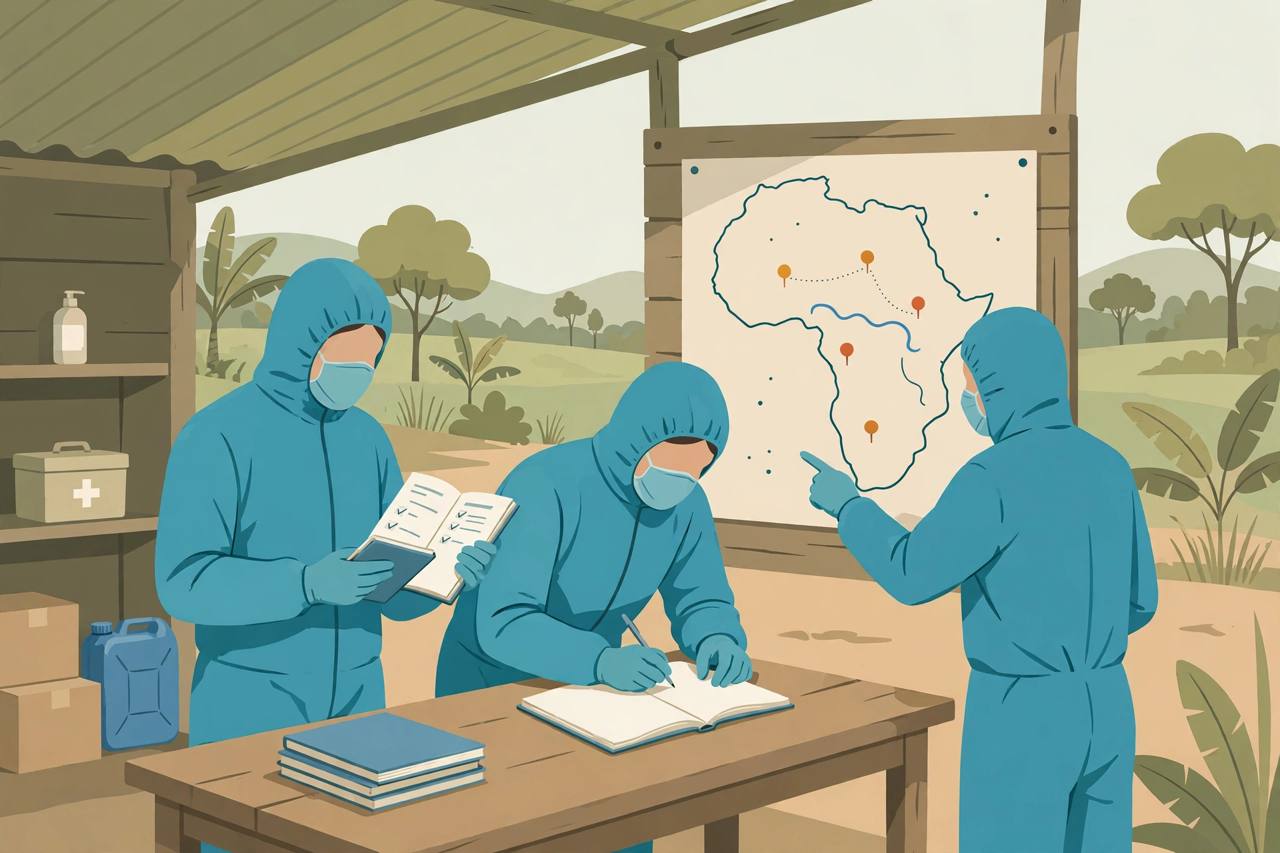
The World Health Organization (WHO) has called for stronger epidemiological surveillance after new Ebola clusters were detected in remote areas of the Democratic Republic of Congo (DRC), warning that security and logistical challenges are limiting access to some areas and complicating efforts to contain the virus. The country has recorded 9,765 cases to date and 4,727 people have died, and about 30,000 contacts are being monitored each day, the WHO said in figures reported by AfricaWire.
Source: WHO via AfricaWire / Muscat Press, Oct 24, 2026
Dr Catherine Smallwood, the WHO's incident manager in the DRC, gave the latest figures. Nearly half of all recorded cases have resulted in death, she said. Contacts of confirmed patients are followed daily over a three-week period so new infections can be detected early. Smallwood said 2,600 people in the country had survived the disease, describing this as a positive development. The WHO called for increased funding, medical and logistical support, stronger local response capabilities and faster detection, saying the needs are greatest in areas affected by conflict, displacement and food insecurity. It urged countries in the region to step up surveillance and health screening at border crossings, but advised against restrictions on travel to, or trade with, affected countries.
Source: WHO via AfricaWire / Muscat Dispatch, Oct 24, 2026
The outbreak is caused by the Bundibugyo virus, a species of Ebola, and has been under way since May 2026; Congolese authorities declared it on May 15 after infections emerged in the country's northeast. It is the largest and deadliest Ebola epidemic recorded in the DRC. Earlier this month the national count stood at 8,376 confirmed cases and 4,042 deaths, according to the same WHO reporting — so the new totals mark a continued rise, not a recount of the same figures.
Source: WHO via AfricaWire / Muscat Press, Oct 24, 2026
Separate European data cited in the same reporting gives a slightly different confirmed-case picture: the European Centre for Disease Prevention and Control (ECDC) reported 9,704 confirmed cases and 4,687 deaths based on data up to October 20, with eight provinces affected as of October 21 — Ituri, North Kivu, South Kivu, Tshopo, Haut-Uele, Bas-Uele, Sud-Ubangi and Nord-Ubangi — and Ituri remaining a major centre of transmission. The ECDC also reported linked cases outside the DRC: Kenya has reported nine confirmed cases including one death, all linked to its first case, with the most recent reported on October 20, and Nigeria reported one case on the same day in a person with a travel history to Uganda, with 44 contacts identified. The WHO and ECDC totals differ because they cover different dates and counting methods; both are reported here with their attribution rather than merged. Sources: WHO statements via AfricaWire, and ECDC data cited in the same reporting.
Source: ECDC data cited by AfricaWire / Muscat Press, Oct 24, 2026
What is solid
- WHO called for stronger surveillance after new Ebola clusters were found in remote areas of the DRC
- WHO figures: 9,765 cases, 4,727 deaths, about 30,000 contacts monitored daily, 2,600 survivors
- WHO urged more funding and border surveillance in the region, and advised against travel or trade restrictions
What is only claimed
- The exact confirmed total: ECDC reported 9,704 confirmed cases and 4,687 deaths on data to Oct 20, while WHO's later total is 9,765 cases and 4,727 deaths — different dates and methods, reported separately here