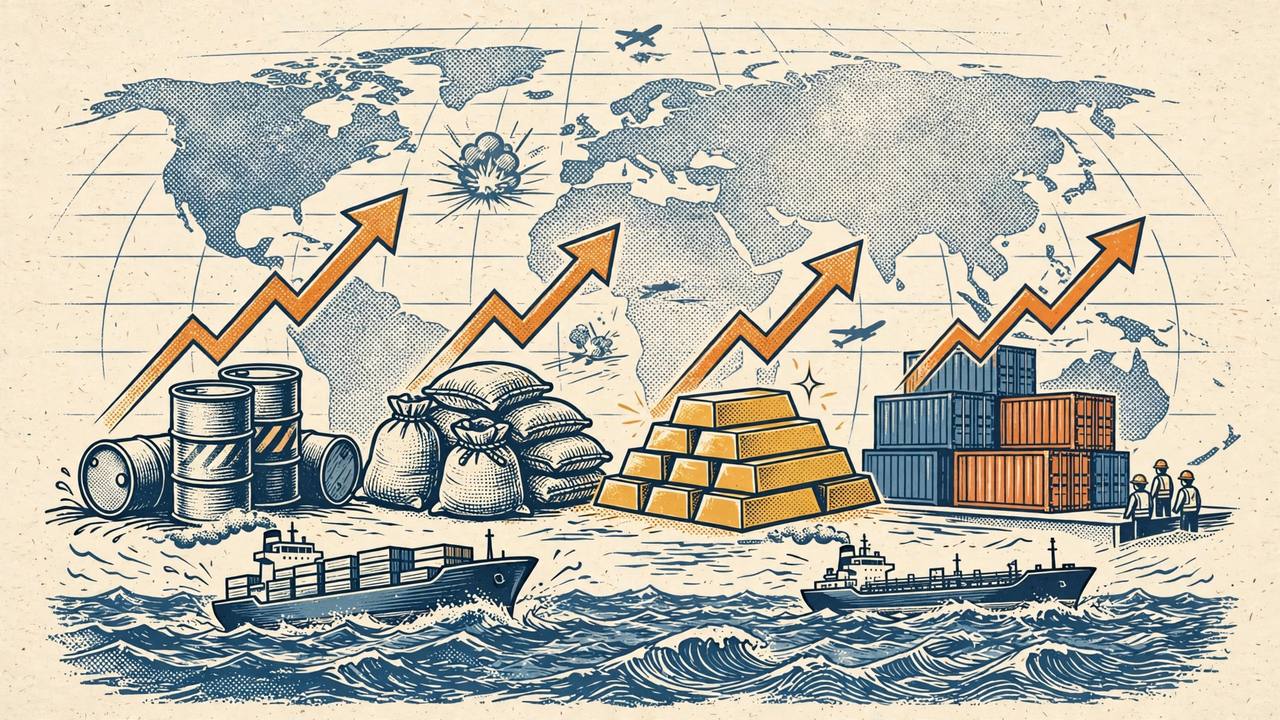
Global commodity prices are set to surge 23% in 2026, the World Bank said on Wednesday, citing rising energy prices and disruptions to cargo shipping during the Middle East war, grain shipment problems in the Black Sea and high demand for safe-haven assets such as gold.
Source: Reuters
Oil, natural gas, food and metals prices all rose sharply this year as global shocks mounted, the bank said in its latest Commodity Markets Outlook, its twice-yearly assessment of world commodity markets. It warned the situation could worsen if the conflict in the Middle East ratcheted up and damage to Russian oil infrastructure continued.
“Commodity markets are being hit by several major shocks at once,” said Ayhan Kose, the World Bank's deputy chief economist. “Higher energy costs and trade disruptions are driving up prices across a broad range of commodities, threatening to worsen inflation, food insecurity, and economic growth.”
The bank said global oil stocks have been depleted during the war in the Middle East, leaving the global economy more vulnerable to future supply shocks. Commodity prices are expected to ease by 7% next year, but continued shocks — including forecasts for the worst El Niño weather effect since 1950 — could keep food commodity prices elevated, raising the prospect of higher inflation and tighter monetary policy.
Yaani, a basket of everyday commodities that cost 100 units this year is expected to cost about 123 units in 2026 — fuel, food grains and metals all getting costlier at the same time.
The report was released two days before foreign ministers from the world's 20 largest economies are due to gather in Atlanta, Georgia, for a meeting that will focus on the wars in the Middle East and Ukraine. Kose said the World Bank was focused on protecting the world's poorest people and supporting low-income countries already grappling with heavy debt burdens.
For Punjabi and Indian workers in the Gulf and for truck drivers in Canada and elsewhere, the warning lands directly on household budgets: costlier diesel and petrol, dearer food imports in the Gulf states, and pressure on the remittances families send home if inflation keeps central banks holding interest rates higher for longer.