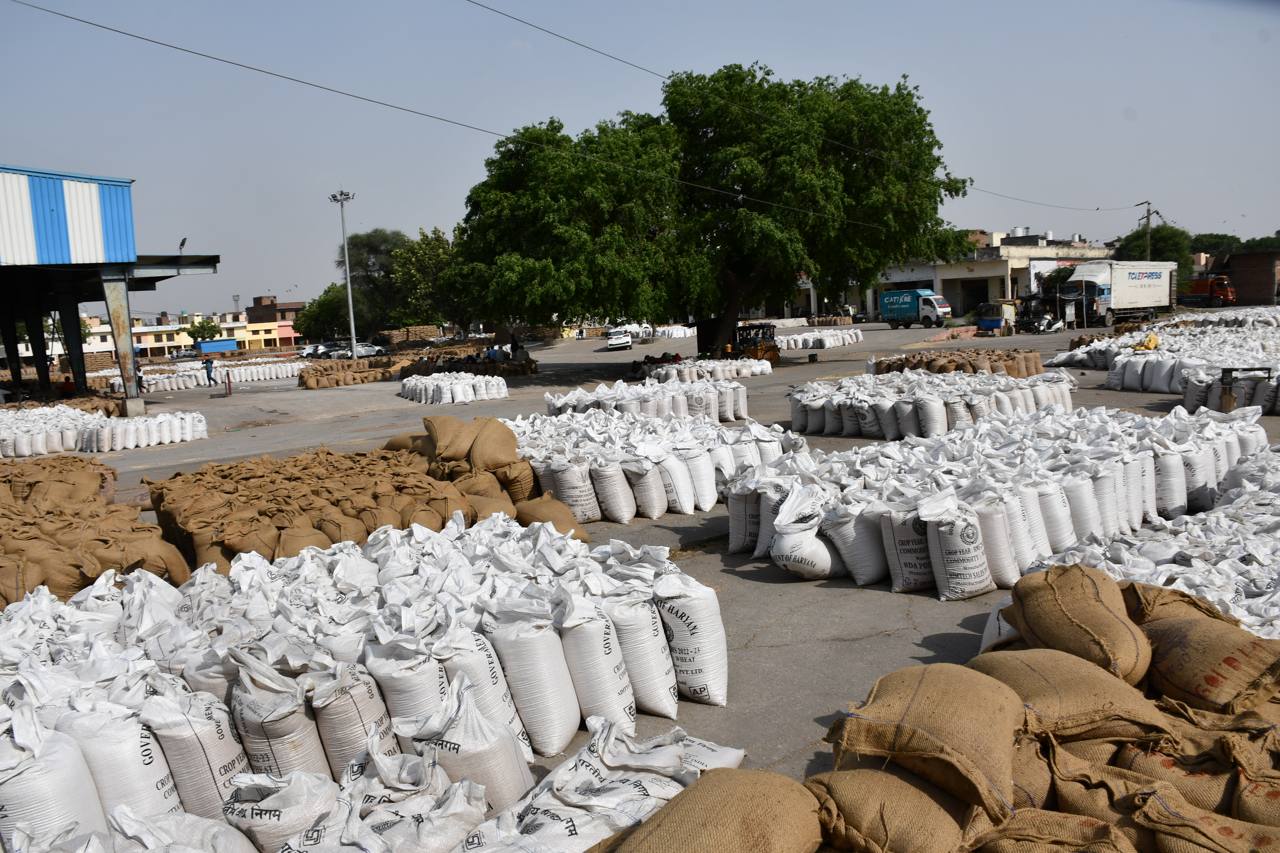
Chandigarh: The Haryana government has eased its paddy procurement rules, directing district authorities to buy paddy that exceeds the district-wise yield limits fixed for the Kharif Marketing Season 2026-27, subject to verification. Mirror Now reported that the Director of the Agriculture and Farmers Welfare Department has instructed all deputy commissioners to facilitate the purchase of surplus produce after a formal verification process, following sustained pressure from farmers who said the caps were preventing them from selling their full harvest at the Minimum Support Price (MSP).
The yield limits, fixed under central government guidelines on the basis of the average production of the previous three years, range from 21.39 quintals to 29.26 quintals per acre across districts, Direct Headlines reported. The department said representations from farmers pointed out that actual yields this season were substantially higher than the prescribed limits in several cases.
Under the fresh instructions, a farmer claiming a higher yield can submit a written request to the secretary of the local Haryana State Agricultural Marketing Board. The claim will be forwarded to revenue or agriculture department officials, and the verification — based on the farmer's previous production and sale records — must be completed within 48 hours. If the higher yield is confirmed, the additional quantity will also be procured. A senior agriculture department official told Mirror Now that data from the 'Meri Fasal Mera Byora' portal is supporting the process so that only genuine farmers benefit.
Farmer unions have not fully welcomed the move. Mirror Now reported that Bharatiya Kisan Union (Charuni) president Gurnam Singh Charuni expressed dissatisfaction with the framework and sought a 10 per cent relaxation in procurement limits, arguing that the three-year average is flawed because previous seasons were hit by adverse weather and excessive rainfall that depressed production figures. State officials said the measures are meant to ensure genuine farmers can sell their entire harvest, and that verification requirements will be kept from causing unnecessary hardship in grain markets.