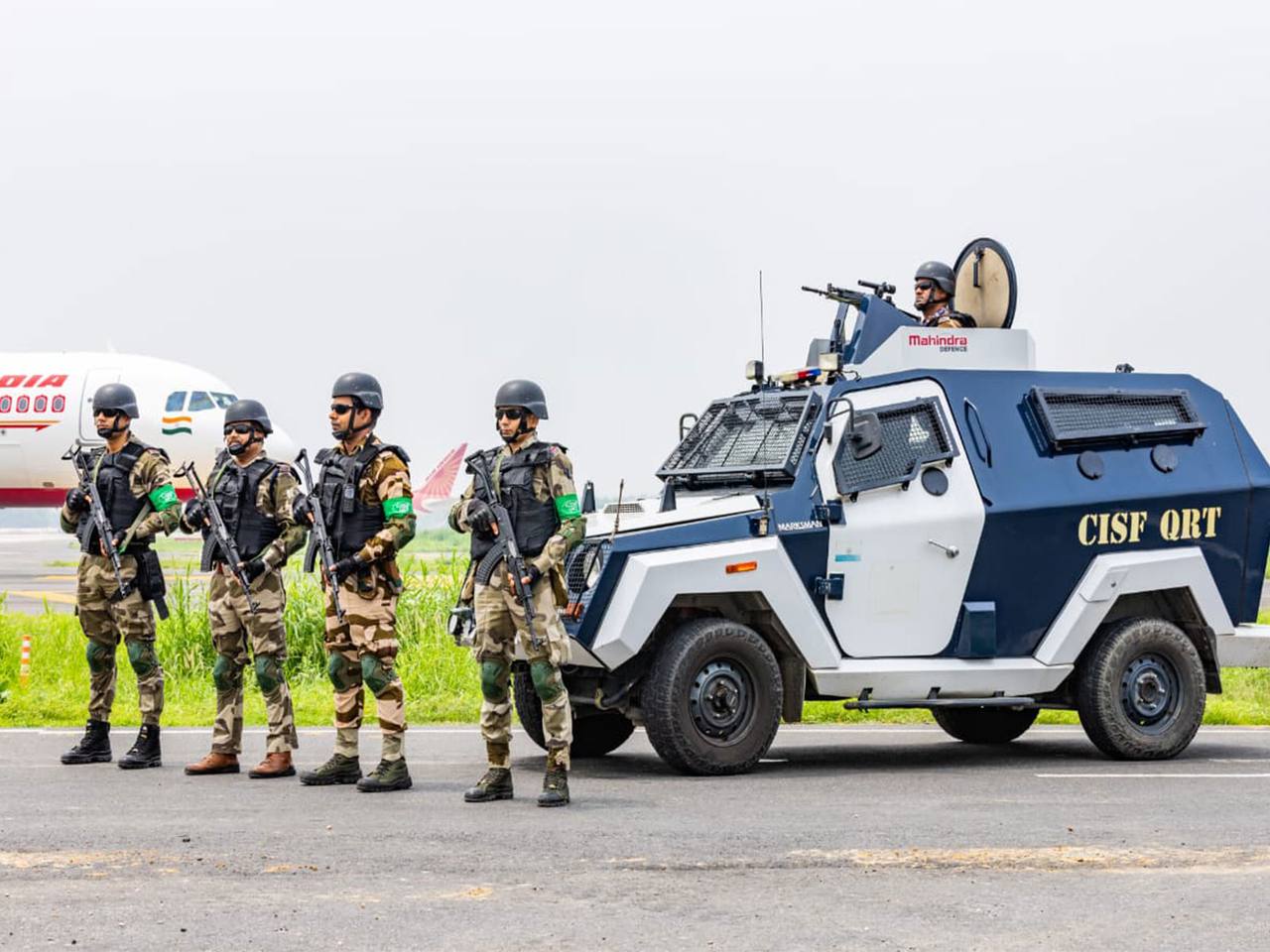
New Delhi, November 1: The Central Industrial Security Force (CISF) on Sunday implemented a major organisational restructuring, shifting its supervisory architecture from a territorial command model to a specialised functional sector-based system to strengthen the security of the country's critical infrastructure, ANI reported. The restructuring was undertaken with the concurrence of the Ministry of Home Affairs (MHA).
Source: ANI via Indian Economic Observer
Under the new arrangement, supervision of CISF units will be organised according to the nature of the installation rather than its geographical location. The newly operationalised functional sectors are Power-I (New Delhi), Power-II (Kolkata), Coal (Ranchi), Steel (Bhilai), Petroleum and Natural Gas (Guwahati), West Coast Port (Mumbai), East Coast Port (Chennai), and the Government Buildings, Museums and Monuments and Mass Rapid Transit System (GBMM & MRTS) Sector (New Delhi), InfraInsiders reported.
Source: InfraInsiders
The new sectors will function alongside the Aviation Sectors, which have operated under the functional model since 2001, and the Department of Atomic Energy and Department of Space (DAE & DoS) Sector, operational since 2018. Earlier, a single territorial Sector Headquarters supervised more than 50 units belonging to diverse sectors — coal mines, power plants and ports among them — and had to coordinate with multiple ministries and organisations.
The CISF said the restructuring assumes significance amid an evolving threat landscape in which critical infrastructure is increasingly vulnerable to drone attacks, precision weapons, cyber threats, sabotage and coordinated disruptions. The specialised sector headquarters are expected to facilitate sector-specific counter-drone systems, better management of cyber risks involving operational technology and industrial control systems, and contingency plans for faster restoration of operations after a security incident.
CISF Director General Praveer Ranjan said the restructuring would improve coordination between agencies and client organisations while ensuring greater accountability and operational efficiency. "In a multi-stakeholder environment of our units, it will promote better inter-agency coordination and communication, especially with the respective managements, with a single point of contact from either side. Secondly, a dedicated nodal head in a functional sector would reduce operational bottlenecks, resulting in timely and informed decision-making in tactical and strategic matters and effective crisis management," the DG said.
The CISF, a Central Armed Police Force under the MHA, provides security to vital installations across the country, including airports, ports, power plants, oil and gas facilities, industrial establishments and government buildings. Officials said the functional restructuring is aimed at strengthening its capacity to protect these interconnected infrastructure networks through specialised oversight and faster responses.