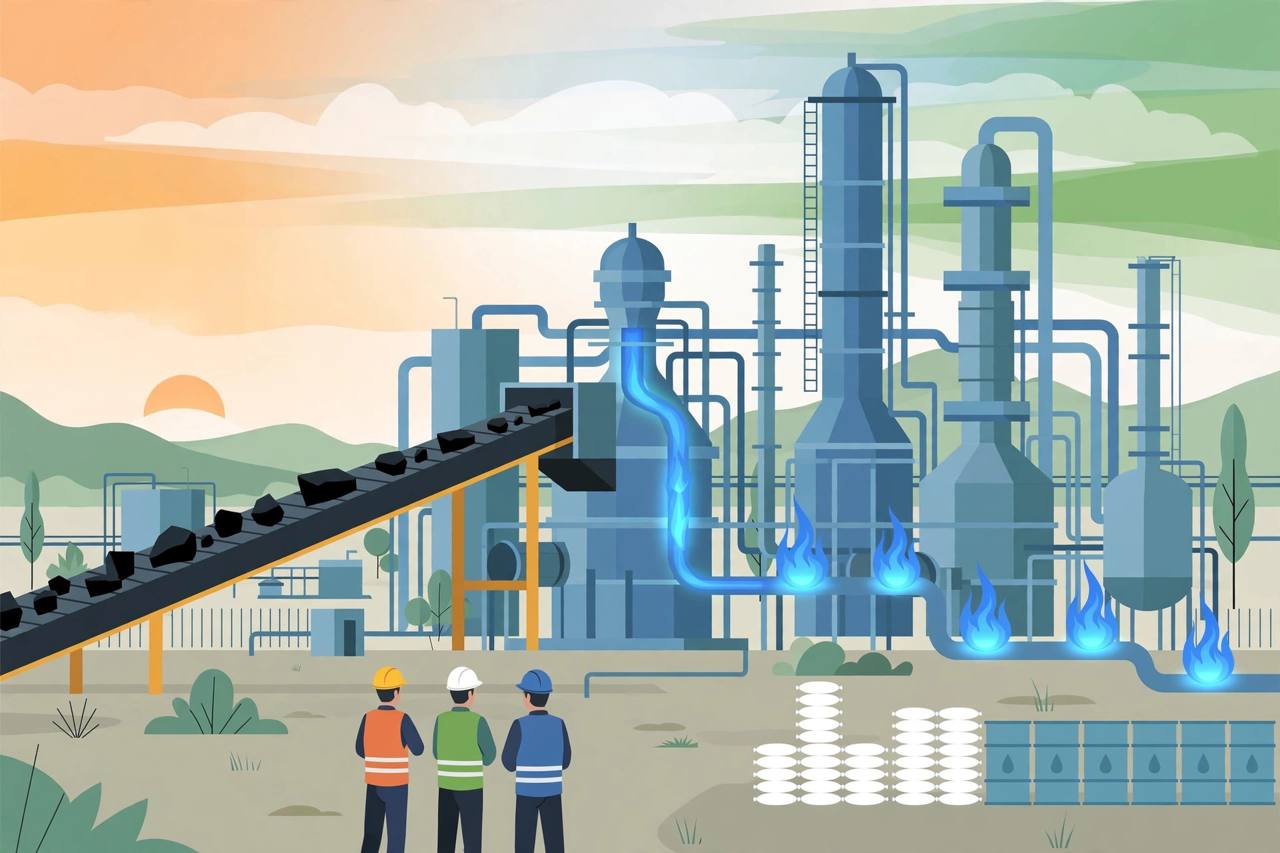
India is expediting coal gasification projects with an outlay of Rs 46,000 crore to boost domestic production of fertilisers and gas and reduce dependence on imports, Coal and Mines Minister G Kishan Reddy said in New Delhi on Friday, October 23, IANS reported.
Source: IANS — Rs 46,000 crore push to speed up coal gasification in India: Kishan Reddy (Oct 23, 2026)
Speaking at the 'Agrasar Bharat Manch' event, Reddy described coal as an important industrial raw material and said plans to convert coal into syngas, ammonia, urea and methanol through gasification are being expedited. Coal continues to meet 55 per cent of India's primary energy needs and accounts for 74 per cent of its electricity generation, he noted.
Total outlay Rs 46,000 crore (yaani about Rs 460 billion); Cabinet-approved surface coal gasification scheme Rs 37,500 crore; national target — gasify 100 million tonnes of coal by 2030.
The Union Cabinet has recently approved a scheme for the promotion of surface coal gasification projects with a financial outlay of Rs 37,500 crore, advancing the national target of gasifying 100 million tonnes (MT) of coal by 2030, IANS reported. The move aims to strengthen energy security and reduce dependence on imports of LNG, urea, ammonia and methanol.
The Hindu BusinessLine has previously reported the same Rs 46,000 crore scheme for promotion of surface coal gasification projects, with Reddy saying its guidelines would be finalised and companies invited to apply, with long-term coal linkages of up to 30 years.
Source: The Hindu BusinessLine — Coal gasification guidelines to be finalised in two months: Kishan Reddy
Reddy also said the government is working on boosting production of critical minerals and looking at overseas mining assets, adding that India is currently exploring mines in Argentina and holding discussions with other countries, IANS reported. He said the government is encouraging Indian entrepreneurs to go abroad for exploration and processing of critical minerals, which are vital inputs for EVs, telecommunications, solar power units and defence hardware.