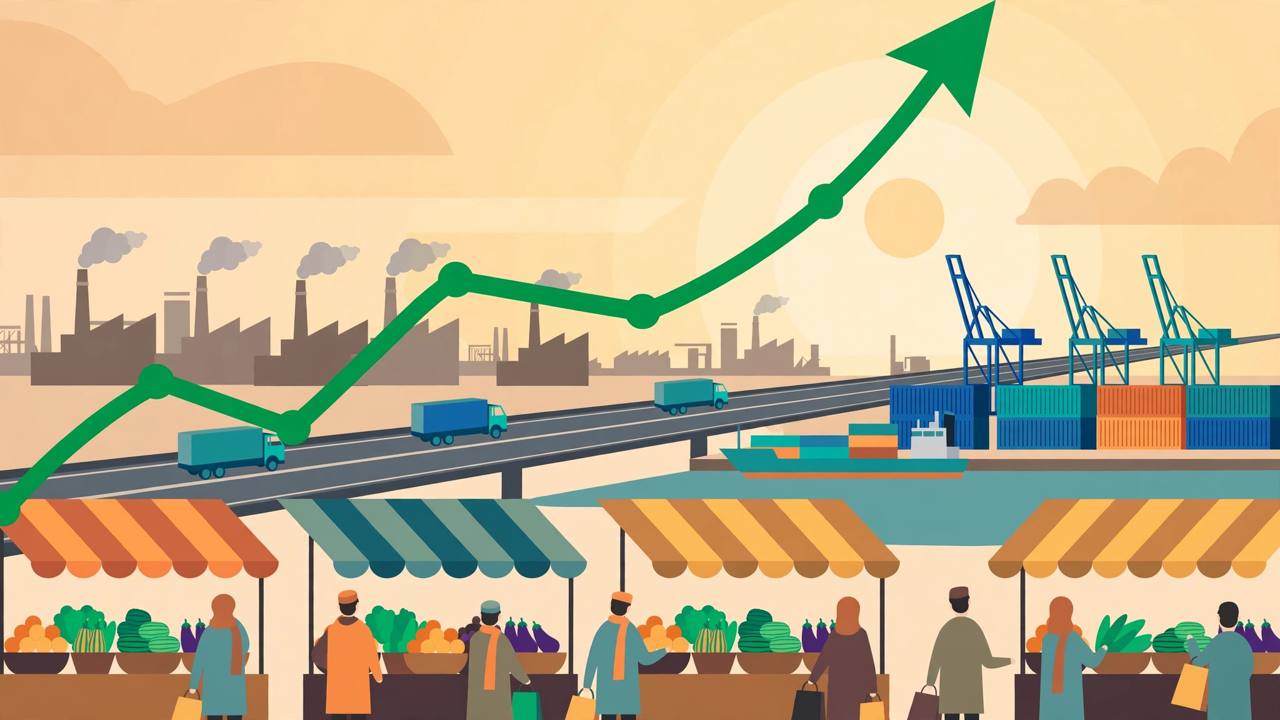
India's economy is estimated to have grown by 7.35 per cent in the July-September quarter of the current financial year (Q2 FY27), supported by strong domestic demand, industrial activity and higher consumption, according to the Finance Ministry's October Monthly Economic Review released on Thursday, October 29.
Source: ANI via Devdiscourse
The estimate comes from the Finance Ministry department's nowcasting model, introduced in the Economic Survey 2025-26. It follows real GDP growth of 7.8 per cent in the April-June quarter (Q1 FY27), and is slightly above the roughly 7.3 per cent the ministry had projected for the second quarter in its September review. A nowcast is an estimate built from high-frequency indicators; the official quarterly GDP figures are published separately later.
Source: IANS via HiIndia
Industrial activity stayed firm in the quarter. The Index of Industrial Production (IIP) expanded 8.0 per cent year-on-year in August 2026, led by 9.0 per cent growth in manufacturing, while the Index of Core Industries grew 7.9 per cent year-on-year in September. The HSBC India Manufacturing PMI strengthened to 55.1 in September from 52.8 in August — a reading above 50 signals expansion.
Other indicators pointed the same way. Gross GST collections grew by around 15 per cent during the July-September quarter, compared with approximately 8.4 per cent in the preceding quarter, and domestic automobile sales rose by around 25 per cent year-on-year, supported by demand across rural and urban markets, the review said.
India's external sector also held up in September amid global uncertainty: total exports of merchandise and services grew 11 per cent year-on-year, with merchandise exports up 23.1 per cent, led by electronics and engineering goods, and foreign exchange reserves stood at $721 billion as of October 16, 2026. Looking ahead, the ministry said domestic consumption, investment activity and structural reforms were expected to support growth in the rest of FY27, while reports on the review also noted caution over elevated crude oil prices and food inflation.