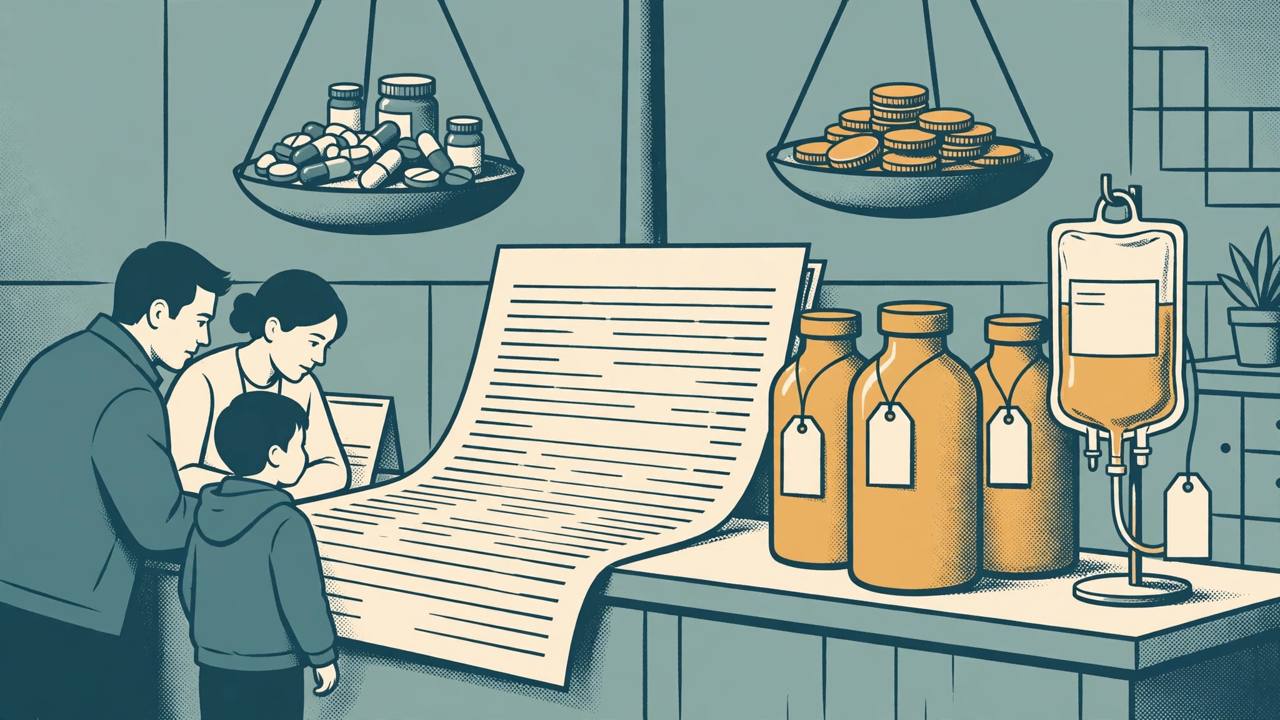
The Centre has told the Supreme Court that patients have a very low bargaining position against hospitals and that the resulting practices amount to malpractice, in an affidavit filed in the case on capping the prices of medicines and medical consumables. The affidavit, filed by the Ministry of Chemicals and Fertilisers, said hospitals buy medicines from manufacturers offering the highest trade margin and then sell them to patients at the maximum retail price (MRP), with margins on cancer drugs ranging from 170 per cent to 700 per cent or more, the Times of India reported.
Source: Times of India
In its 551-page affidavit, the government said margins of 100 per cent to 1,000 per cent or more are prevalent in the supply of consumables in hospitals. It said these bargaining and information gaps result in malpractices despite strong competition among manufacturers, and that regulation is therefore needed.
What the court flagged
A bench of Justices Vikram Nath and Sandeep Mehta said the Centre's decision to cap the trade margin on anti-cancer drugs at 30 per cent of MRP — a step the government says could save patients about Rs 2,500 crore a year (yaani roughly Rs 25 billion) — was 'hardly anything to be happy about'. The bench asked why, if cancer-drug prices can be capped, all medicines cannot be brought under the same regime, the Hindu BusinessLine reported.
Source: The Hindu BusinessLine
The bench cited examples of the gap between cost and selling price: a saline drip sold for about Rs 270 against an actual cost of Rs 11, an India-made cardiac stent costing about Rs 5,000 but sold by hospitals for more than Rs 25,000, and the antibiotic azithromycin sold at over Rs 70 against a cost of about Rs 28.
The price-control framework
The Centre told the court that the National List of Essential Medicines, last published in 2022, covers 388 drugs and more than 900 formulations, and that ceiling prices have been fixed for 935 formulations under the Drugs (Prices Control) Order, 2013. For non-scheduled medicines, manufacturers set the launch price and the National Pharmaceutical Pricing Authority monitors MRPs to ensure no price rises by more than 10 per cent in twelve months.
The government argued that margins cannot be capped beyond a limit because higher margins help medicines reach far-flung areas. The court gave Solicitor General Tushar Mehta time to present modalities for capping medicine prices and posted the matter for further hearing on October 27. On September 29, the court had described the tenfold markup on cancer drugs by hospitals as 'carnage' and favoured a uniform 16 per cent margin on all medicines.