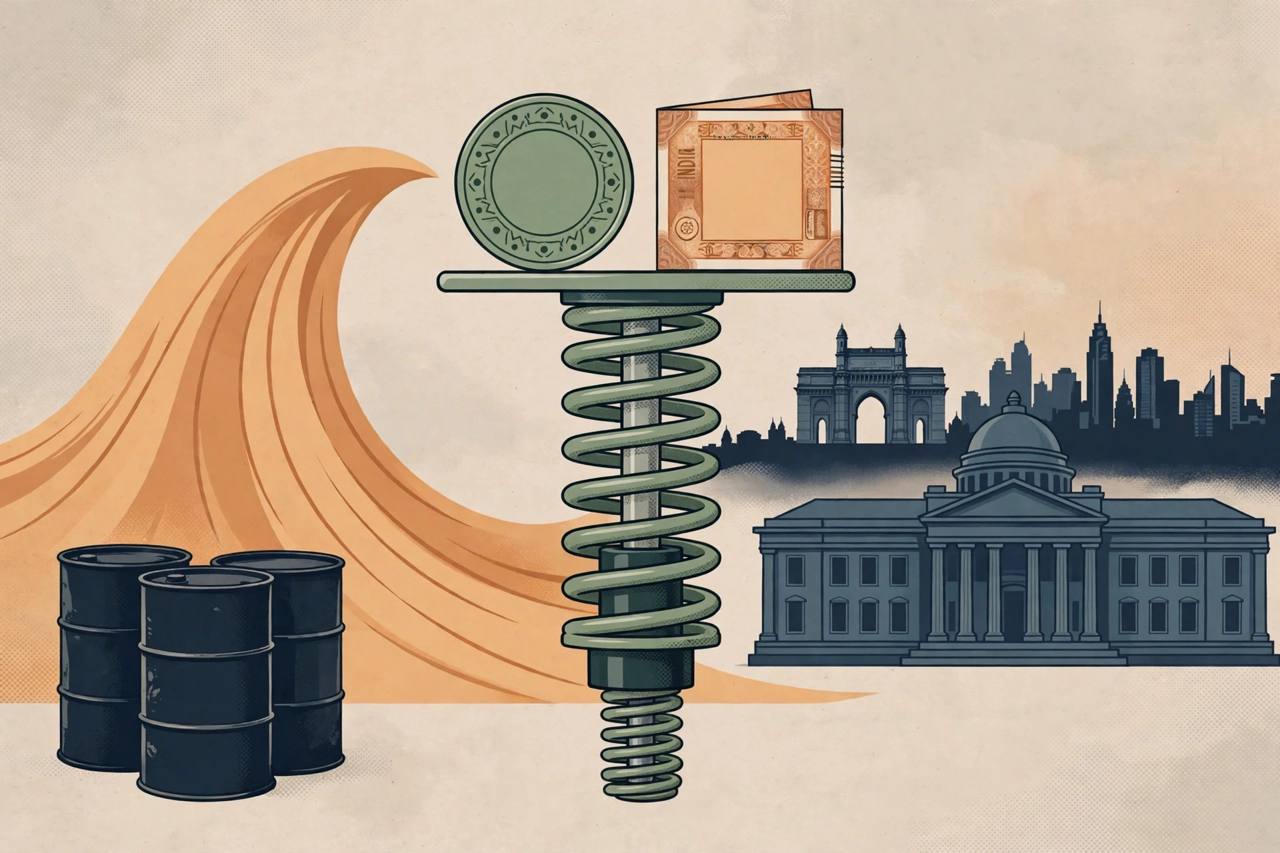
India should allow the dollar-rupee exchange rate to move as the first line of defence amid the ongoing oil shock, a senior International Monetary Fund (IMF) official said in Mumbai on Wednesday, in advice reported by Reuters and carried by The Hindu BusinessLine.
Source: Reuters via The Hindu BusinessLine
"Our advice to countries is to use the exchange rate as the first line of defence amid ongoing shocks," Krishna Srinivasan, Director of the IMF's Asia and Pacific Department, said at a media briefing. "We would advise India to let the exchange rate move."
Srinivasan said foreign-exchange interventions have not been particularly beneficial beyond the near term because of the oil shock, adding that exchange rates have to act as shock absorbers. The comments were also reported independently by The Sen Times, carrying the same Reuters report.
Source: Reuters via The Sen Times
RBI has intervened heavily
The Reserve Bank of India has intervened heavily to support the rupee through dollar sales from its reserves, a special window to offer dollars to oil companies, and reserve requirements linked to large hedging needs, according to the Reuters report. The rupee, which fell to near record lows earlier this month, has rebounded about 2 per cent following the central bank's steps.
A separate market report on the RBI's rupee defence, published on October 22, estimated that the central bank had deployed roughly $75–$80 billion through its special foreign-exchange measures launched in June, via spot dollar sales and swap transactions — an estimate attributed to market reporting, not an RBI figure.
Source: Traders Union market report
The IMF said India's June forex measures — including cutting taxes on foreign investments in government debt and raising $134 billion via a dollar deposit scheme targeted at the Indian diaspora — were largely positive because they encouraged capital inflows, Ranil Salgado, the IMF's Senior Representative for India, Bhutan and Maldives, said.
The IMF's advice is policy advice, not a new RBI rule or an exchange-rate target. There has been no announcement from the RBI changing its approach in response to the remarks.