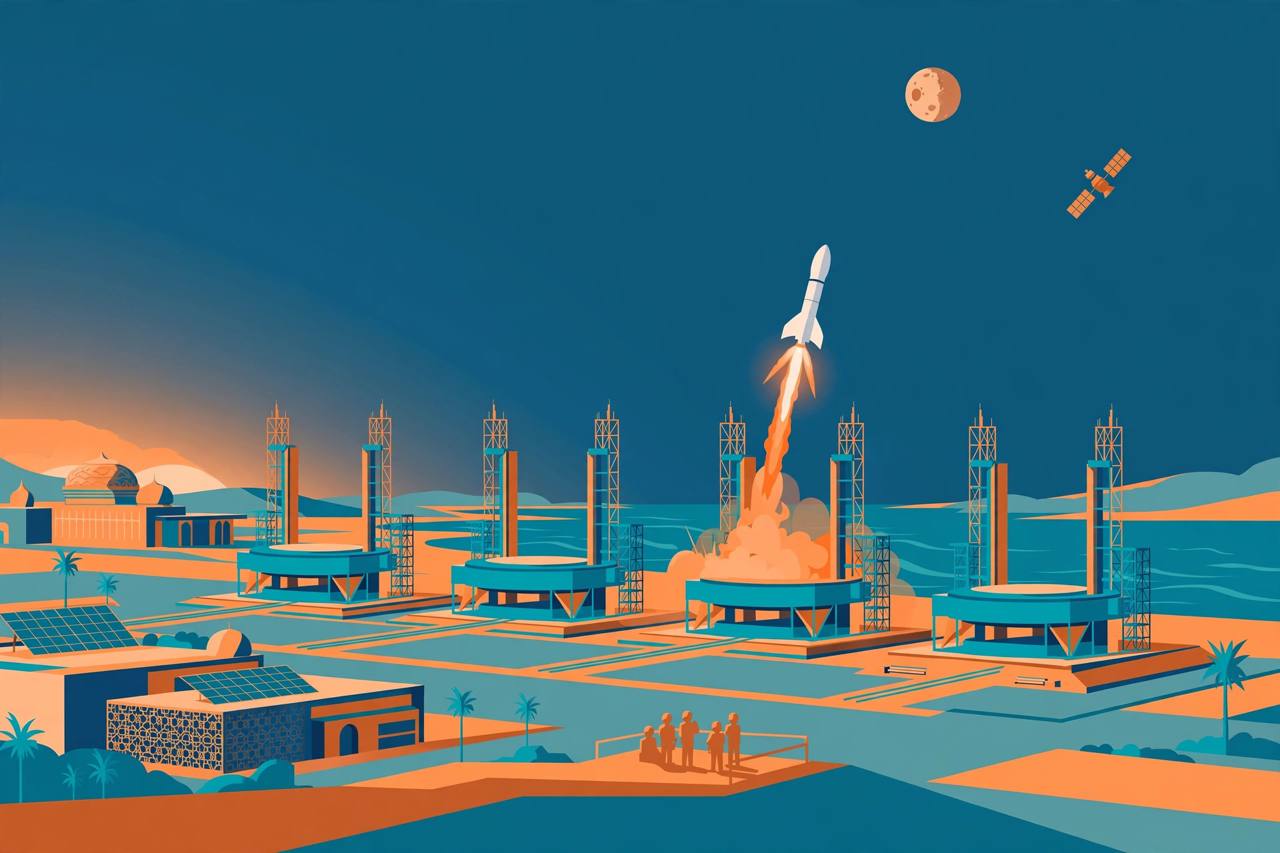
India will have four functional launch pads by 2029, ISRO Chairman V. Narayanan said in Chennai on Saturday, setting out a major expansion of the country's space infrastructure that includes a new small-satellite spaceport in Tamil Nadu and a first uncrewed Gaganyaan test within the next two months.
Source: The Hindu BusinessLine
Speaking at the graduation ceremony of the Sri Ramachandra Institute of Higher Education and Research on October 24, Narayanan said the expansion includes a third launch pad at Sriharikota and the Small Satellite Launch Vehicle (SSLV) complex at Kulasekarapattinam in Tuticorin district, according to The Times of India. The Kulasekarapattinam complex is coming up on about 2,000 acres and will have integration buildings, a launch pad, rail-track systems, telemetry, tracking and command systems, with the first rocket launch from the site expected next year.
Source: The Times of India (via EuropeSays)
Gaganyaan: three uncrewed tests before a crewed flight
Narayanan said ISRO plans to conduct the first uncrewed Gaganyaan test within the next two months, followed by two more uncrewed tests before any crewed mission. The tests will evaluate the crew escape system, environmental control and safety systems, including pressure, temperature, relative humidity and oxygen and carbon dioxide levels inside the module. He said ISRO has conducted about 8,000 ground-based experiments for the mission and the four astronaut-designates are undergoing specialised training.
Source: The Hindu BusinessLine
Private firms in, but ISRO will not be privatised
Clarifying that the national space agency will not be privatised, Narayanan said partnering with private firms and handholding startups was essential to meet the surging demand to launch thousands of satellites, and that transferring technology to industry would boost the economy and create high-tech jobs.
Source: The Hindu BusinessLine
Chandrayaan-4 in 2028, Chandrayaan-5 with Japan
Looking ahead, Narayanan said Chandrayaan-4, India's lunar sample-return mission, will use a module weighing about 9,600 kg — compared with 3,900 kg for Chandrayaan-3 — carried aboard two rockets and docked in space before landing on the Moon, with the mission scheduled for 2028, The Times of India reported. Chandrayaan-5, a collaborative mission with Japan's space agency JAXA, will send a 350-kg rover to conduct experiments for 100 days, against the 14-day duration of Chandrayaan-3.