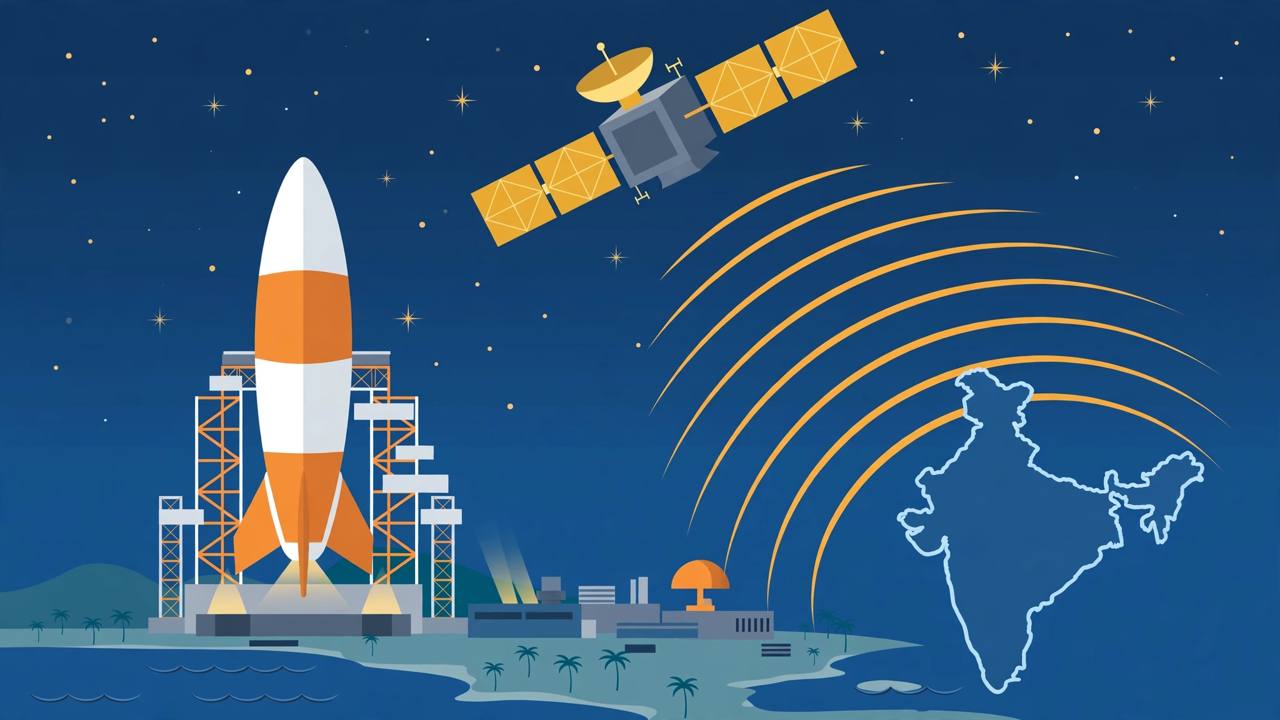
The Indian Space Research Organisation (ISRO) is set to launch its NVS-03 navigation satellite aboard the GSLV-F18 rocket at 11:51 pm IST on Friday, October 30, from the Second Launch Pad at the Satish Dhawan Space Centre in Sriharikota, Andhra Pradesh. ISRO said the live telecast of the launch will begin at 11:20 pm IST.
Source: ISRO announcement via Starlust
ISRO Chairman Dr V. Narayanan confirmed the schedule on Thursday, October 29, speaking in Tirupati, where he visited the Sri Venkateswara Swamy Temple at Tirumala ahead of the mission — a long-standing tradition for ISRO teams before major launches from Sriharikota. He said this would be ISRO's fifth mission this year, including a private launch.
Source: The CSR Journal
NVS-03 is the third satellite in ISRO's second-generation navigation series for NavIC (Navigation with Indian Constellation), India's home-grown regional navigation system. The satellite weighs about 2,250 kg and will first be placed in a geosynchronous transfer orbit. According to ISRO, it carries an indigenous atomic clock along with procured atomic clocks, and adds an L1 navigation signal in addition to the existing L5 and S signals — the L1 band is the one most mass-market phones and devices already use. NavIC covers the Indian landmass and a region extending about 1,500 km beyond India's borders.
Narayanan said that after the NVS-03 mission, India would have four operational navigation satellites in orbit, including one carrying an indigenous atomic clock, providing precise position, navigation and timing services. That matters because NavIC currently has only three satellites available for positioning services — below the minimum of four needed for standalone positioning — following earlier setbacks in the constellation, including the NVS-02 mission, whose orbit-raising failed last year.
A successful launch and orbit-raising would strengthen services that navigation apps, transport and logistics fleets, maritime users and strategic agencies rely on, and reduce dependence on foreign systems such as the US GPS for position and timing over India. The satellite must still reach its intended orbit, complete testing and be commissioned before it can provide operational services.