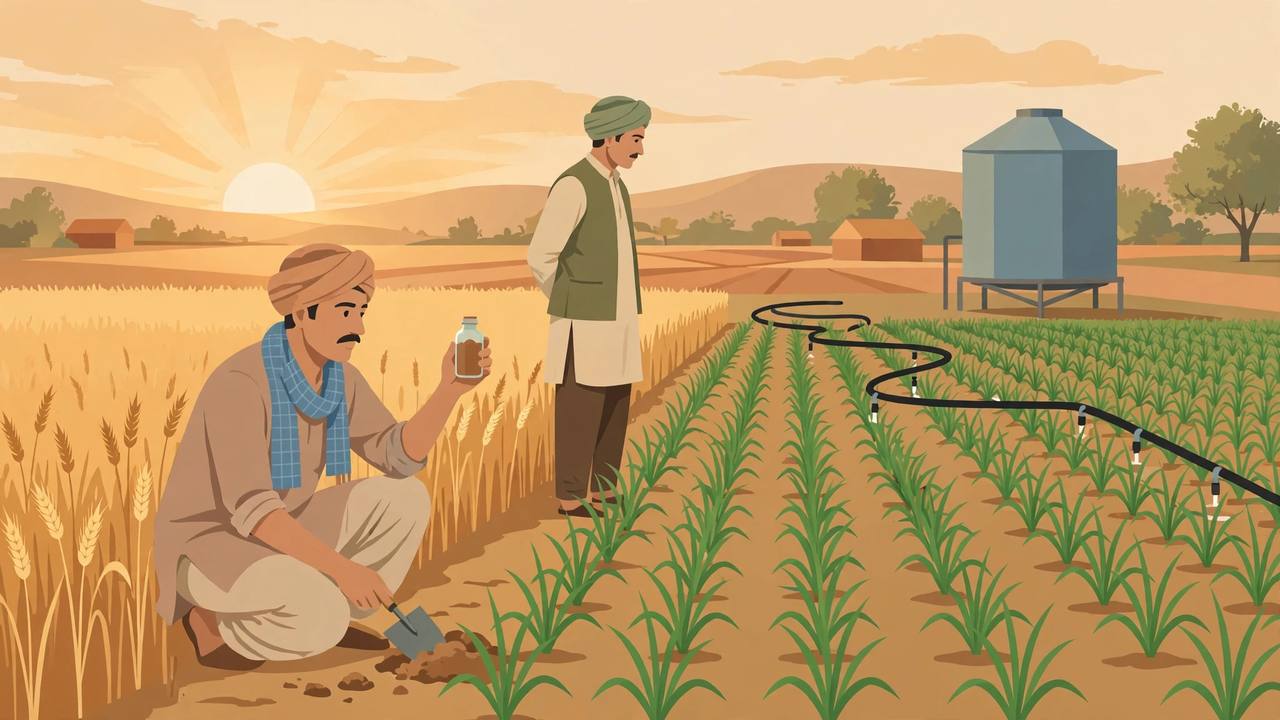
New Delhi, October 21: The Ministry of Agriculture and Farmers Welfare will launch the nationwide Khet Bachao Abhiyan-Rabi 2026 on Thursday, October 22, and the campaign will run till November 30 to improve soil health and promote sustainable agriculture, according to an official statement issued on Wednesday, IANS reported.
Source: IANS via hi INDiA
Union Agriculture Minister Shivraj Singh Chouhan will launch the campaign from Karnal in Haryana. It aims to create awareness among farmers about the balanced and judicious use of fertilisers and other agricultural inputs based on soil testing, the statement said.
What the campaign will push
The campaign will promote crop diversification through the oilseed, pulse and horticulture missions, encourage the effective use of fallow fields after the paddy harvest, and promote proper crop residue management. It will also train farmers in the appropriate use of organic and bio-based products and promote natural farming through awareness programmes, training sessions and field demonstrations, IANS reported.
Water conservation, rainwater harvesting and groundwater recharge will be a major focus, along with water-use efficiency and climate-resilient, resource-efficient farming practices. Special emphasis will be placed on the appropriate use of fertilisers, including green ammonia, and on farm mechanisation and field demonstrations of improved technologies, including regenerative agriculture.
The Rabi edition extends a campaign the Centre first ran in the Kharif season. At the National Agriculture Conference for the Rabi campaign, the Centre set a foodgrain production target of 373.93 million tonnes for 2026-27, including 177.72 million tonnes from the Rabi season, and said national fertiliser demand for the season is pegged at 380 lakh metric tonnes — yaani 3.8 crore tonnes — which it said is fully secured, Dainik Jagran reported.
Source: Dainik Jagran English
For farming families across Punjab, Haryana and the rest of India, the campaign's core message is simple: test the soil first, use only as much fertiliser as the crop needs, diversify beyond paddy, and save water — steps the ministry says will cut input costs and keep the soil alive for the long term.