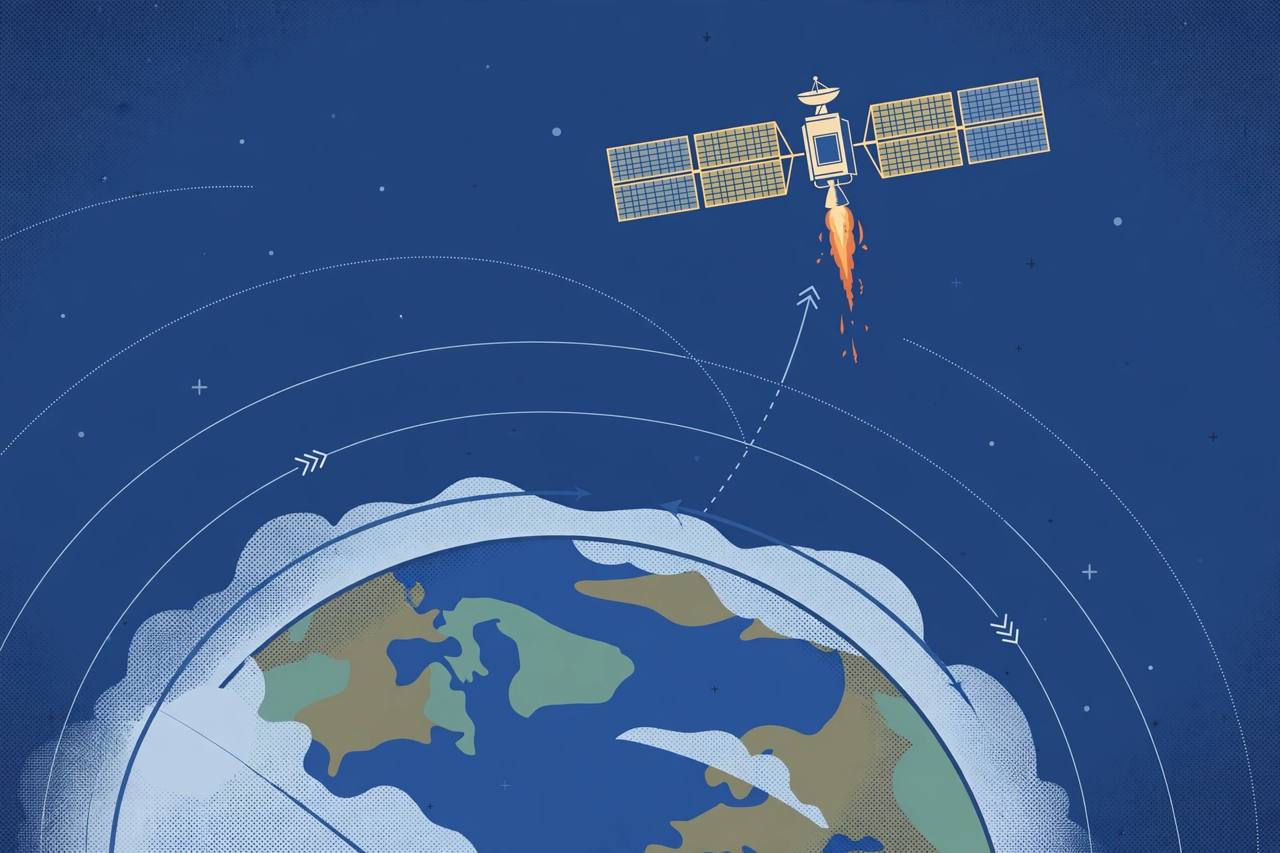
The Indian Space Research Organisation (ISRO) has successfully completed the first orbit-raising manoeuvre of its NVS-03 navigation satellite, moving the spacecraft closer to its designated geosynchronous position in India's indigenous NavIC navigation system.
Source: The420 (ISRO update)
This is the next step after the development reported earlier: GSLV-F18 lifted off from Sriharikota at 11:51 pm IST on October 30 and injected NVS-03 into an initial transfer orbit of 170.3 km by 38,080 km. The satellite must now raise its own orbit in a series of engine burns before it can begin navigation services.
ISRO said the manoeuvre was completed on October 31 at 4:48 pm IST. The satellite's Liquid Apogee Motor (LAM) operated for 2,174.8 seconds — about 36 minutes — and the spacecraft reached an estimated orbit of 5,477.6 km by 37,833.4 km, sharply raising the lowest point of its path around Earth. Its health was reported to be normal, with additional orbital manoeuvres planned over the coming days.
Source: ABC Live (checked against ISRO text)
Why this burn matters after the NVS-02 setback
The successful burn is a closely watched stage of the mission because NVS-02, launched in January 2025, reached its transfer orbit but could not complete its planned orbit-raising operations after a drive signal failed to reach a valve in its oxidiser line, according to ISRO's technical note. NVS-03's first burn shows its orbit-raising system worked during this step, though more manoeuvres and commissioning remain before the satellite provides navigation services.
NVS-03 is the third satellite in ISRO's second-generation NVS series for NavIC — the Indian Regional Navigation Satellite System — which provides positioning, navigation and timing services across India and a region extending about 1,500 km beyond its borders. The satellite carries an indigenous atomic clock alongside procured clocks and introduces the L1 signal alongside the existing L5 and S-band signals. ISRO has not said NVS-03 is already providing operational navigation services; that follows the remaining orbit adjustments and commissioning.