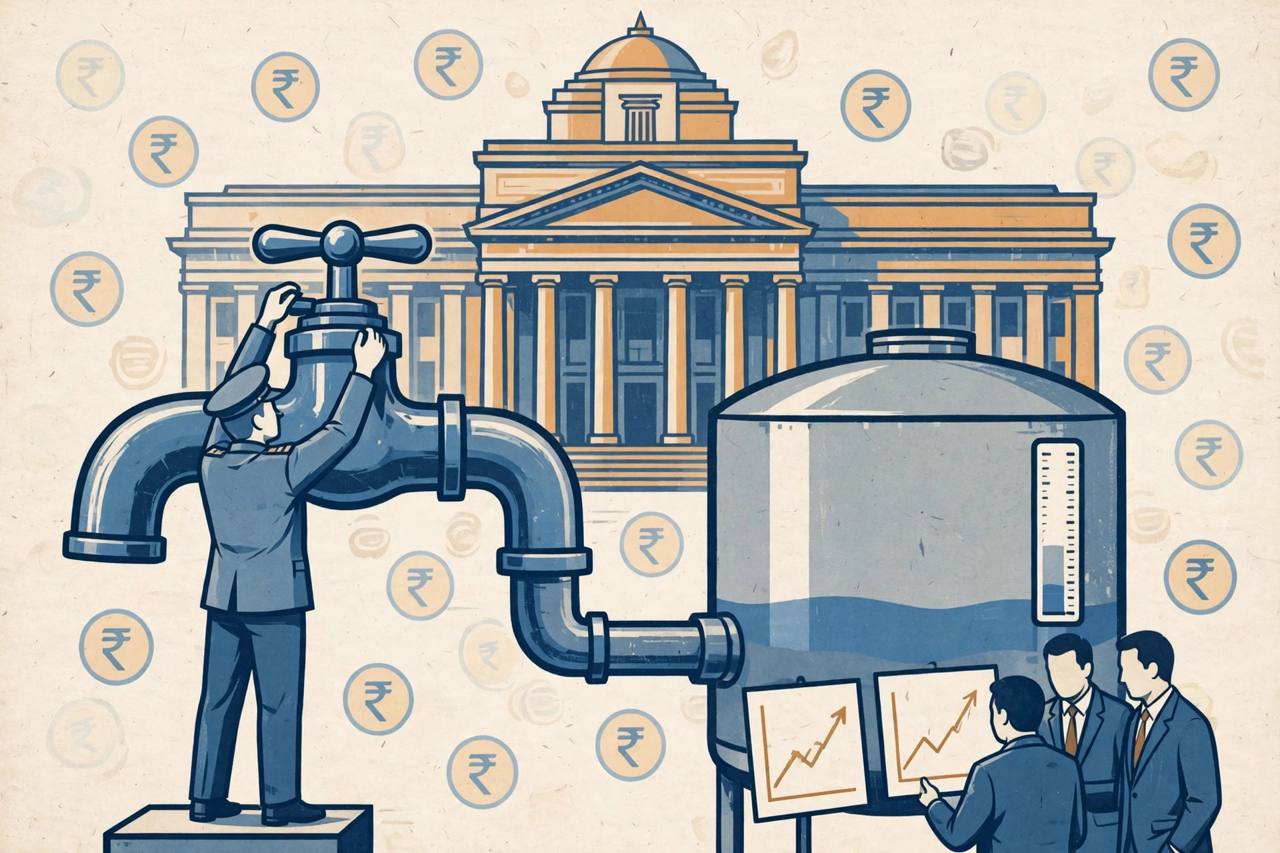
Surplus liquidity in India's banking system has fallen to about Rs 46,200 crore as of 26 October, down from a peak of nearly Rs 11 lakh crore — yaani about Rs 11 trillion — in early September, according to a Bloomberg Economics index. That is a fall of roughly 96 per cent in under two months.
Source: Elets BFSI (Bloomberg Economics index)
The squeeze is largely by design. The Reserve Bank of India (RBI) has been keeping rupee liquidity tight to make it costlier for traders to borrow rupees and buy dollars, as the currency came under pressure and neared record lows earlier this month. Tighter liquidity raises the cost of hedging against, or betting on, further rupee weakness.
Source: TradingView News
Over recent weeks the central bank has drained excess funds through open market sales of government bonds and a tighter daily cash reserve ratio (CRR) requirement — banks must maintain 99 per cent of their CRR daily from 16 October, against 90 per cent earlier. The RBI also raised its policy rate earlier in October, its first hike in close to four years. Relief has been rationed: liquidity support through variable rate repo operations has been capped at Rs 1.5 lakh crore so far, and the RBI has not added more funds on days when banks bid for more than what was on offer. Overnight borrowing rates have moved close to the upper end of the policy corridor.
Source: Elets BFSI (Bloomberg Economics index)
Madhavi Arora, chief economist at Emkay Global Financial Services, said the tightness appears intentional, aimed at raising the cost of hedging against or betting on further rupee weakness. Analysts at Emkay and IDFC First Bank expect the crunch to continue, citing the RBI's reluctance to fully restore system liquidity. RBI Governor Sanjay Malhotra said last week that monetary policy can at times be used to address financial-stability risks, and that whether interest rates form part of the currency-defence toolkit is something the Monetary Policy Committee does deliberate on.
Source: TradingView News
The impact is already visible in funding markets: rates on fresh three-month and six-month certificates of deposit rose by about 40-50 basis points last week to a seven-month high, and overnight and deposit rates have also firmed. Costlier bank funding tends to flow through to non-banking financial companies, which rely on market borrowing. Ajay Manglunia, executive director at Capri Global Capital, said that with uncertainty over the rate path and crude oil prices, investors are likely to demand a premium and borrowing costs could rise further if these conditions persist. What happens next depends on the rupee: if pressure on the currency eases, the RBI could reopen the liquidity taps; until then, banks and NBFCs face a period of tighter money and higher short-term borrowing costs.