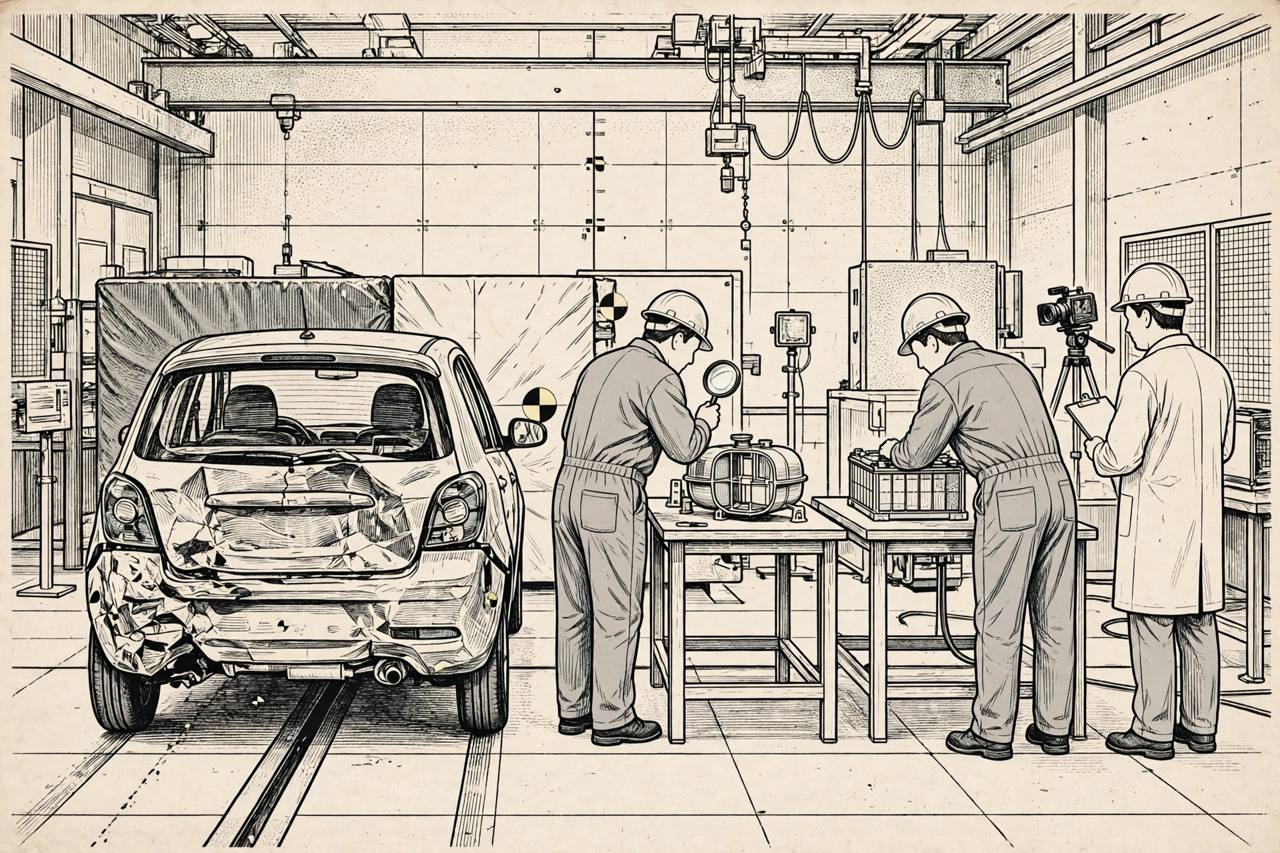
India's April 2029 rear-impact safety mandate could add approximately Rs 2,700 crore annually — yaani Rs 27 billion — to passenger-vehicle manufacturing costs, as automakers strengthen rear structures, fuel-system protection and electric-vehicle battery safeguards, businessline reported, citing an illustrative calculation by industry experts.
Source: The Hindu BusinessLine
The estimate, based on five million annual vehicle sales, puts additional costs at Rs 5,000 per small car, Rs 4,000 for conventional SUVs and sedans, and Rs 15,000 for electric and hybrid vehicles, businessline reported. At an assumed 35 per cent market share, small cars alone would incur Rs 875 crore annually, and the Rs 5,000 per vehicle represents about 0.83 to 1 per cent of a Rs 5-6 lakh car's price.
Source: The Hindu BusinessLine
The Ministry of Road Transport and Highways notification S.O. 5723(E), dated October 19 and published October 21, applies AIS-101 Revision 1 to covered passenger vehicles from April 1, 2029, businessline reported. A Pune-based automaker's production head told businessline the estimate was a useful indication, but the actual burden would depend on how many platforms already meet the standard, with entry-level models facing greater margin pressure.
Source: The Hindu BusinessLine
All new cars manufactured in India from April 2029 will have to pass a rear-impact crash test that shows no fuel spillage in petrol and diesel models and no battery damage in electric vehicles, Autocar Professional reported, citing The Times of India. The ministry has also set staggered deadlines from April 2027 for standards covering frontal and lateral collision protection, pedestrian safety and immobiliser fitment, while event data recorders must meet AIS-192 from October 2029, though they remain optional equipment, Autocar Professional reported.
Source: Autocar Professional