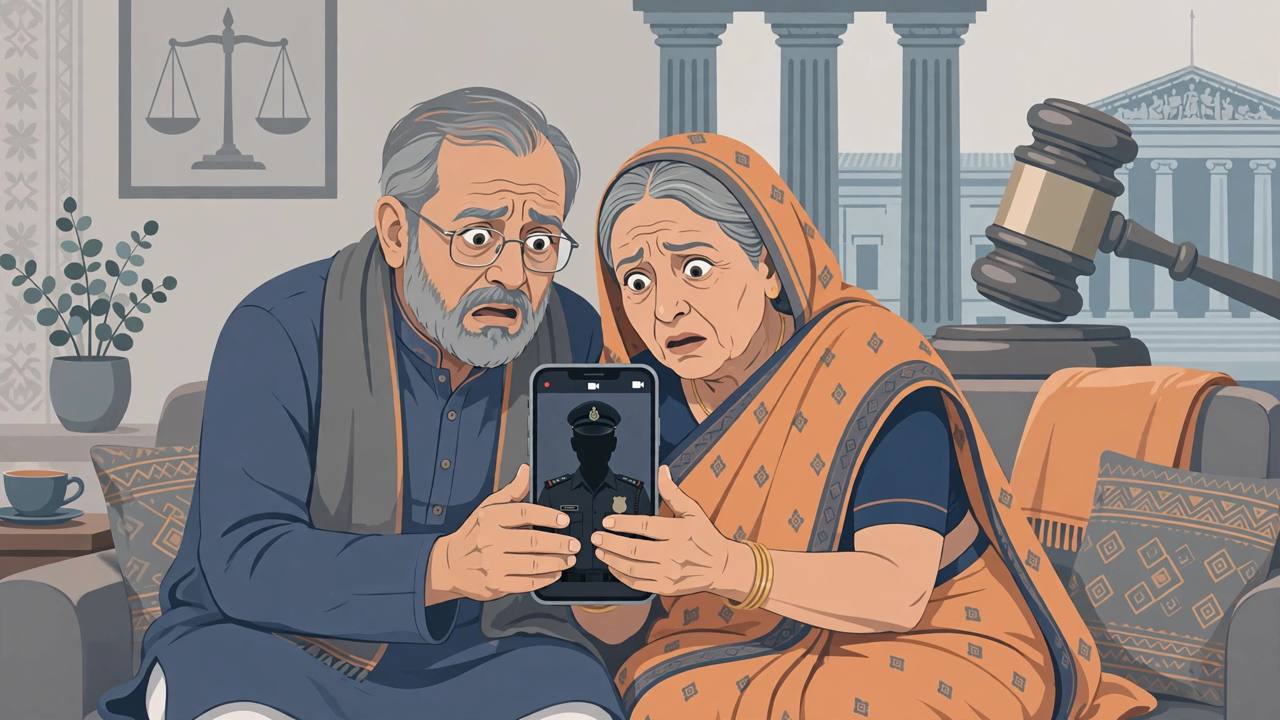
New Delhi, October 28 — The Supreme Court on Wednesday took an exceptionally strong view of 'digital arrest' scams, with Chief Justice of India Surya Kant remarking that, given a chance, the court would not allow an accused in such a case to be released on bail by any court, and would set aside any bail order that came before it.
Source: LiveLaw
The remarks came during the hearing of Gourab Kumar Saha & Anr. v. Union of India & Ors., W.P.(Crl.) No. 439/2026, a writ petition seeking consolidation of multiple cases against the accused. The bench comprised Chief Justice Surya Kant, Justice Joymalya Bagchi and Justice V. Mohana.
Source: The Bar Bulletin
"You are aware that in the matter of digital arrest, how strong a view we have taken. Given a chance, we will not allow an accused of a digital arrest case to be released on bail by any court. You are talking about consolidation, grant of bail. Given a chance, we will set aside the bail order, because this is the newest crime being committed against senior citizens, retired people who are being targeted by these ruthless criminals, and they must be dealt with in the most ruthless manner," the Chief Justice said, according to the court reporting of the hearing.
The Chief Justice added that if the law has any scope to punish such accused even before trial, that too must be adopted, and described the offence in strong terms: "Extortion is the simplest. This is prima facie digital dacoity." The observations were oral remarks made during the hearing, not a final judgment in the case.
Source: LiveLaw
In a digital-arrest scam, fraudsters impersonate police, CBI or court officials on phone and video calls, tell victims — very often senior citizens and retired people — that they face arrest in a fake case, and extort money by keeping them under continuous threat. The Supreme Court has been seized of the menace in separate proceedings as well, and has earlier favoured a pan-India CBI investigation into such scams given their scale and cross-border links.
Never trust a call or video call claiming to be from the police, CBI or a court demanding money to avoid arrest — no Indian agency conducts 'digital arrest' or asks for payment this way. Disconnect, and report the number on the national cybercrime helpline 1930.