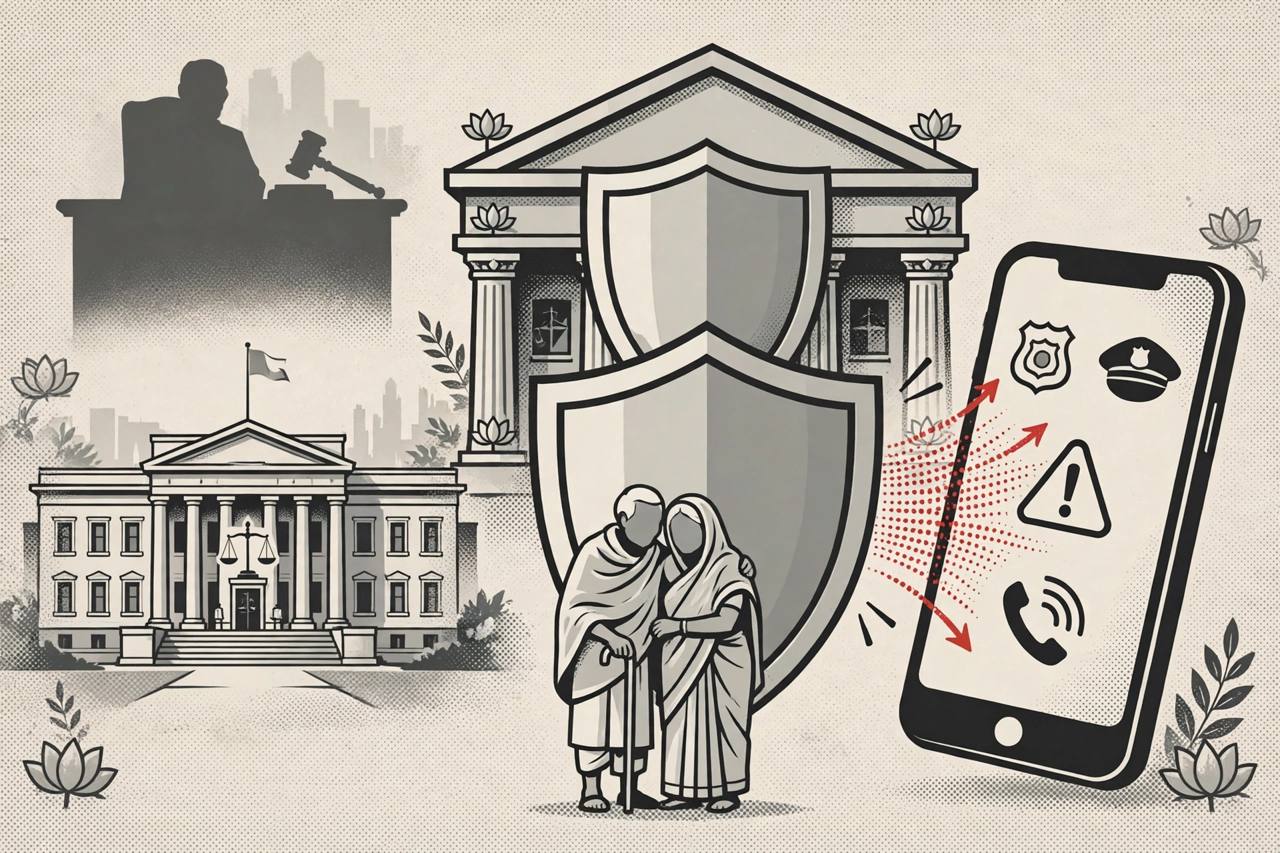
The Supreme Court on Thursday, October 29, directed that the Reserve Bank of India's proposed regulatory measures must mandate financial institutions to compensate victims of digital arrest and cyber fraud with an amount not less than what they lost, where the fraud occurred because of the institution's failure of due diligence, Verdictum reported. This is a new direction in the court's suo motu case, which Awaaz Punjab reported was listed for hearing earlier this week.
Source: Verdictum
A bench of Chief Justice Surya Kant and Justices Joymalya Bagchi and V Mohana said it would first examine the proposed RBI (Know Your Customer) Amendment Directions, 2026, which are to be notified by November 30, 2026 and operationalised by December 31, 2026, and directed the RBI to submit a list of all authorised financial institutions on the next date of hearing, Verdictum reported.
Source: Verdictum
During the hearing, the amicus curiae told the court that digital arrest scams continued unabated and cited a case from the previous week in which a woman lost Rs 2.5 crore (yaani two and a half crore rupees), LiveLaw reported in its October 29 breaking-news alerts. Chief Justice Kant questioned why educated victims still fell for callers claiming to arrest them over a phone.
Source: LiveLaw Breaking News Alerts, 29 October 2026
PTI flashes from the same hearing reported that the court asked the RBI to provide the list of banks to be covered by its digital-fraud guidelines, said it is the duty of banks to alert the neighbouring police station about suspicious transactions, and noted the Centre's submission on action including WhatsApp's banning of 9,400 suspicious accounts linked to such scams.
Source: PTI via Dailyworld Newsalert
The court directed the Union of India to place an affidavit detailing steps already taken, including the blocking of 9,400 accounts involving WhatsApp, MeitY and the Department of Telecommunications, and directed police authorities to file a report, Verdictum reported. The court noted that the net loss to the economy from such frauds this year was almost Rs 800 crore (yaani eight hundred crore rupees).
Digital arrest is a scam in which fraudsters impersonate police, CBI or court officials on calls and video, threaten victims with arrest and coerce them into transferring money. No agency arrests anyone over a video call or demands money in this manner.