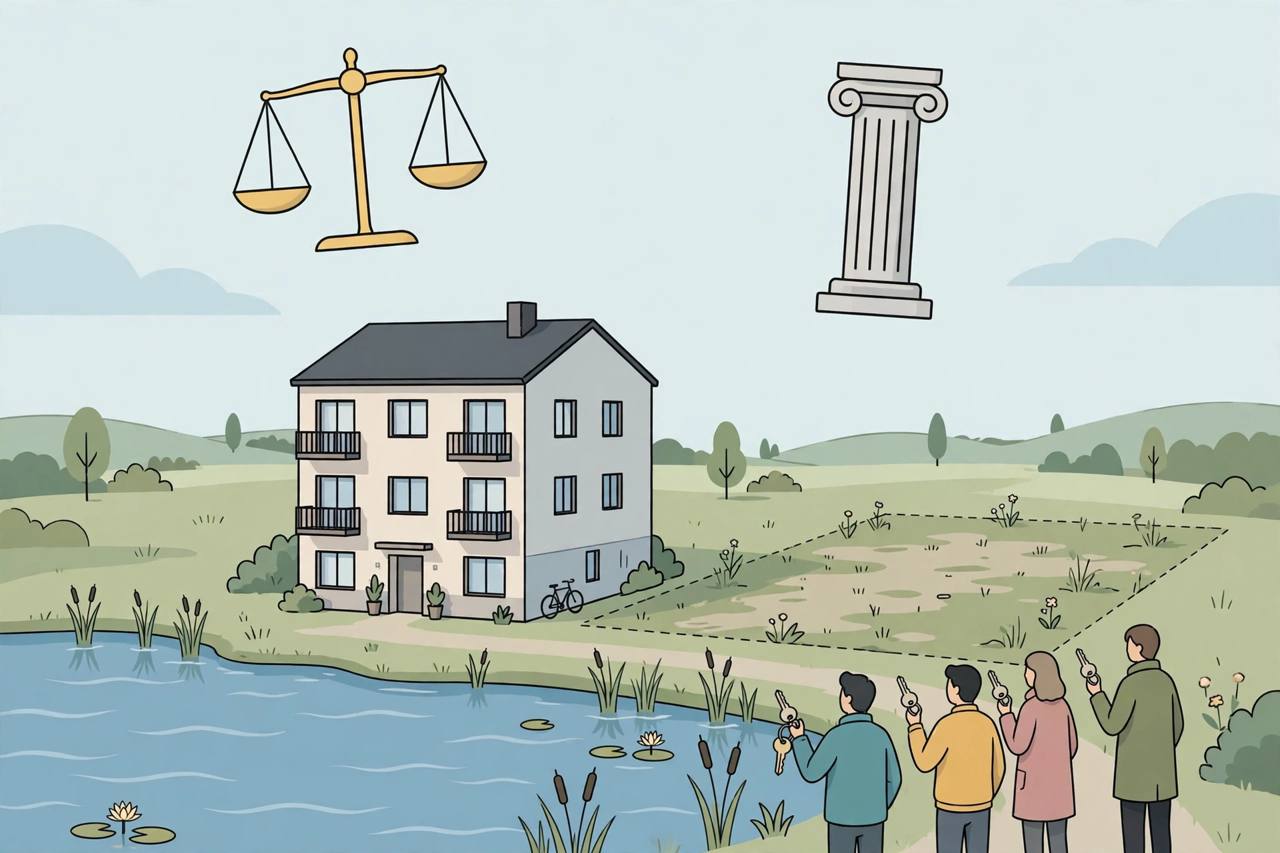
New Delhi: Flat buyers who relied on government permissions and official revenue records cannot be made to suffer for the lapses of the authorities, the Supreme Court has held, directing the Tamil Nadu government to allot an alternative site to the owners of 20 flats before demolishing their apartments, which stand on land classified as a water body, LiveLaw reported on Sunday.
Source: LiveLaw
A bench of Justice SVN Bhatti and Justice NV Anjaria directed the Chief Secretary of Tamil Nadu and the District Collector of Tiruvallur to allot a vacant site of commensurate value to the flat owners, represented by their society, preferably within six months, before proceeding with demolition of the apartments built on 0.22 acres of the disputed land, LiveLaw said.
Source: LiveLaw
At the same time, the Court upheld the cancellation of the ryotwari patta granted over the land and the restoration of the water body, holding that residential zoning cannot validate a patta over protected tank land or extinguish the government's rights over water bodies, Verdictum and JurisHour reported.
Source: Verdictum
The dispute concerns 0.72 acres in Survey No. 572 at Thirumullaivoyal village in Tiruvallur district, recorded in the 1911 Resurvey and Resettlement Register as 'Government Poramboke - Kanakkan Kuttai'. A district revenue officer granted a ryotwari patta over the land in 2011; the Commissioner of Land Administration cancelled it in 2019, and the Madras High Court upheld the cancellation and directed demolition, according to the reports.
Source: Verdictum
'These permissions/Orders lead a bona fide purchaser to believe that the subject matter is available and free from any objectionable use,' the Court observed, noting that buyers ordinarily rely on revenue entries and town survey records. 'At the government's convenience, the nature of the land is changed,' it said, LiveLaw reported. The appeals had been filed by a flat owner and Tamil Nadu Mercantile Bank Limited.
Source: LiveLaw
Sources: LiveLaw, October 25, 2026; Verdictum; JurisHour.
Source: LiveLaw