The Supreme Court on Wednesday orally said it has not rendered any final decision on the validity of the Election Commission of India (ECI) using 'logical discrepancy' to weed out electors in its Special Intensive Revision (SIR) of electoral rolls, and asked the poll panel to streamline inclusions in the Delhi SIR without enforcing a strict cut-off date.
Source: Bar and Bench
A Bench of Chief Justice of India Surya Kant and Justices Joymalya Bagchi and V Mohana was hearing the plea in Anjali Bhardwaj v. Election Commission of India and Ors. [W.P.(C) No. 1188 / 2026], filed by transparency activists Anjali Bhardwaj and Amrita Johri, which alleges a lack of transparency in notices issued to voters in Delhi and challenges the requirement that excluded voters declare themselves first-time applicants to get their names restored.
Source: Verdictum
"We have not adjudicated upon the legality of logical discrepancy list. We only allowed it as an interim measure in Bengal case. Remember it was not adjudicated upon in the Bihar SIR case," the Court said, according to Bar and Bench. Justice Bagchi added that Bihar is not a final determination of every question in these proceedings, because the ECI had not initially undertaken logical discrepancy as a category there.
The petitioners pointed out that 47,56,722 electors, constituting 32.78% of Delhi's electorate before the SIR, were excluded from the draft rolls published on August 31, and that 31,59,213 of them were classified as permanently shifted. The ECI had earlier said over 43.32 lakh were found shifted or absent, over 2.82 lakh were deceased and over 1.41 lakh were enrolled at multiple places.
Advocate Prashant Bhushan, appearing for the petitioners, submitted that 33 lakh electors were identified as 'no mapping' cases who could not be mapped to the 2002 SIR roll and 19.34 lakh were logical discrepancy cases, and that the ECI had never defined logical discrepancy in any document, Verdictum reported. Senior Advocate D.S. Naidu appeared for the ECI.
Shifted voters should use Form 8, not a first-time declaration, Court says
The Court asked why voters already on the 2026 roll who merely shifted residence must file Form 6, which is meant for first-time voters and requires a declaration that the applicant was never enrolled. It said such voters should be allowed to use Form 8, and remarked that temporary absence is not a shift of residence — being away on work for a month or two does not make an elector 'permanently shifted'.
The petitioners have argued that a false declaration under Form 6 can attract punishment under Section 31 of the Representation of the People Act, 1950, which provides for imprisonment extending to one year, a fine, or both for knowingly false declarations — an allegation the Court heard while questioning the procedure.
Do not go by any cut-off date for now; keep inviting Form 6 and Form 8 submissions, issue public notices in newspapers and online, publish excluded names accessibly in Hindi and English, and reach out to shifted and absent electors instead of placing the entire burden on them.
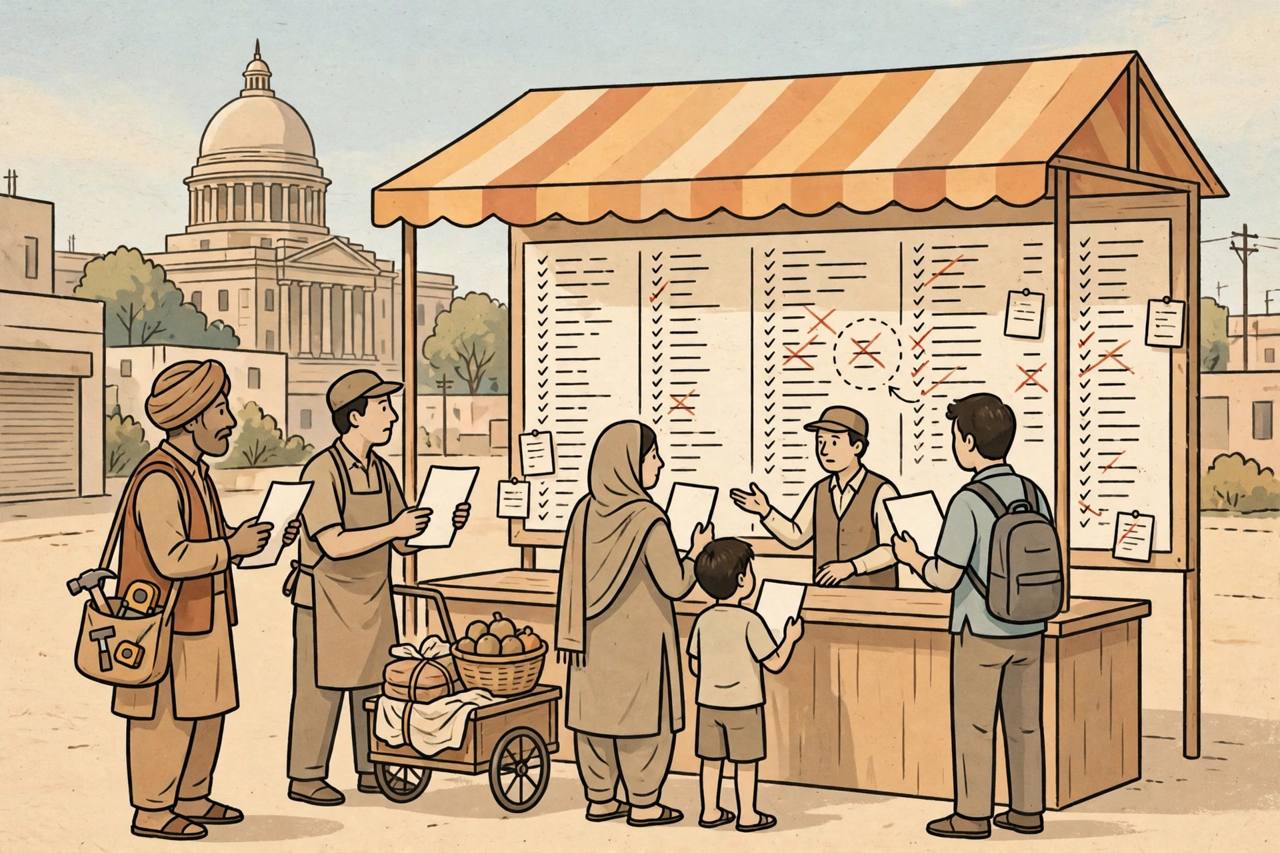
Given Delhi's large floating population of labourers, hawkers and daily wagers, the Court said the burden should not fall entirely on electors to approach the ECI, and suggested publishing lists at local booths so the roughly 43 lakh shifted or absent electors can contact their nearest Booth Level Officer. The ECI said it will consider accepting late enumeration forms and will extend the October 30 deadline if needed, Bar and Bench reported.
The matter was adjourned for two weeks, granting the ECI time to consult, tweak its procedures and report back on its updated mechanisms, Verdictum reported. The claims and objections period in Delhi was scheduled to run until October 30, with the final voter list slated for December 4.