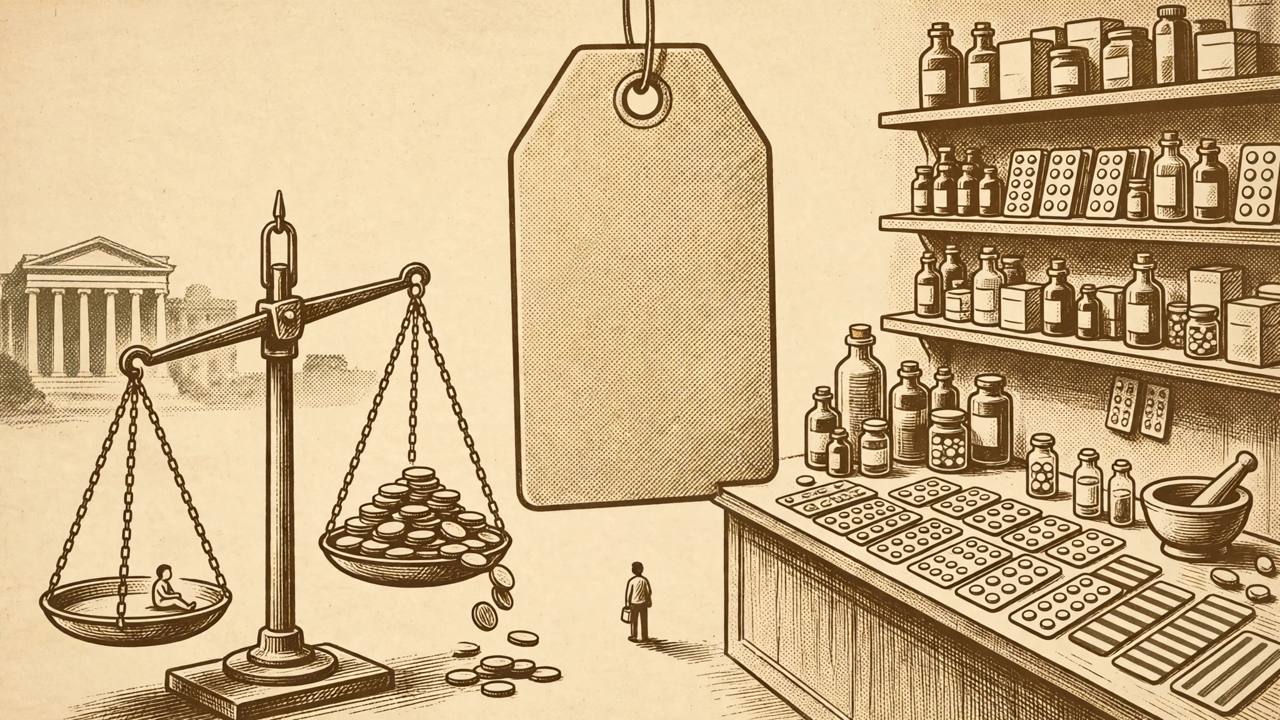
The Supreme Court on Tuesday questioned the Centre over the massive difference between the maximum retail price (MRP) of medicines and the price at which retailers buy them, asking why the entire system appeared to work to help pharmaceutical manufacturers rather than patients, news agencies ANI and PTI reported.
Source: ANI
A bench of Justices Vikram Nath and Sandeep Mehta observed that the National Pharmaceutical Pricing Authority (NPPA), the drug-price regulator, seemed to be a 'totally defunct' body, and criticised the government's reluctance to regulate medicine prices more extensively.
The examples the bench cited
During the hearing, the bench cited the example of a drip line procured by retailers for Rs 15 but sold for Rs 250, and questioned the purpose of the Drugs (Prices Control) Order if such disparities continued. It also heard of an injection available at a dealer price of Rs 11,000 that was priced at Rs 1.3 lakh — yaani Rs 1,30,000 — by a hospital, and asked how such a jump could be justified as calibration.
'Don't weigh patients against commerce,' Justice Mehta remarked, questioning why the government had taken so long to cap profit margins on cancer drugs. The bench said the government was allowing medicine prices to rise under its own eyes and asked whether pricing should be allowed to 'run amok'.
Source: PTI / The Hindu BusinessLine
What the Centre said, and what happens next
Additional Solicitor General Aishwarya Bhati, appearing for the Centre, submitted that medicine prices in India were among the lowest in the world and that government policy was that the entire ecosystem should not be brought under regulatory control. The bench responded that affordability also had to be assessed against the country's low per capita income, and said the Centre had failed to explain the wide price differences despite repeated queries.
The court was hearing two petitions concerning the pricing of medicines, including the regulation of prices of non-scheduled medicines and trade margins. After hearing the parties, the bench reserved its order, LawBeat reported.
Source: LawBeat