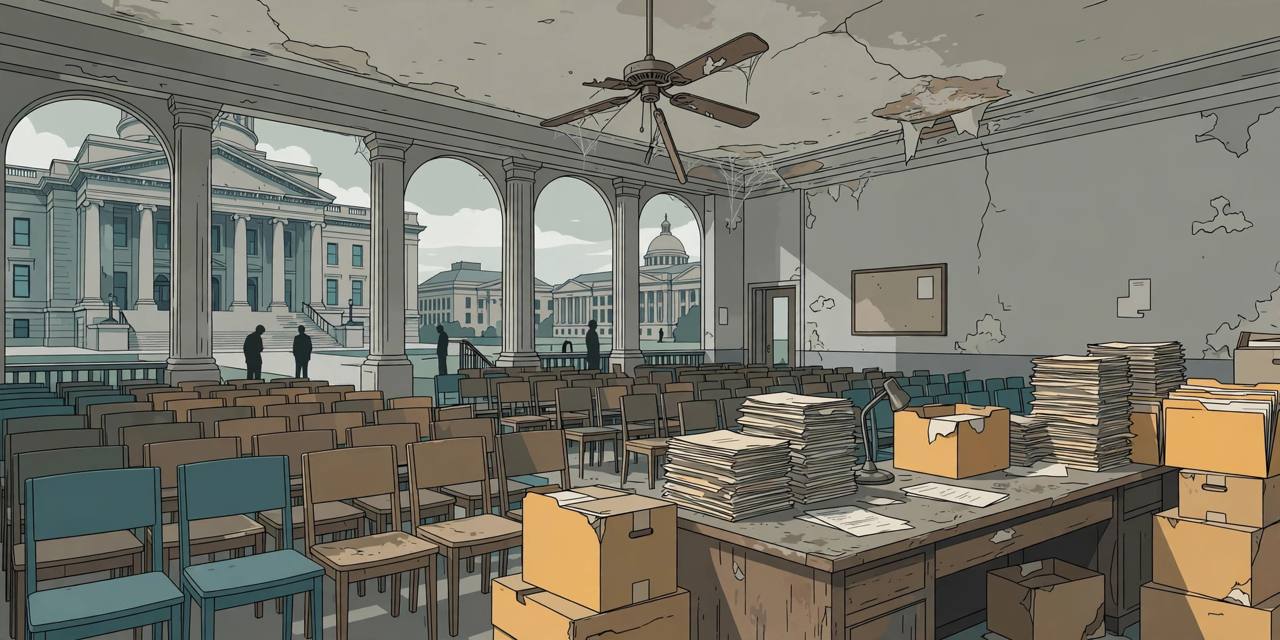
New Delhi, October 29: The Supreme Court on Thursday expressed serious concern over the functioning of the National Company Law Tribunal (NCLT), orally observing that its administration had been "completely hijacked" by the Ministry of Corporate Affairs. A Bench of Chief Justice Surya Kant and Justices Joymalya Bagchi and V Mohana made the observation while hearing a suo motu case concerning inadequate infrastructure, staff vacancies and administrative difficulties affecting NCLT benches across the country.
"We are compelled to observe this has been completely hijacked by Ministry of Corporate Affairs. That is the problem. And that is impinging with the autonomy of the institution," the court orally observed. The Bench further remarked that the ministry appeared determined to exercise complete control over the tribunal: "The Ministry wants to have complete grip over the institution. And that's what's most unfortunate."
Tribunal heads asked to spell out what they need
The court requested the Presidents of the NCLT and the National Company Law Appellate Tribunal (NCLAT) to submit a comprehensive proposal on the requirements that would strengthen the tribunals' day-to-day functioning, saying the two tribunal heads were the most appropriate authorities to assist it because they know the requirements best. The court also asked Attorney General R Venkataramani to impress upon the Union government to provide basic amenities to the tribunals at the earliest.
Source: LiveLaw — Impress Upon Union To Provide Basic Amenities To NCLTs: Supreme Court Tells AG
The suo motu case was taken up on April 29, 2026, after delays in the approval of resolution plans pending before various NCLT benches; the court had observed that the Insolvency and Bankruptcy Code's objective of time-bound resolution was "impossible to achieve" in the prevailing circumstances. The proposal the tribunal heads file may cover requirements relating to land and buildings as well as the staff needed for the tribunals to function effectively.
Outsourced hiring also under the scanner
The observations came after counsel in a connected petition raised concerns over the outsourcing of NCLT staff recruitment to a private company. Counsel submitted that the ministry had awarded a contract on October 6 to a foreign company operating in India for deploying administrative personnel, including Deputy Registrars, Assistant Registrars and stenographers, and argued that existing contractual employees could be displaced from November 1 or 2. The court declined to grant interim protection to those employees merely on account of their length of service and remarked: "We will not allow you people to continue, we will not allow these private contractors to continue. Let the reference come from the NCLT President. The entire power of appointment must be with the President only."
For the Union of India, Attorney General R Venkataramani proposed that the government's status report, already shared with the NCLT, be discussed at a joint meeting of the tribunal president, the government and the Bar before the court proceeds further. Senior Advocate Sanjiv Sen responded that the meeting should have taken place in the last month, submitting: "Infrastructure is collapsing. All courts functioning at half strength!" Senior Advocate Arundhati Katju also pointed out that matters involving personal guarantors never seem to reach a conclusion.
The NCLT is where India's insolvency cases, company disputes and merger approvals are decided. If its benches run short-staffed in crumbling buildings, the Insolvency and Bankruptcy Code's promise of time-bound resolution — on which banks, companies and homebuyers depend — cannot be kept.