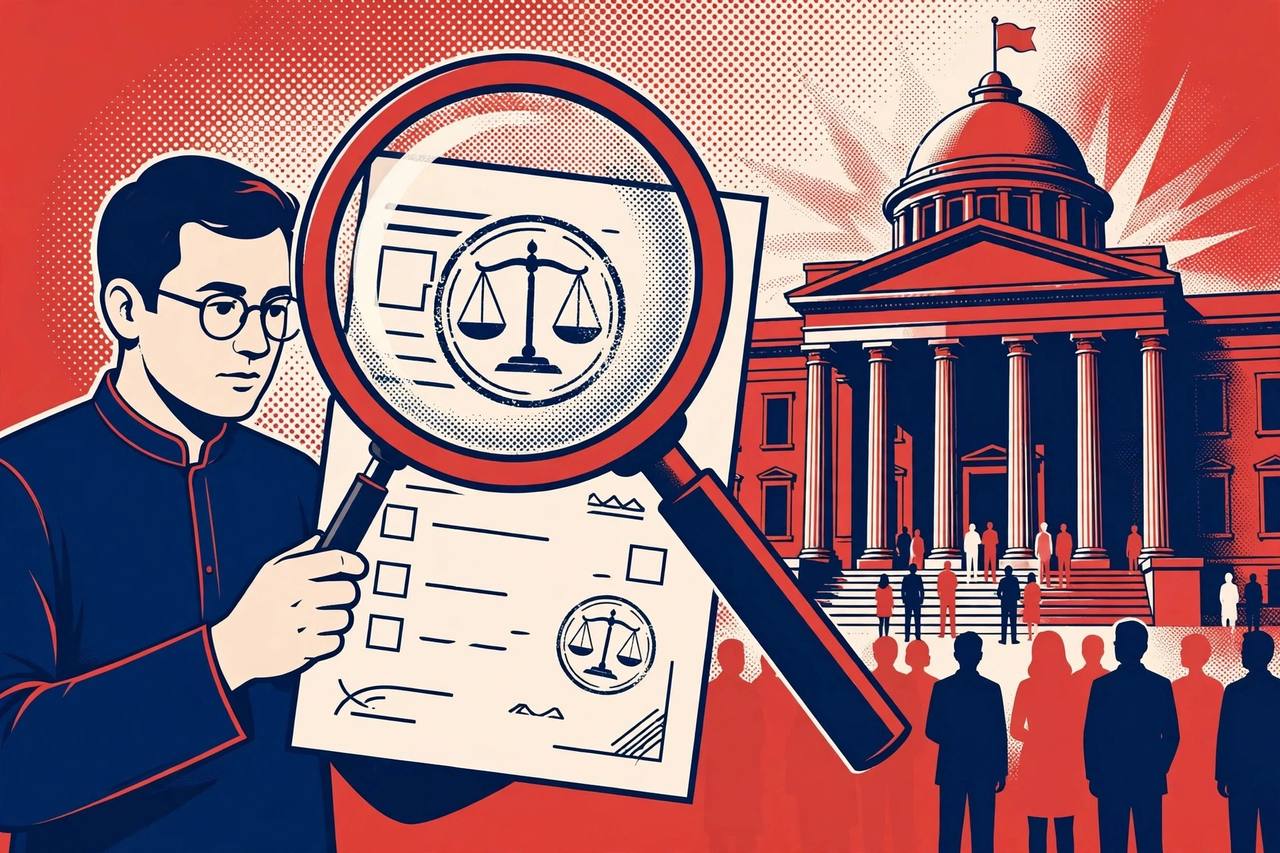
The Supreme Court has ruled that any private citizen can file a criminal complaint against a candidate accused of giving false information or concealing facts in an election affidavit. A Bench of Justice Dipankar Datta and Justice Sheel Nagu held that Section 195(1) of the Code of Criminal Procedure (CrPC), which requires a public servant's complaint for certain offences, does not bar complaints under Section 125A of the Representation of the People Act, 1951.
Justice Datta, who authored the judgment delivered on October 16, said: "If indeed it were the intention of the legislature that cognizance of any offence relating to furnishing of false information by a candidate in an affidavit with intent of being elected in an election could only be taken if the complainant were a public servant, the same could have been provided by an amendment of Section 195, CrPC."
The court noted Section 125A was introduced in 2002 and Section 195 was amended in 2006 without adding Section 125A to it, treating that omission as deliberate, and pointed out that no law requires such a complaint to be filed only by a public servant. It also held that Election Commission press notes and guidelines do not bind courts when interpreting a statute.
The case was filed by Rajkumar Madki against Karnataka MLA Dr Shailendra Beldale, elected from Bidar in 2023. Madki had alleged a false residential address in Beldale's nomination affidavit and filed a private complaint under Section 200 of the CrPC in August 2023. The Karnataka High Court quashed that complaint on March 7, 2025, holding that only the Election Commission or a public servant could complain and that a voter's remedy was an election petition.
The Supreme Court rejected that reasoning — but still upheld the quashing on the merits of this case, finding that documents on record had prima facie rebutted the address allegation and the prospect of conviction was remote, so continuing the case would waste judicial time. The Bench cautioned that magistrates already have powers to deal with frivolous complaints filed to harass candidates. The appeal was disposed of with both parties bearing their own costs.
Section 125A punishes false or concealed affidavit information with imprisonment of up to six months, a fine, or both.
Sources: Supreme Court judgment in Rajkumar Madki v. Dr Shailendra Beldale (October 16, 2026), as reported by JurisHour, Fact.net and CourtBook on October 19, 2026.