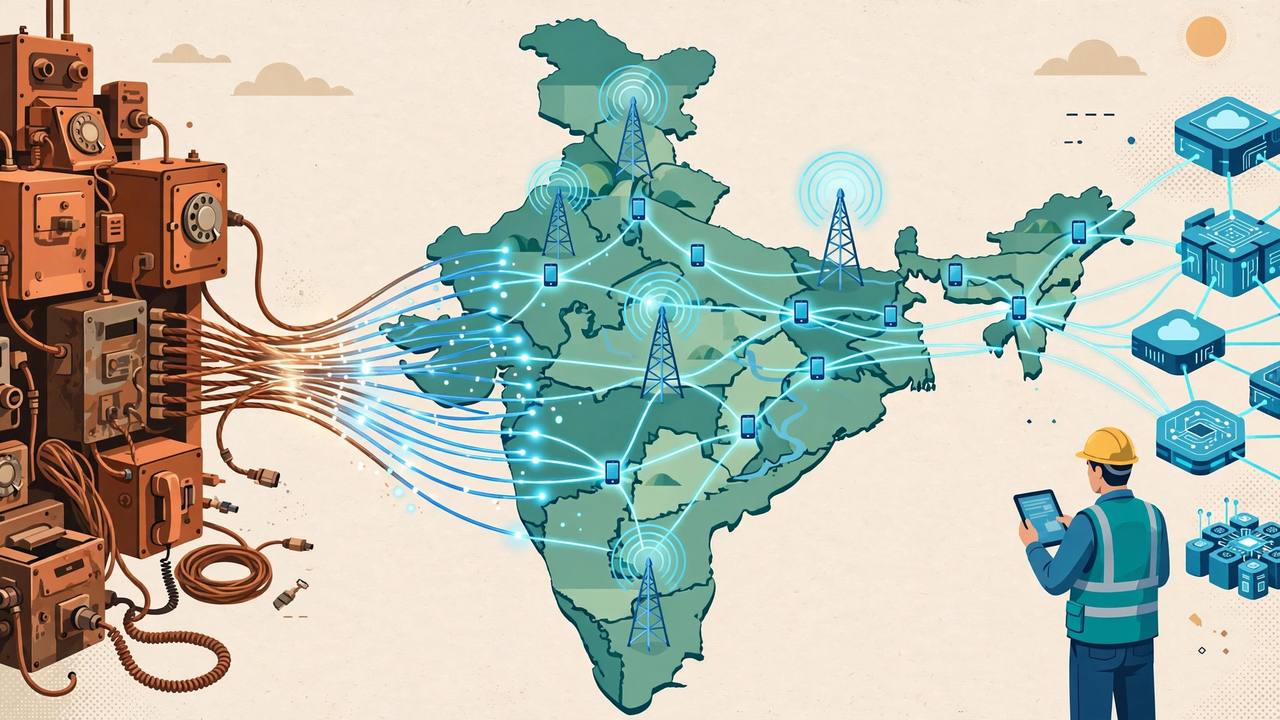
The Telecom Regulatory Authority of India (TRAI) on Tuesday, November 3, released the Telecommunication Interconnection (Third Amendment) Regulations, 2026, overhauling the rules that govern how India's telecom networks connect to each other. The regulations take effect from January 1, 2027, according to the Press Information Bureau (PIB).
Source: PIB, Ministry of Communications, via Technology For You
Interconnection covers the technical, operational and commercial arrangements that let traffic pass between two or more operators' networks — the reason a call from one company's SIM reaches a phone on another network. TRAI is empowered to prescribe these terms under Section 11(1)(b) of the TRAI Act, 1997.
From local exchanges to service areas
The amendment moves interconnection from the existing Long Distance Charging Area (LDCA) and Short Distance Charging Area (SDCA) levels to the Licensed Service Area (LSA) level. Providers and seekers can mutually agree the locations where traffic is handed over, and TRAI says shifting traffic to LSA-level Points of Interconnection (POIs) will simplify routing, support more efficient management of scarce numbering resources, lower latency and improve service reliability.
Three-year deadline for IP migration
Every interconnection established after the rules take effect must be IP-based, and existing E1/TDM-based links must be replaced with IP-based interconnections within three years. The transition is staged: traffic through older links and local connection points must fall to no more than 80 per cent of the specified baseline after the first year and 45 per cent after the second, before the shift is completed in the third year, PolicyEdge reported.
Source: PolicyEdge
The regulations also set out a framework for surrendering POIs, extend the validity of bank guarantees from six months to twelve, and cap interest on delayed interconnection payments at two per cent above the State Bank of India's one-year MCLR, on terms mutually agreed by providers. Reporting requirements and a phased financial penalty structure will back enforcement, Daily Kiran reported.
Source: Daily Kiran
The rules follow a long consultation: TRAI issued a pre-consultation paper on April 3, 2025, a consultation paper on November 10, 2025, and held an Open House Discussion on January 28, 2026, before finalising the amendment.