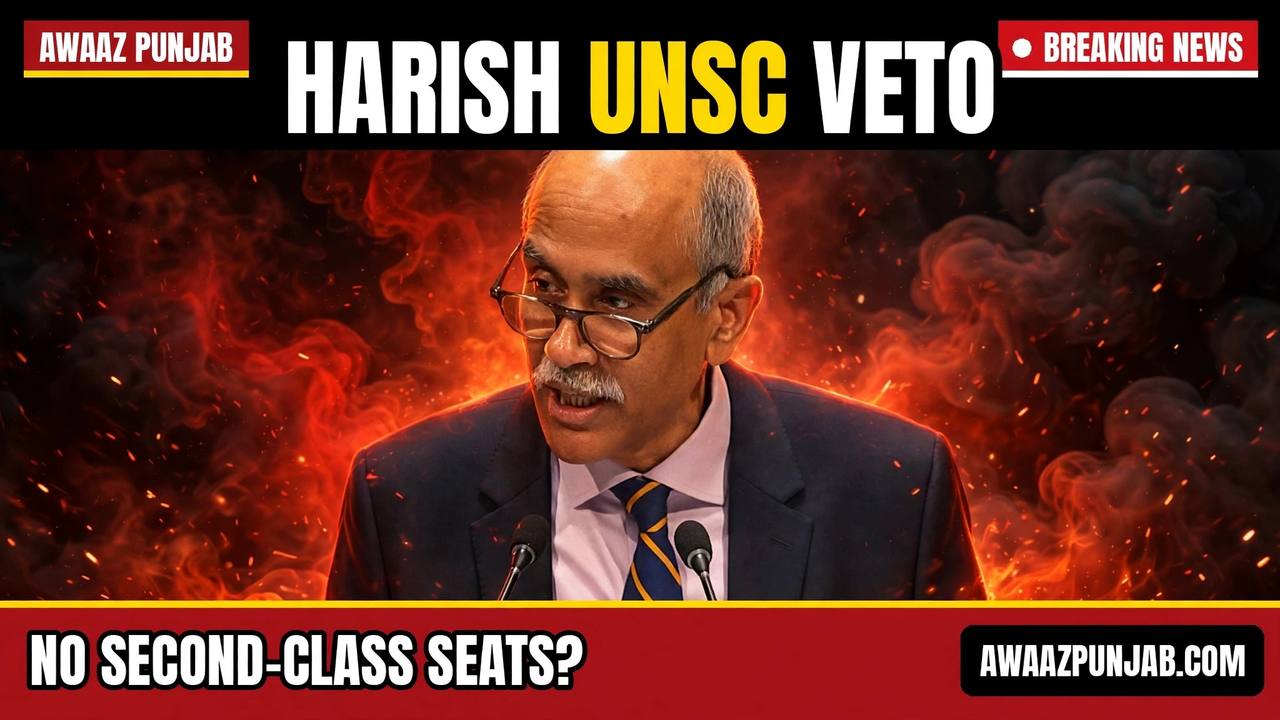
United Nations, Oct 27 (IANS): India has decried the 'disguised, de facto veto' that is preventing the UN Security Council reform process from moving forward, telling the General Assembly debate on the veto that the argument of consensus has been harnessed as a disguised veto inside the Intergovernmental Negotiations (IGN) on reform.
Source: IANS
India's Permanent Representative P. Harish said a small group of countries calling themselves Uniting for Consensus — led by Italy and including Pakistan — has blocked the IGN from adopting a negotiating text through procedural manoeuvres, even though the 2008 General Assembly decision that founded the IGN makes 'the widest possible political acceptance, not consensus' the guiding principle. After 17 cycles of negotiations, he said, 'we have no outcome to show for it' because of a de facto veto that has no basis in that founding resolution, IANS reported.
Source: IANS
Addressing the IGN plenary's cluster debate on the question of the veto, Harish said any reform that expands the Council by creating another category of long-term members without the veto 'effectively makes them second-class members' and would not change the decision-making dynamic of the five permanent members — China, France, Russia, the UK and the US. 'As long as the veto exists, it must be held by all permanent members of a reformed Council,' he said, adding that fairness and justice demand equal rights and responsibilities for all permanent members, The Hindu BusinessLine reported.
Source: The Hindu BusinessLine
Harish said the record of the veto is stark: it has been exercised 331 times on around 200 resolutions over the life of the organisation, two of the five permanent members have not used it for more than three and a half decades, and most vetoes or threats of vetoes have come from only three of the five. The 2022 Veto Initiative, which mandates a General Assembly debate every time a veto is cast, has not produced the expected change, he said, ANI reported.
Source: ANI via NewKerala
India also flagged what Harish called the 'effective or de facto veto' inside the Council's own working methods: under the unwritten rule of consensus, any single Council member — permanent or elected — can hold or block presidential statements, press statements and sanctions-committee decisions, most often without explanation. The veto, he said, 'is a responsibility that must be exercised with great restraint, especially on matters bearing upon the maintenance of international peace and security. It should not be an instrument of narrow political expediency,' ANI reported.
Source: ANI via NewKerala
Harish said the starting point for comprehensive reform is the early start of text-based negotiations with clearly defined timelines and milestones, and reaffirmed India's alignment with the Common African Position. India has long argued that the Council, founded in 1945, does not reflect contemporary geopolitical realities and has pressed for expansion in both the permanent and non-permanent categories, IANS and The Hindu BusinessLine reported.
Source: IANS