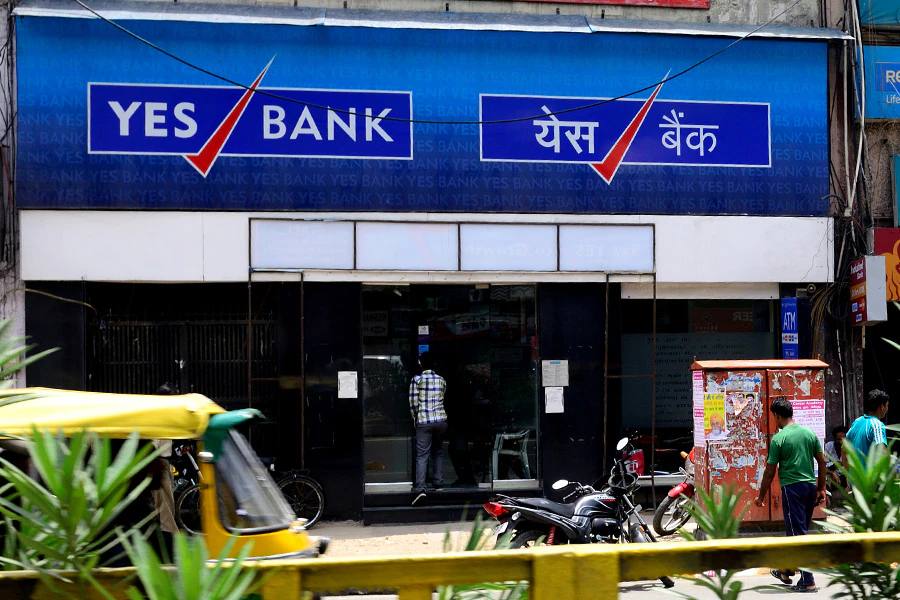
New Delhi: The Yes Bank AT-1 Bondholders' Association has written separately to the Reserve Bank of India (RBI), the Securities and Exchange Board of India (SEBI) and the finance ministry, asking the regulators and the government to secure time-bound implementation of the Supreme Court judgment that restored the bank's written-down AT-1 bonds, The Hindu BusinessLine reported on Wednesday.
Source: The Hindu BusinessLine
The letters, sent on Tuesday, seek restoration of the investors' written-down principal, payment of coupons and interest legally due, and clear implementation timelines from Yes Bank and the authorities. The association has sought written responses from the RBI and SEBI within 15 days and asked the finance ministry to coordinate a time-bound response across institutions, according to a Moody's news report carried by TradingView.
Source: Moody's news via TradingView
The judgment they won — and the coupon that did not come
On October 15, a Supreme Court bench of Justices Dipankar Datta and Augustine George Masih dismissed appeals by Yes Bank, the RBI and the Union of India, upholding the Bombay High Court's January 2023 judgment that quashed the March 14, 2020 write-down of AT-1 bonds worth Rs 8,415 crore — yaani about Rs 84 billion. The bonds were issued in two tranches: Rs 3,000 crore in December 2016 at 9.5 per cent and Rs 5,415 crore in October 2017 at 9 per cent. The judgment states that payment of the annual coupon shall remain unaffected by the outcome of the appeals and must be made in terms of the bonds' Information Memoranda.
The immediate trigger is a missed payment. The association told the RBI it is seriously concerned that, despite the judgment, Yes Bank failed to pay the coupon due in October 2026 on the 9 per cent AT-1 bonds — a coupon that fell due on October 18, three days after the court order. In a regulatory filing on October 24, Yes Bank said it had not completed its evaluation and assessment and would communicate its decision, if any, on whether coupon discretion is required after that process is complete.
"An internal assessment by the bank is not a stay of the Supreme Court's judgement," the association wrote to the RBI, urging the central bank to require a reasoned, instrument-specific examination instead of a general assertion of discretion that leaves investors without payment, a decision date or an adequate explanation.
"The Supreme Court has given the judgment in our favour, dismissing the appeals. We want RBI and Sebi to step in and enforce their own regulatory role," said Saurabh, a Bengaluru-based member of the association whose parents hold the bonds. "Our demands are simple: we want our principal back."
Mostly elderly savers, and a bank weighing its options
The association says many of its members bought the bonds with retirement savings, including provident fund and gratuity money, and that 12 members died during the court proceedings. The group had earlier also written to Axis Trustee Services, the debenture trustee, seeking the overdue coupons — including coupons skipped between 2020 and 2025 — restoration of holdings in demat accounts, and regulatory intervention.
Yes Bank, for its part, is reported to be unlikely to pay this year's AT-1 coupons and to be weighing a review of the Supreme Court ruling, Reuters reported, citing two persons familiar with the matter who declined to be named. The sources said the bond documentation gives the bank discretion over coupon payments and that the question can only be considered once the AT-1 bonds are reinstated on the bank's balance sheet. Yes Bank did not respond to a Reuters email seeking comment. Awaaz Punjab is presenting those points as the reported position of unnamed sources, not as a bank statement.
Source: Reuters via The Hindu BusinessLine
The association has given the RBI and SEBI 15 days to respond in writing. Whether the regulators direct the bank to pay, and whether Yes Bank files the review its officials are reported to be weighing, will decide how quickly a judgment won on paper turns into money back in investors' accounts.