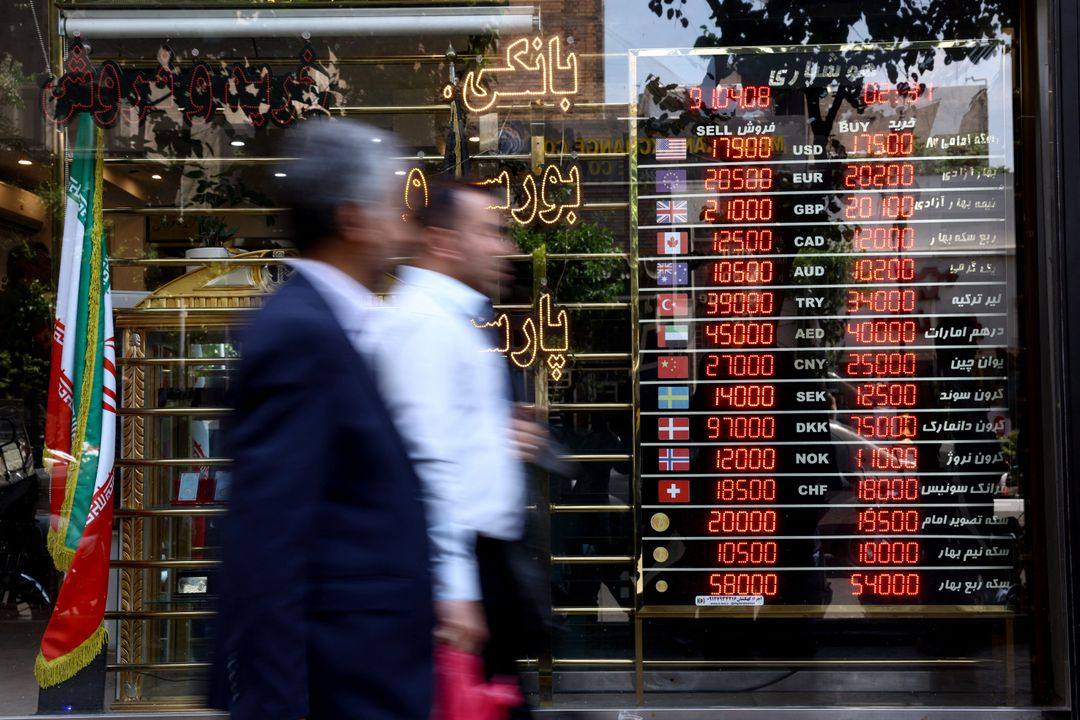
Iranian authorities have rejected claims that Iran is close to economic collapse and unable to support its regional allies, while acknowledging that US sanctions and the war have created financial challenges, Al Jazeera reported.
The American claim came from US Central Command chief Admiral Brad Cooper, who said in a video message on Friday, October 16, that US military attacks and a naval blockade of Iran's southern ports had 'dealt severe blows' to the country. Cooper claimed the blockade had prevented at least $25 billion in Iranian crude exports — yaani $25 billion, about 2,500 crore dollars — and that the US had helped freeze roughly $350 million in cryptocurrency assets — yaani about 35 crore dollars. He claimed the strain meant the IRGC was not paying its troops and that Iran-aligned militia groups were withholding their fighters' pay to funnel money back to Tehran. These are US claims and have not been independently verified.
Tehran's central bank governor Abdolnaser Hemmati gave the opposite account at an International Monetary Fund meeting in Bangkok on October 14. 'Despite all these pressures, the Iranian economy has demonstrated very good resilience, and the claim that Iran's economy is collapsing is nothing more than an illusion,' Hemmati said. He said Iran held adequate foreign-exchange reserves and could inject up to $2 billion into currency markets — yaani $2 billion, about 200 crore dollars — to defend the rial.
President Masoud Pezeshkian acknowledged on Sunday that military attacks and the maritime blockade had created 'substantial problems', but said his government was relying on domestic capacities to withstand the pressure. He claimed consumption management had removed the need for petrol imports that would otherwise cost $12 billion — yaani $12 billion, about 1,200 crore dollars — and promised to return revenues from recently increased fuel prices to households through modestly higher electronic food vouchers.
The World Bank has projected a 7.7% contraction of Iran's economy in the fiscal year 2026-27, according to Al Jazeera's reporting. Analysts quoted by Al Jazeera were divided on what the pressure means: Michael Knights of the US-based Horizon Engage advisory said Hezbollah in Lebanon and the Houthis in Yemen had suffered financially and continued to receive stipends and in-kind fuel funding from Iran, while Negar Mortazavi, a senior fellow at the Center for International Policy in Washington, said economic pressure was constraining Iran's military resources but would not by itself force Tehran to surrender or fundamentally change the IRGC's calculations.
Sources: Al Jazeera; US Central Command statement as reported by Al Jazeera.