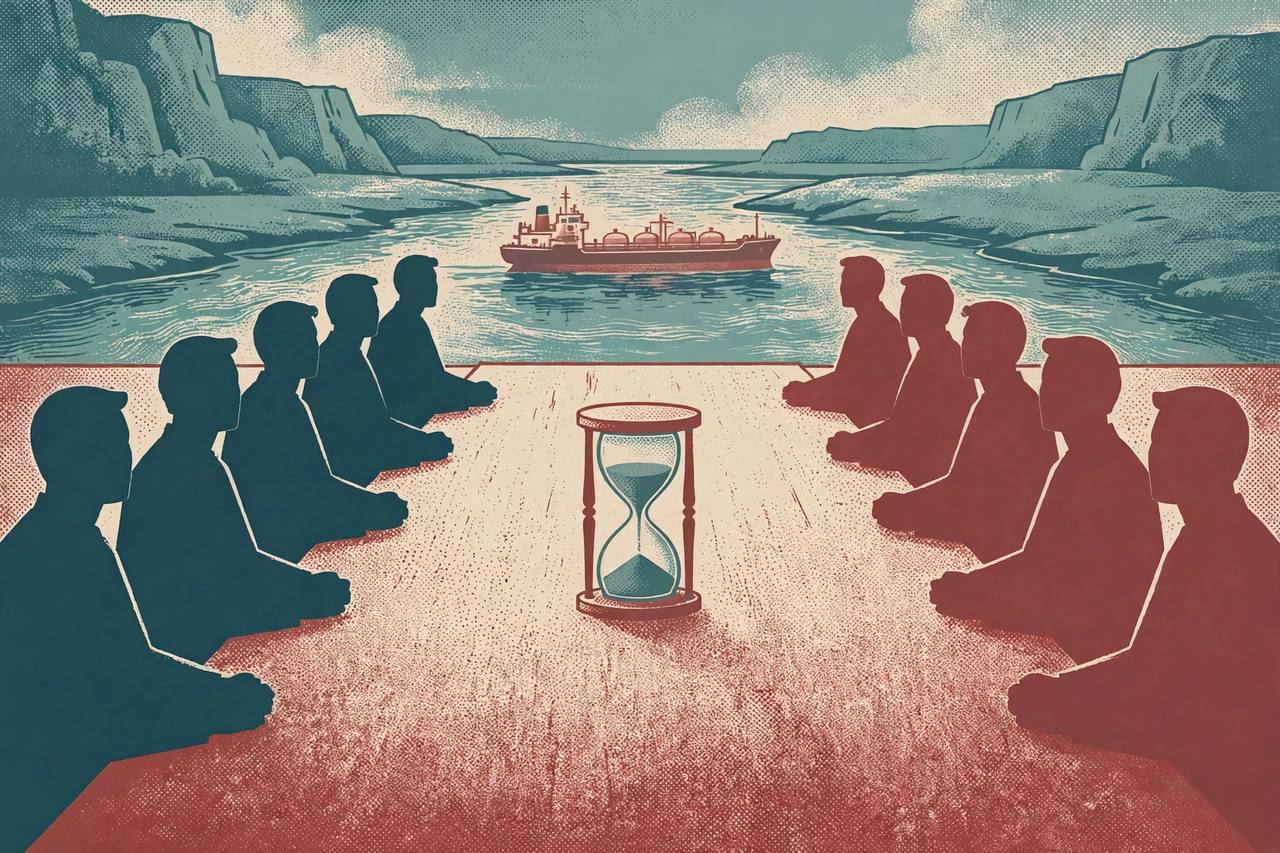
Iran has deliberately prolonged talks with the US to try to weaken Donald Trump politically ahead of November's US midterm elections, senior officials say, while fears of renewed military action and deep distrust of Washington have reinforced Tehran's reluctance to strike a quick deal to end the war, Reuters reported on Tuesday. Three senior Iranian officials and an Iranian insider, speaking on condition of anonymity, said Tehran was convinced the US president was ready to resort to renewed attacks to try to break the stalemate in the eight-month-old war. 'Iran is preparing for renewed Israeli and US attacks, not for a deal with America to end the war,' one of the officials said. 'The clerical establishment is determined not to give Trump a political victory.' Tehran analyst Saeed Leylaz said that, by prolonging the talks, 'Iran is influencing the US election without taking any unlawful action'. Iran's Foreign Ministry and the White House did not respond to Reuters requests for comment.
The sequencing dispute is at the heart of the deadlock, Reuters reported. Under pressure from Israel, Washington wants Iran's nuclear programme on the table from the outset; Iran says the programme is purely peaceful, while Western powers allege it has military dimensions — an allegation Tehran denies. Tehran insists its conditions under a 'seven-day plan' be met before nuclear negotiations begin: the proposal, conveyed through Qatari mediators, offered to reopen the Strait of Hormuz within seven days, albeit under Iranian control, provided Washington lifted its maritime blockade, eased restrictions on Iranian oil exports, released frozen assets and ended hostilities on all fronts. Foreign Minister Abbas Araqchi said on Sunday that the offer remained on the table, with messages being exchanged through mediators, Reuters reported.
Iran's public position in Tehran on Tuesday pointed the same way. President Masoud Pezeshkian told Pakistan's army chief, Field Marshal Asim Munir — who was in Tehran as part of mediation efforts — that Washington must first lift sanctions and threats before any talks, Press TV, Iran's state broadcaster, reported. 'You cannot intensify sanctions and pressure day after day and close off routes and avenues to our country, and then claim that you want dialogue and negotiations,' Pezeshkian said, according to Press TV. 'Today, our nation does not trust America and believes that if we negotiate, they will attack us again,' he added. Those are the Iranian president's own stated views, reported as such.
The stalemate is costing both sides, Reuters reported. The war, which began in February when the US and Israel launched strikes on Iran, has helped drive Trump's approval rating to a record low, with polls suggesting Americans worried about high gasoline prices will punish his Republican Party in the November 3 congressional elections; Iranian attacks, threatened and real, have kept ship traffic through the Strait of Hormuz to a trickle. Inside Iran, annual inflation hit 73.6 percent in September, according to the Statistical Centre of Iran, and the rial has fallen nearly 35 percent against the dollar since Washington reapplied its naval blockade in July. Iran's seaborne crude exports fell to zero in the second week of September, from a 14-day average of 230,000 barrels per day at the start of the month, and remained there as of October 5, according to energy intelligence platform Vortexa, Reuters reported. Leylaz said: 'Reaching a sustainable deal with the US, even after the Trump administration, is no longer possible because of the deepened distrust. Nothing will go back to the pre-war status quo.'
Sources: Reuters, 'Iran prolongs talks in stalemate to influence US midterms, officials say', 20 October 2026 (reporting by Parisa Hafezi in Dubai, additional reporting by Steve Holland in Washington); Press TV, 'Pezeshkian: US must lift sanctions, threats before any talks as Iran distrusts Washington', 20 October 2026.