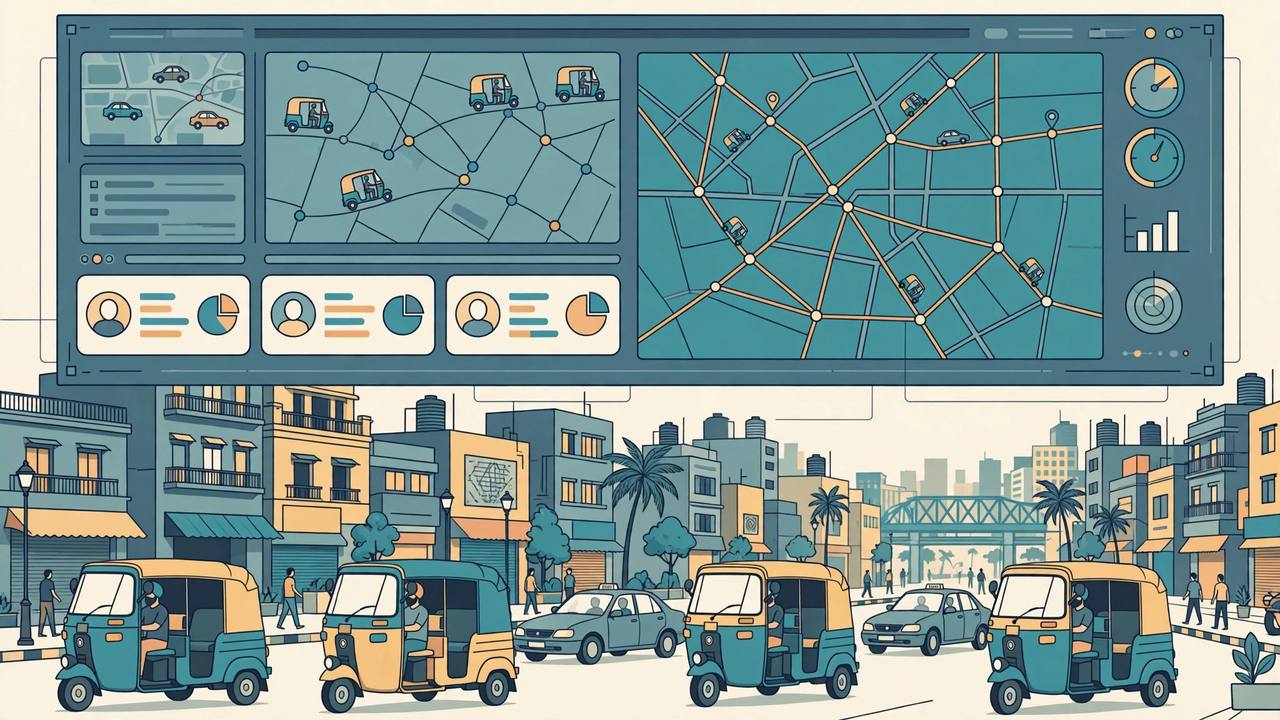
Maharashtra Chief Minister Devendra Fadnavis on Thursday, October 29, directed the state Transport Department to build an AI-powered digital platform that will hold real-time data on every vehicle and driver working for app-based cab aggregator companies in the state, in one of the most specific regulatory interventions an Indian state has announced against ride-hailing platforms.
Source: Nation Press
Fadnavis issued the directions at a review meeting on the Maharashtra Aggregator Rules-2026 at Varsha Bungalow in Mumbai. Transport Minister Pratap Sarnaik, Additional Chief Secretary (Transport) Sanjay Sethi, Transport Commissioner Rajesh Narvekar and other senior transport officials were present, according to the reporting on the meeting.
What the platform will record
Every vehicle operating under an aggregator company must have complete digital records on the platform — vehicle registration, assigned parking, driver profile, driving licence, police verification and all other mandatory documents. The system will use AI-based analytics to monitor vehicle operations, driver dispatch, parking and passenger services, and will keep real-time logs of which driver is operating which vehicle across shifts, so that after an accident or any other incident, vehicle and driver details can be retrieved immediately.
Audit of ride-allocation algorithms
The second, pointed direction was on how apps hand out rides. Fadnavis told officials to audit the criteria aggregator platforms use to assign trips and to deploy technology to detect bias or unfair discrimination in ride allocation. Independent drivers have long alleged — an allegation, not a proven finding — that platform algorithms direct high-value trips such as airport and long-distance bookings to large fleet operators and leave lone drivers with lower-paying work. The Times of India reports that the wider framework under discussion also covers regulation of dynamic pricing, monitoring of geo-fencing, safeguards against arbitrary suspension of driver accounts, and plans to integrate standardised minimum earnings, regulated working hours and benefits such as health insurance, Provident Fund and ESI for drivers.
Source: The Times of India reporting, via LetsDataScience
No timeline for building or launching the platform has been announced. Officials must first design the technical details, the auditing procedure and the enforcement steps under the Maharashtra Aggregator Rules-2026.
The directions place passenger safety and fair competition side by side: the state says the platform is meant to make app-based transport safer and more transparent, while ensuring small, independent drivers get equal opportunity alongside aggregator-owned fleets. How an algorithm audit would work in practice — whether it would require access to dispatch logic, logs or pricing models — has not been spelled out, and no response from aggregator companies was included in the reports of the meeting.
Maharashtra, home to Mumbai — India's most ride-hail-dense city — is among several states framing or updating their own aggregator rules after the Centre's 2020 Motor Vehicles Aggregator Guidelines left licensing and regulation of app-based transport to the states. Awaaz Punjab will follow the notification of the final rules and any timeline the Transport Department announces.