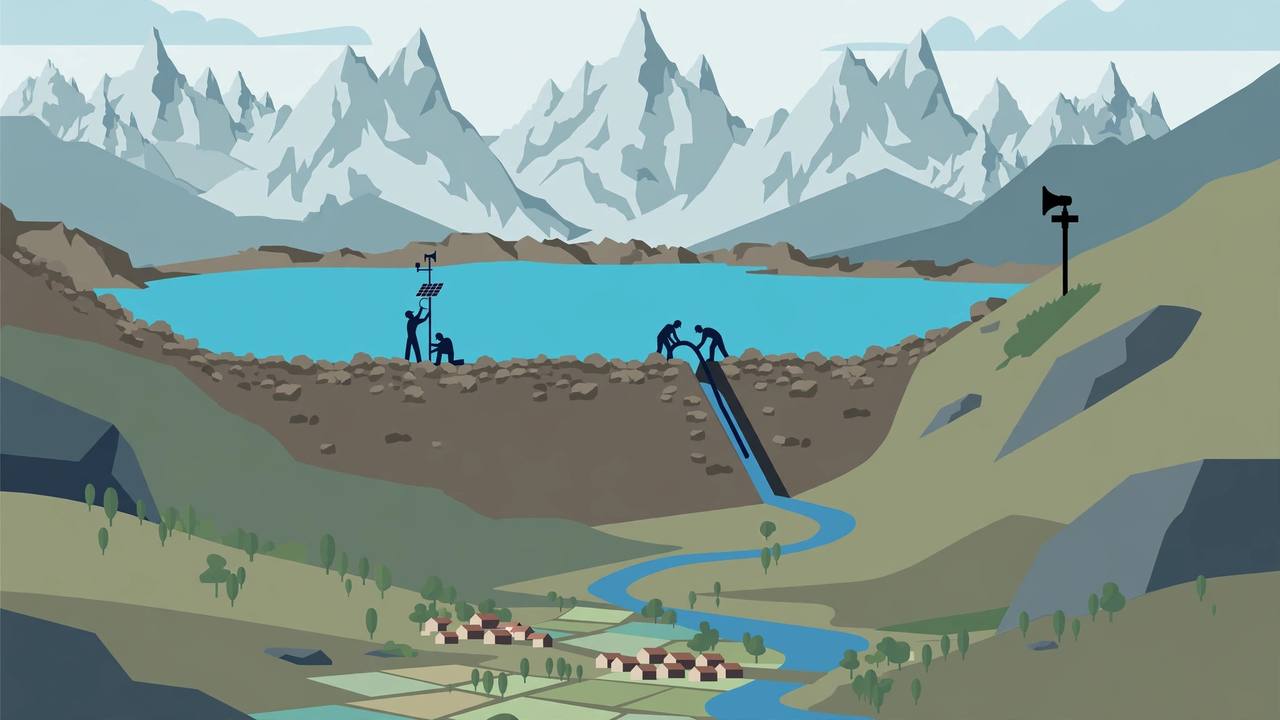
Kathmandu, Oct 25: Nepal plans to expand flood early warning systems across six major river basins and lower the water levels in four high-risk glacial lakes following the devastating floods of August 26, IANS reported on Sunday, citing a government white paper on disaster preparedness in the Himalayan nation.
Source: IANS
The August 26 floods claimed around 1,500 lives and more than 5,000 people remain missing, according to the reporting. The government's preliminary Rapid Damage and Needs Assessment (RDNA) puts damage to physical assets at $1.81 billion (yaani about $181 crore). The Bhotekoshi and Trishuli river basins were among the worst affected, with hydropower projects, solar energy facilities, electricity transmission infrastructure and transport networks all sustaining significant losses, and the energy sector, particularly hydropower, among the hardest hit.
According to the white paper, flood early warning systems will be installed across six river basins under the Priority River Basin Flood Risk Management Project, which runs from 2022 to 2028 with an investment of $7.54 million (yaani about $75 lakh). The basins are Mawa-Ratuwa, Bakraha, Lakhandehi, East Rapti, West Rapti and Mohana-Khutiya. Round-the-clock flood forecasting and early warning services will also be provided from mid-May to mid-October, covering the country's main monsoon season.
Under the Glacial Lake Outburst Flood (GLOF) Sanjeevani Project, scheduled from 2026 to 2033 with an estimated budget of $49.9 million, water levels will be lowered in four high-risk lakes: Thulagi in Manang district, Lower Barun in Sankhuwasabha district, and Lumding Tsho and Hongu-2 in Solukhumbu district. The UNDP project page for the same initiative gives a total investment of $49.94 million, says it directly benefits more than 385,000 people and indirectly benefits around 2 million people in vulnerable mountain river basins, and places the four lakes in the Koshi and Gandaki river basins.
Source: UNDP Nepal
Nepal has carried out similar interventions before, lowering water levels at Tsho Rolpa in Dolakha district and Imja Lake in Solukhumbu district. The Department of Hydrology and Meteorology also plans to prioritise artificial intelligence, machine learning and high-performance computing to improve the accuracy and reliability of flood and weather forecasts, the IANS report said.