Kathmandu, Oct 28: Nepal's Minister for Energy, Water Resources and Irrigation, Biraj Bhakta Shrestha, on Wednesday called for stronger use of space technology, data sharing and regional cooperation to reduce disaster risks in mountainous regions, addressing the opening session of the Fifth Ministerial Conference on Space Applications for Sustainable Development in Asia and the Pacific, organised by the United Nations Economic and Social Commission for Asia and the Pacific (UN ESCAP) in Bangkok, Thailand, Nepal Energy Forum reported.
Source: Nepal Energy Forum
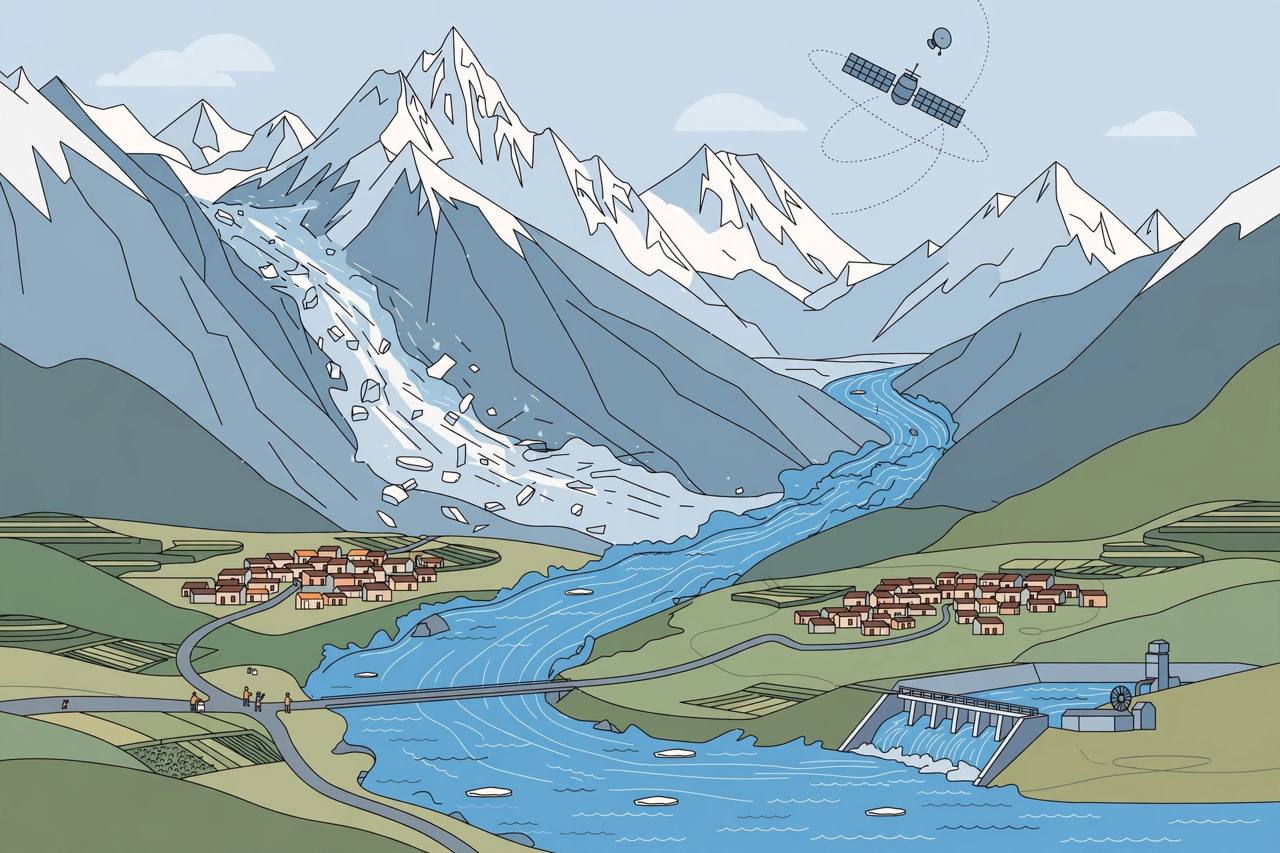
Shrestha warned that climate-induced disasters originating in the Himalayan region could spread hundreds of kilometres across districts and even beyond national borders within hours, and said relying solely on rainfall forecasts is insufficient, Nmkhabar reported. He recalled the August 26, 2026 rock and glacial ice avalanche from the upper reaches of Langtang Lirung, which triggered devastating flows in the Bhote Koshi and Trishuli river basins and damaged settlements, roads, bridges, border crossings and hydropower projects, and the October 11, 2026 landslide in the Budhigandaki area, which blocked the river and later burst, damaging an under-construction hydropower project.
Source: Nmkhabar English
In Indian terms, $2.7 billion is roughly Rs 24,000 crore and $4.8 billion is roughly Rs 42,000 crore — a scale the minister presented as the reason rainfall forecasts alone cannot manage risks from avalanches, glacial lake outbursts, landslides and flash floods, which need scientific study, continuous monitoring and preparedness.
Welcoming the draft Bangkok Ministerial Declaration, Shrestha stressed satellite data sharing, early-warning systems and technical cooperation during the declaration's third phase (2026-2030), and reaffirmed Nepal's commitment to net-zero carbon emissions by 2045 despite the country contributing only 0.01 percent of global greenhouse gas emissions, Nepal Foreign Affairs reported.
Source: Nepal Foreign Affairs