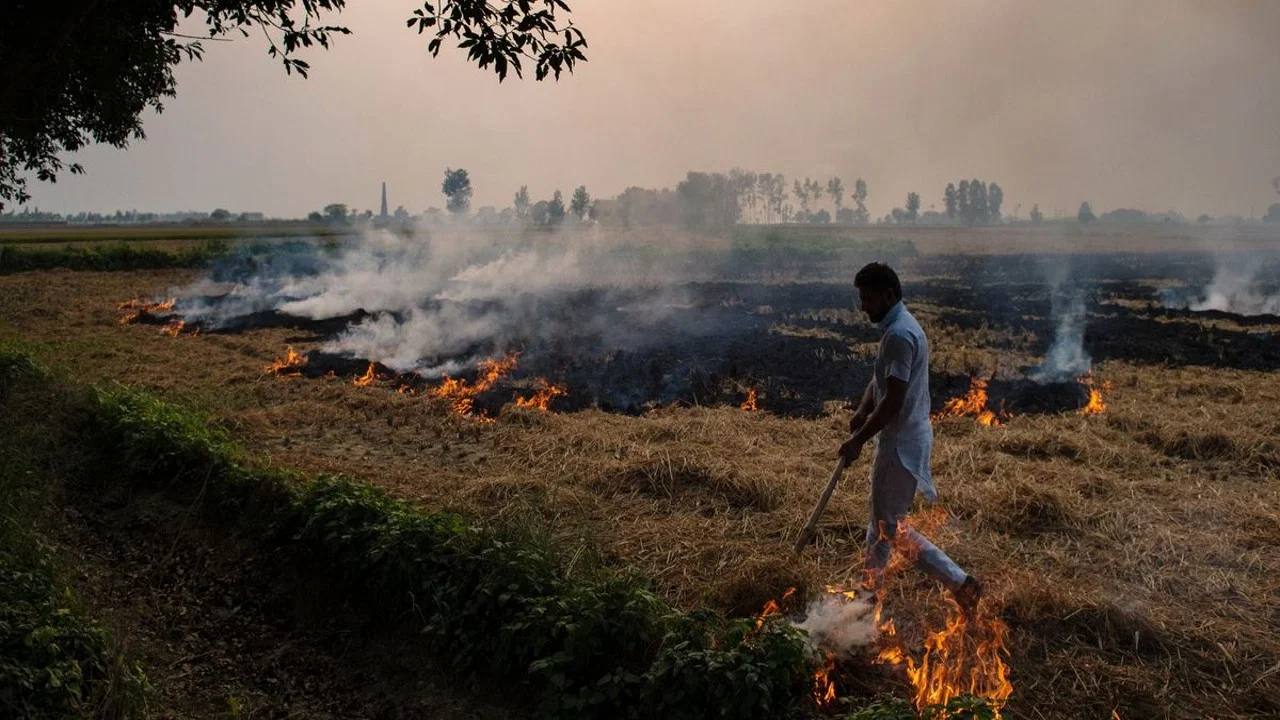
Chandigarh, October 22: The Commission for Air Quality Management in NCR and Adjoining Areas (CAQM), under the chairmanship of Rajesh Verma, on Thursday held separate review meetings with the governments of Punjab and Haryana in Chandigarh to review the measures being taken for the prevention and control of paddy stubble burning and the abatement of other key sources of air pollution, calling for prompt action on the ground, according to an official statement cited by ANI and IANS.
Source: ANI via DevDiscourse
According to the Ministry of Environment, Forest and Climate Change, the meeting with the Punjab government focused on the implementation of the State Action Plan for the prevention and control of paddy stubble burning, in accordance with CAQM Direction No. 99 dated May 15.
The Commission reviewed on-ground enforcement measures, district-level preparedness and monitoring mechanisms for effective paddy stubble management. It also reviewed the availability, deployment and effective utilisation of Crop Residue Management (CRM) machinery at the district and farmer levels, along with gaps in machinery utilisation and arrangements for the collection, transportation and utilisation of paddy straw through in-situ and ex-situ management.
The Commission emphasised the need to strengthen the crop-residue supply chain and ensure effective utilisation of available machinery during the peak harvesting period. The meeting also covered field validation of burnt-area assessment through satellite-based fire alerts, along with district-wise deployment of drones and low-cost sensors for monitoring stubble-burning incidents.
Compliance with the CAQM direction mandating the use of paddy straw-based biomass pellets and briquettes in brick kilns, and progress towards prescribed targets for biomass co-firing in thermal power plants, were also reviewed, the statement said.
Source: IANS via hi INDiA
In the separate meeting with Haryana officials, the review covered stubble management as well as other sources of air pollution, including vehicle emissions, road and open-area dust, construction and demolition dust, and industrial pollution.