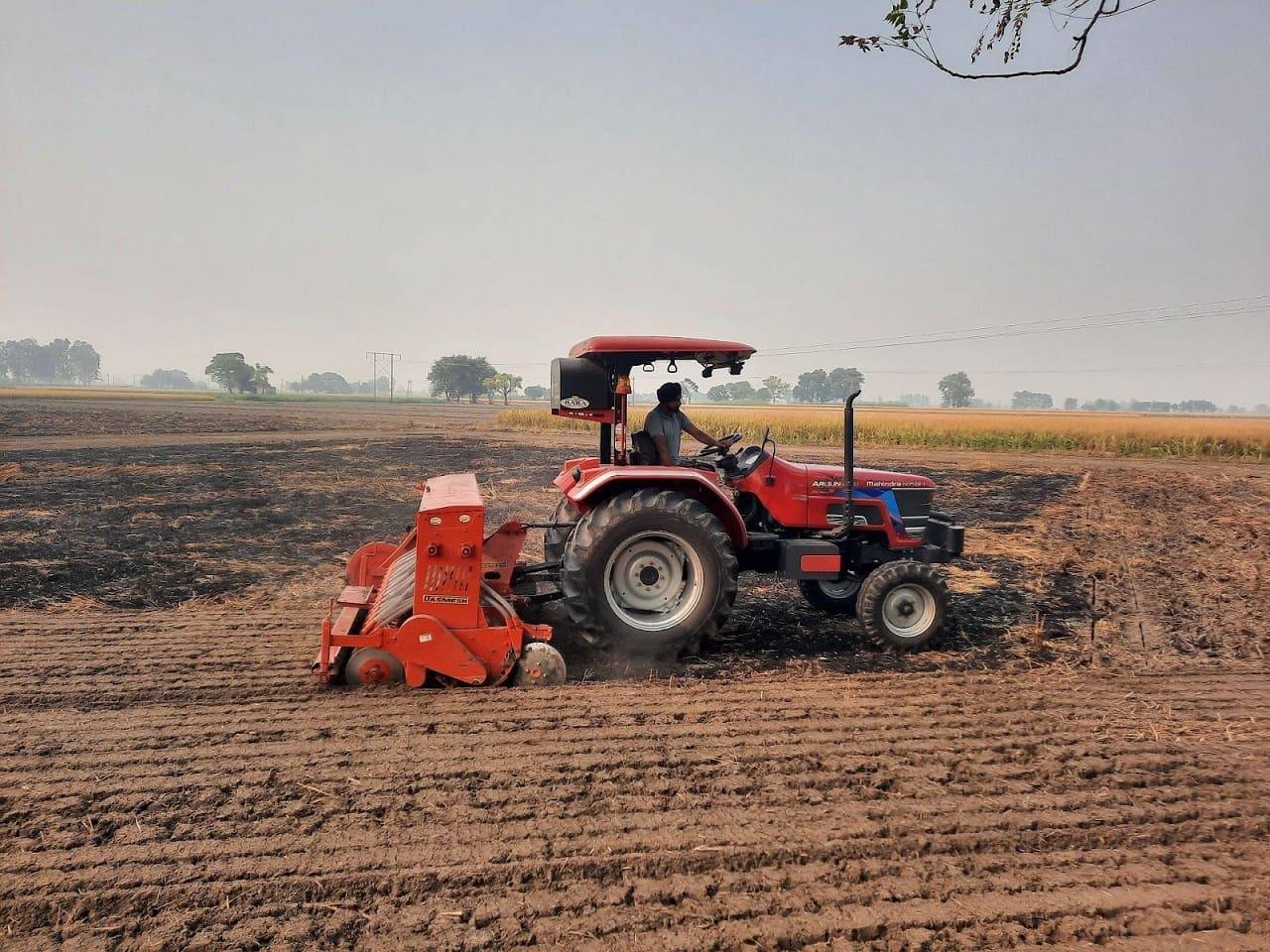
A high-level team of the Commission for Air Quality Management in NCR and Adjoining Areas (CAQM) on November 1 reviewed paddy straw management measures across Sangrur, Patiala and Malerkotla districts in Punjab, IANS reported, citing an official statement. The review was aimed at ensuring effective prevention of stubble-burning incidents during the ongoing harvesting season, the statement said.
Source: IANS
The CAQM officials asked the concerned departments to continue making concerted efforts with close monitoring of stubble-burning incidents, and advised officers to ensure effective paddy stubble management as committed in their action plans. Ground-level action should match the targets the districts have undertaken, the team said, according to the official statement.
Source: IANS
Malerkotla: a paper unit that burns straw instead of fields
In Malerkotla, the team visited an ex-situ paddy stubble utilisation facility — a duplex board and paper-making unit on Dhuri Road — which uses paddy straw as fuel in a boiler of 20 TPH (tonnes per hour) capacity. Representatives of the industry informed the team that about 17,000 MT of paddy straw would be utilised in its boiler furnace on an annual basis, offering a commercial alternative to open burning.
Source: Nation Press
The team also saw in-situ machinery working in village Ahmadabad of Malerkotla district, where the Agricultural Department demonstrated a super seeder. Farmers who met the team assured it that they would not burn paddy straw and would manage it using in-situ machinery, IANS reported.
Source: IANS
Sangrur: hotspot village Gharachon, and farmers' machinery difficulties
In Sangrur district, the CAQM team visited villages Bassiark, Kapial and Jhaneri in Bhawanigarh tehsil. At Gharachon, identified as a stubble-burning hotspot village, both ex-situ and in-situ management of paddy straw were demonstrated, and the team interacted with farmers there.
Source: BTIN
The team was briefed on the district administration's preparedness and on arrangements to ensure the availability of Crop Residue Management (CRM) machinery to farmers for in-situ management. During the interactions, farmers explained the difficulties they face in utilising CRM machinery — a ground-level challenge the review recorded, IANS reported.
Source: IANS
The meeting focused on reviewing the district administrations' preparation for paddy straw management and control of stubble fires in the three districts, ReportWire reported. Stubble burning in Punjab and neighbouring states is a primary driver of the hazardous air quality that blankets Delhi-NCR every October and November, which is why the Centre's air-quality body reviews the state's field arrangements during the harvest season.
Source: ReportWire
What is solid
- A high-level CAQM team reviewed paddy straw management in Sangrur, Patiala and Malerkotla districts on November 1, per an official statement (IANS; Nation Press; ReportWire).
- A duplex board/paper unit on Dhuri Road, Malerkotla, uses paddy straw in a 20 TPH boiler and its representatives said about 17,000 MT of straw would be used annually (IANS).
- The team saw a super seeder demonstration at Ahmadabad village, Malerkotla, and visited Bassiark, Kapial, Jhaneri and the hotspot village Gharachon in Sangrur district (IANS; BTIN).
What is only claimed
- Farmers told the team they face difficulties in accessing and utilising CRM machinery; no new enforcement figures, fines or fire counts for these districts were announced in the statement (IANS).
- The reports do not give a district-wise breakdown of this season's stubble-fire counts for Sangrur, Patiala or Malerkotla.