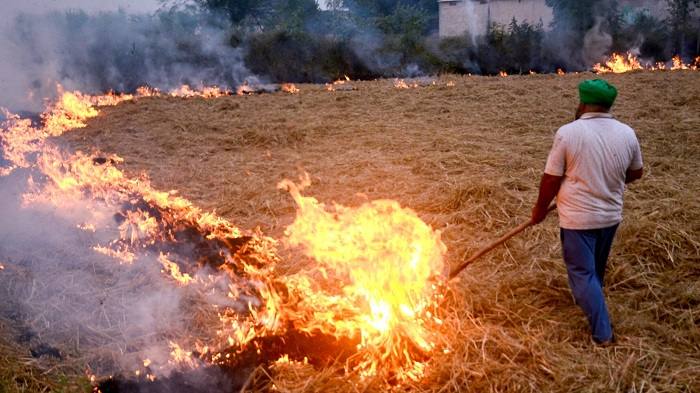
Chandigarh, October 22: The Commission for Air Quality Management in NCR and Adjoining Areas (CAQM), under the chairmanship of Rajesh Verma, held separate review meetings with the governments of Punjab and Haryana in Chandigarh on Thursday to review measures for the prevention and control of paddy stubble burning and other key sources of air pollution, calling for prompt action on the ground, according to a statement from the Ministry of Environment, Forest and Climate Change reported by ANI.
The meeting with the Punjab government focused on implementation of the State Action Plan for prevention and control of paddy stubble burning in accordance with CAQM Direction No. 99 dated May 15. The commission reviewed on-ground enforcement measures, district-level preparedness and monitoring mechanisms, and the availability, deployment and effective utilisation of Crop Residue Management (CRM) machinery at district and farmer levels, along with gaps in machinery utilisation and arrangements for collecting, transporting and using paddy straw through in-situ and ex-situ management.
The commission emphasised strengthening the crop-residue supply chain and ensuring effective use of available machinery during the peak harvesting period. Field validation of burnt-area assessment through satellite-based fire alerts, district-wise deployment of drones and low-cost sensors, compliance on paddy-straw biomass pellets and briquettes in brick kilns, and progress on biomass co-firing targets in thermal power plants were also reviewed. Summaries of the review noted that while overall burning is down from past years, fire counts have risen sharply in Tarn Taran and Amritsar districts.
The CAQM cautioned district administrations that any laxity that leads to a rise in stubble-burning incidents shall be viewed seriously, advised the states to address implementation gaps on priority, and called for time-bound implementation, continuous field-level monitoring and more effective on-ground implementation of information and awareness plans for farmers. It said paddy stubble management should be pursued not merely to prevent burning, but as an opportunity to use paddy straw as a resource in a circular economy.
The review comes a day after the Punjab Pollution Control Board had recorded 404 stubble-burning incidents across Punjab as of October 21, with Tarn Taran (198) and Amritsar (117) accounting for the highest numbers, officials said, as reported by IANS. In those figures, fields were inspected in 358 cases and burning was confirmed at 151 locations, FIRs were registered in 39 cases, and environmental compensation totalling Rs 7.20 lakh — yaani about seven lakh rupees — had been imposed, of which Rs 3.40 lakh had been recovered.