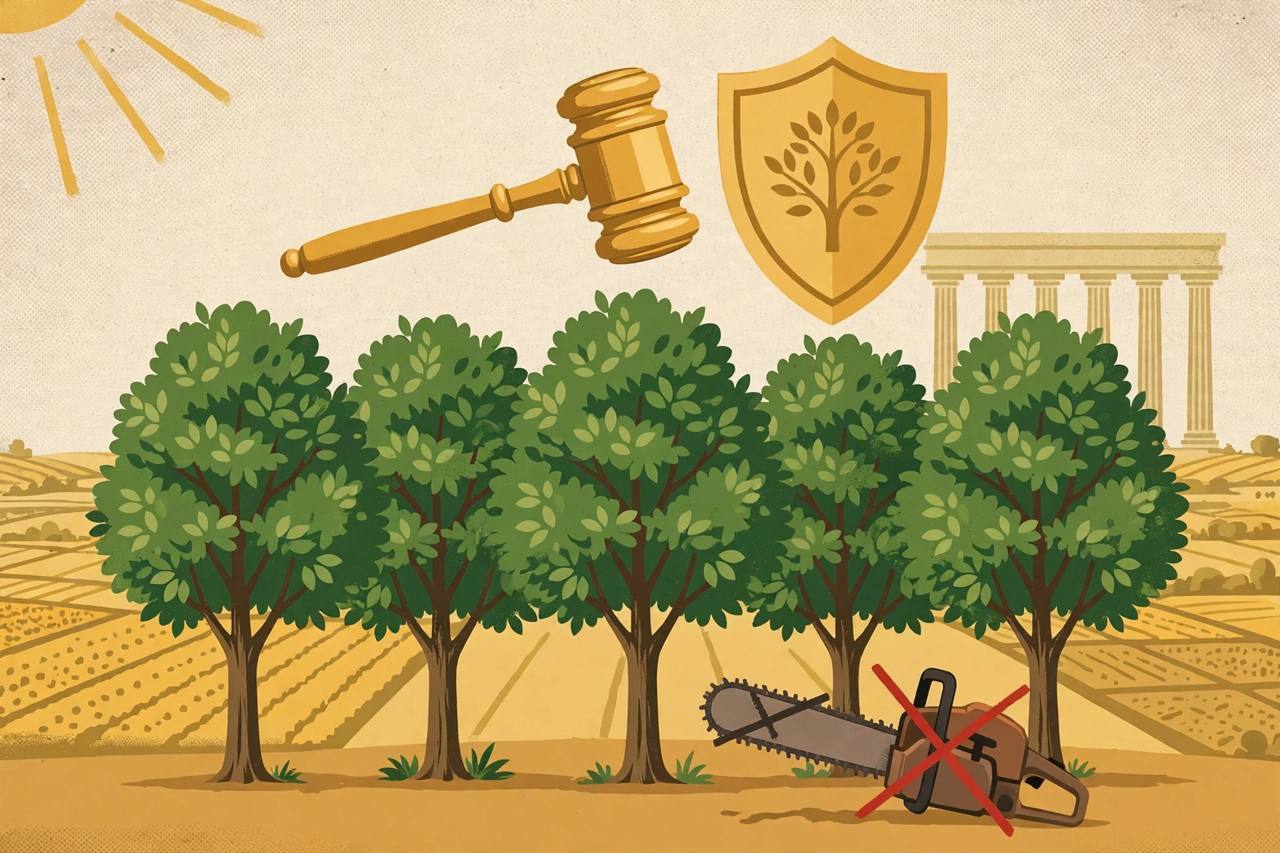
Chandigarh: The Punjab government on Monday, November 2, told the Punjab and Haryana High Court that the Punjab Protection of Trees Act, 2026 will be kept in abeyance until its provisions are reconsidered, and that the state will not proceed under the new enactment.
Source: Bar and Bench
The statement was made in Praneet Kaur v State of Punjab and Others, heard by a Division Bench of Chief Justice Ashwani Kumar Mishra and Justice Rohit Kapoor. The state told the bench it will abide by the court's guidelines and may reconsider the legislation in light of the court's decision, and confirmed that no permission to fell trees has been granted under the new Act so far.
Source: LawChakra
How the case reached this point
This is the latest development in the same case: on October 31, the same bench had termed the Act 'draconian', observing that it permits the felling of trees subject to payment of money, warning that such a law would destroy the state, and asking the Punjab government to reconsider the law before the court examines the pending challenge to it. The state was asked to place its instructions before the court on Monday.
The court said it will issue detailed guidelines with regard to the felling of trees in Punjab and Haryana. The High Court has been seized of tree felling in Punjab since December 2025, when, hearing a batch of public interest litigations — primarily challenging the move to fell 251 trees in Mohali district — it ordered that no tree shall be cut in Punjab without its prior permission until further orders.
The 2026 Act, notified in September, was challenged by way of an application in the pending matter alleging that it removes the previous safeguards and permits tree cutting simply upon deposit of certain charges. At the October 31 hearing, the bench noted that tree and forest cover over Punjab is 3.67% and over Haryana 3.65%, both drastically below the national average of 25.17% recorded in the India State of Forest Report, 2023; Haryana also assured the court it would re-examine its own draft law, which is substantially modelled on the Punjab legislation.