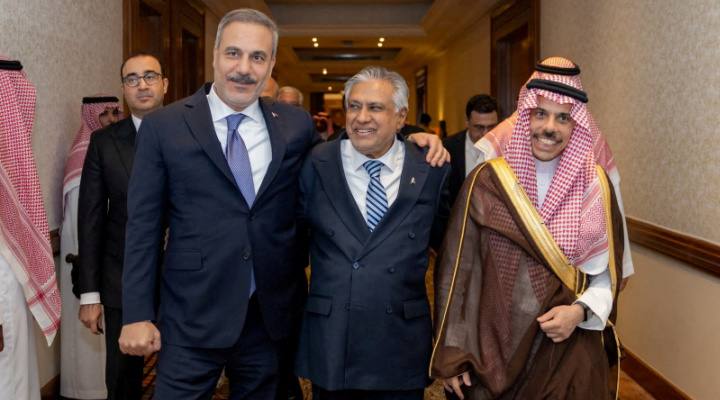
Turkey has submitted a defence pact with Pakistan and Saudi Arabia to parliament for ratification, three parliamentary sources said on Tuesday, Reuters reported — moving NATO's second-largest army closer to a formal mutual defence pledge with Riyadh as it faces attacks by Yemen's Houthis. Parliamentary ratification is required for Turkey to formally approve the agreement.
The three countries signed the Mecca Joint Defence Agreement in August — on August 7, by Turkish President Recep Tayyip Erdogan, Saudi Crown Prince Mohammed bin Salman and Pakistani Prime Minister Shehbaz Sharif, The Media Line reported — under which an armed attack on one member is considered an attack on all. The agreement's first article says the parties shall use "all necessary means" to eliminate threats to one another's territorial integrity, sovereignty or internationally recognised borders, according to a text seen by Reuters. Article 2 says: "In the event one of the parties is subjected to an armed attack or military aggression by another country or group of countries, the parties shall immediately provide assistance to the party under attack, utilising the full range of mutual assistance measures available to them." The provision, similar to NATO's Article 5, refers to Article 51 of the UN Charter, which covers the right of self-defence, and the pact's 16 provisions also cover defence-industry cooperation, intelligence sharing, logistical support and counterterrorism.
Parliament Speaker Numan Kurtulmus, currently visiting Kyrgyzstan, will refer the agreement to parliament's foreign affairs commission upon his return, two of the sources said, and the contents and details are expected to become public once it reaches the commission; another source said the commission could debate it as early as Friday. President Erdogan's communications director, Burhanettin Duran, said the step marked an important milestone towards the institutionalisation of strategic cooperation between the three nations. "This strategic partnership developed between our countries aims to strengthen collective deterrence, enhance joint capabilities in the defence sector, and safeguard security and stability in our region," Duran said in a post on X.
Ankara's own role is expected to stay limited for now. A Turkish official, who spoke on condition of anonymity, told Reuters Turkey's contribution was expected to be limited to military equipment, intelligence sharing and weapons systems, and that no other form of deployment had taken place under the alliance so far. Foreign Minister Hakan Fidan said the Mecca Agreement was not an "offensive agreement" and that Turkey would not send troops to another country to carry out attacks; Turkey's constitution requires separate permission from parliament to deploy troops abroad regardless of any international agreement. At an emergency meeting in Riyadh earlier this month, the three countries agreed to ensure the "rapid deployment" of military forces and capabilities in Saudi Arabia. Turkey has condemned Houthi attacks on Saudi Arabia, offered to help meet Riyadh's military technology needs and agreed to join a Saudi-led coalition to ensure navigational safety in the Red Sea, Reuters reported.
The pact matters well beyond Ankara, Riyadh and Islamabad: Saudi Arabia and the Gulf host lakhs of Indian and Punjabi workers, and any widening of the Houthi conflict threatens the oil supplies, flights and remittances that connect the region directly to Punjab. Ratification would formalise Turkey's place in the alliance, but a vote date has not been set.
Sources: Reuters; The Media Line; Al Jazeera and Hurriyet Daily News reporting on the ratification process; statement by Turkish Presidency Communications Director Burhanettin Duran.