Federal prosecutors in Arizona charged 336 people with immigration-related crimes in a single week, the U.S. Attorney's Office for the District of Arizona announced in Phoenix on October 30. The charges, filed during the week of enforcement operations from October 24 through October 30, 2026, cover illegal entry, illegal re-entry after a previous removal, and alleged migrant smuggling into and within the state.
Source: U.S. Attorney's Office, District of Arizona
The largest group, 171 cases, involves people accused of illegally re-entering the United States after having been removed before. A further 143 people were charged with illegally entering the country. In what the office described as its ongoing effort to deter unlawful immigration, prosecutors also filed 18 cases against 22 individuals accused of smuggling people into and within the District of Arizona.
The cases were referred or supported by a long list of federal partners: U.S. Immigration and Customs Enforcement's Enforcement and Removal Operations (ICE-ERO) and Homeland Security Investigations (ICE-HSI), the U.S. Border Patrol, the Drug Enforcement Administration (DEA), the FBI, the U.S. Marshals Service and the Bureau of Alcohol, Tobacco, Firearms and Explosives (ATF), the U.S. Attorney's Office said in release number 2026-185.
The Florence stop: 13 people in one pickup on Highway 79
The release highlighted one smuggling case in detail. On October 22, a local police officer in Florence, Arizona, stopped a GMC Sierra pickup truck with a camper shell that was speeding on Highway 79. The driver was later identified as Marquise Deone Isomi and the front-seat passenger as Rayla Storm Hunt Gagliardi. In the rear passenger area, officers found two juveniles dressed in camouflage, not wearing seatbelts and surrounded by large amounts of clutter, prosecutors said.
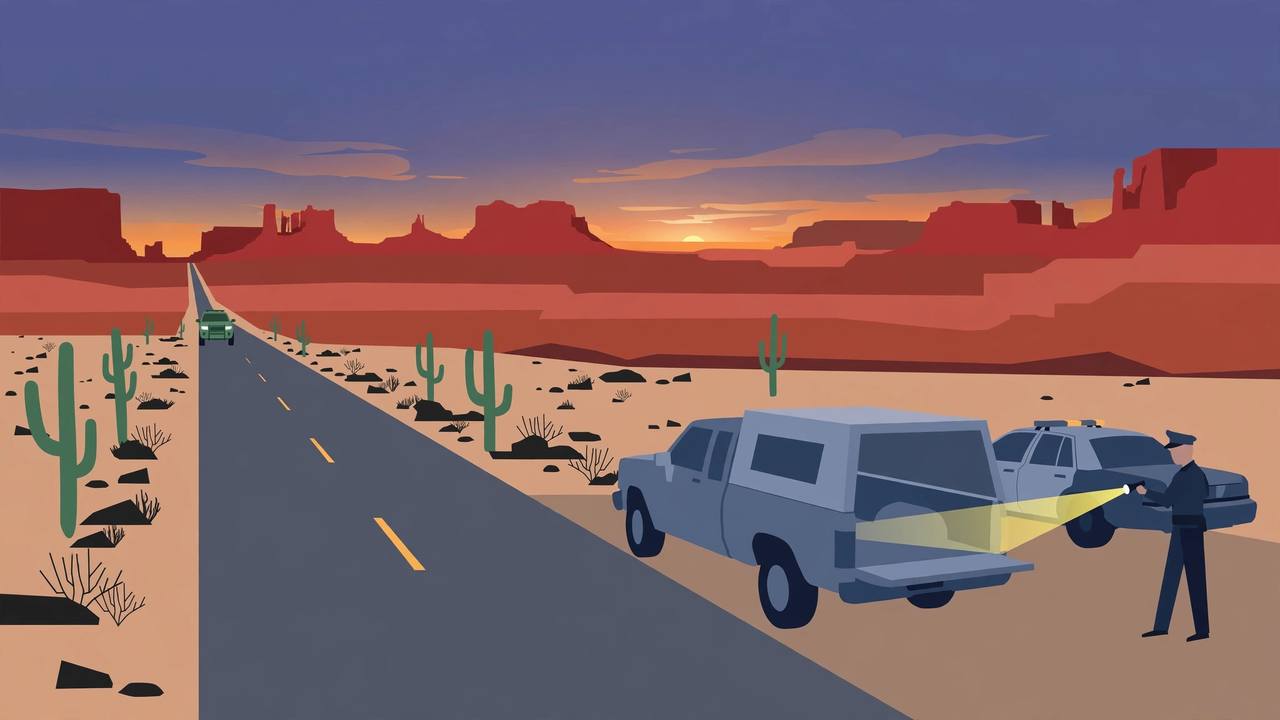
A second officer who arrived at the stop noticed the truck rocking back and forth, indicating weight shifting in the vehicle's bed. The officer shone a flashlight into a gap between the truck's body and the camper shell and saw multiple people inside wearing camouflaged clothing and shoe covers. Suspecting a human smuggling event, the officers contacted the Border Patrol, the release said.
Border Patrol agents who reached the scene found 11 people in the truck's bed, one of them a juvenile. Together with the two juveniles in the cabin, the agents determined that 13 people in the vehicle were citizens of either Mexico or Guatemala and were illegally present in the United States. Of the three juveniles, two were unaccompanied minors, prosecutors said. No names or identifying details of any minor were released.
Prosecutors allege that Isomi and Gagliardi used WhatsApp to coordinate with human smuggling coordinators and had trafficked people in a similar manner on multiple prior occasions. Both were charged by criminal complaint on October 24 with transportation of an illegal alien, in the case numbered 26-MJ-3448. Those coordination and repeat-trip claims are allegations in a complaint; they have not been proven in court.
The U.S. Attorney's Office states this in its own release: a criminal complaint is a formal accusation of criminal conduct, and all defendants are presumed innocent until proven guilty beyond a reasonable doubt in a court of law.
A weekly pattern, not a one-off
The October 24-30 total is the latest in a near-weekly series of charging announcements from the same office. In the week of September 19-25, Arizona federal prosecutors charged 379 people — 191 for unlawful entry, 155 for illegal re-entry and 32 in smuggling cases — and in the week of September 5-11 they charged 306 people, including 145 re-entry and 137 entry cases. The pattern shows a sustained, high-volume prosecution pipeline running through Arizona, one of the busiest border-enforcement districts in the country, rather than a single exceptional sweep.
For drivers, the Florence case carries a practical lesson that reaches beyond Arizona's border communities: the stop that started it was an ordinary local-police speeding stop on a state highway, Highway 79, far from any border crossing. Local traffic enforcement on Arizona's desert highways is routinely feeding federal immigration and smuggling cases, a reality that matters to the truckers and long-distance drivers — including many Punjabi drivers who run Arizona corridors — who use these roads every day.
What happens next
All 336 cases now move through the federal court system in Arizona, beginning with initial appearances and, for the complaint-stage cases such as Isomi and Gagliardi's, the next steps toward indictment and arraignment. The U.S. Attorney's Office gave no trial dates in its announcement. The office has also set a clear rhythm: a fresh weekly total is expected in its next release, and the September and October figures suggest the charging pace is not slowing.