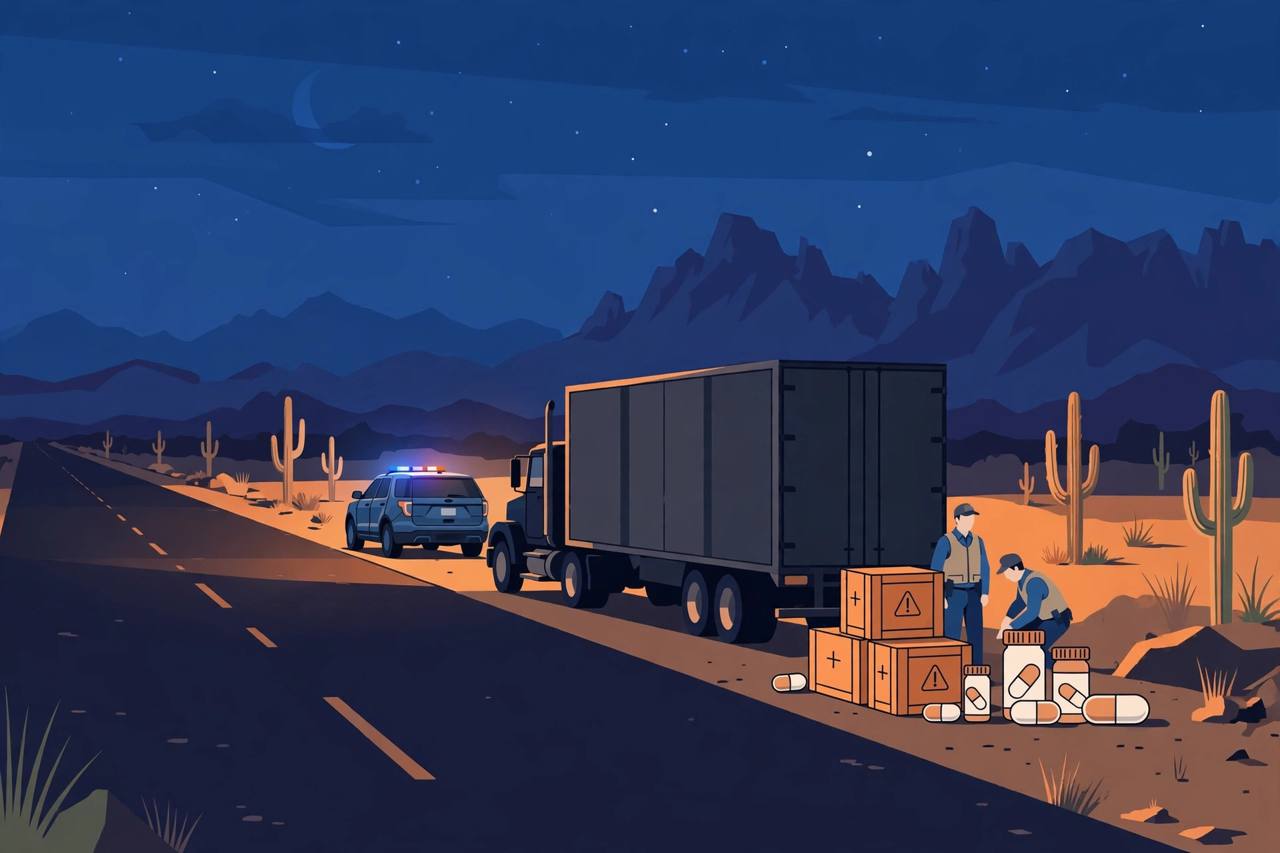
Arizona's first statewide unified anti-trafficking command, Operation Desert Guardian, produced more than 2,900 arrests, seized over 8,900 pounds of illegal drugs and intercepted about 1.2 million fentanyl pills in the ten months from December 2025 through September 2026, the Arizona Department of Public Safety (AZDPS) said in an October 28, 2026 release and video marking the operation's first year.
The department put the estimated street value of the intercepted drugs at more than $19 million and said 127 firearms were confiscated from criminal networks. The figures are the Arizona DPS's own totals, released this week and reported by the Gila Herald on October 28 and in independent reporting by Valley 108 on October 29, which drew on the DPS release, an October ride-along by Tucson's 13 News with the DPS Strategic Priority Squad, and the Governor's Office's earlier updates.
Source: Gila Herald (AZDPS release)
What Operation Desert Guardian is
Governor Katie Hobbs created Operation Desert Guardian by executive order in February 2025, and operations began that March. It is not a new police force: DPS describes it as Arizona's first statewide unified command, built to connect intelligence and enforcement across agencies against drug, human and weapons trafficking, rather than replacing local police.
Twelve state and county partners take part. The state partners are the Arizona Department of Public Safety, the Arizona Department of Homeland Security, the Department of Emergency and Military Affairs, the Governor's Office of Youth, Faith and Family, and the Department of Health Services. The county partners are the sheriff's offices of Cochise, Coconino, Greenlee, La Paz, Navajo, Pinal and Yavapai counties. The operation runs alongside Task Force SAFE, the Arizona National Guard deployment supporting federal officers at the southern ports of entry.
What officials said, and the work on the road
"Operation Desert Guardian demonstrates what is possible when agencies work together," DPS Director Colonel Jeffrey Glover said in the department's release.
Much of the street-level work is done by the DPS Strategic Priority Squad, part of the Highway Patrol Division led by Lt. Col. Daven Byrd, who describes the target as organised crime groups moving illegal guns and drugs into the state. Troopers say the job is not only seizing loads but tracing where drugs came from — which is why some arrests turn into informants. In southern Arizona alone, troopers report about 1,200 arrests, more than 60 weapons and more than 400 pounds of drugs this year, with late-night sweeps running about once a month.
Background: how the numbers grew
The growth curve is steep. At the six-month mark in September 2025, the Governor's Office reported 622 arrests and about 971 pounds of drugs seized. Ten months into the period DPS is now reporting, arrests have more than quadrupled and drug seizures are roughly nine times that earlier weight — growth the department attributes to agencies finally sharing intelligence in one command instead of working county by county.
These totals are DPS figures and have not been independently verified. Some coverage of the DPS video cites nearly 10,000 pounds of drugs and 15 agencies; the department's own release says more than 8,900 pounds and lists 12 partners, and that is the version used here. Arrest totals also do not show how many arrests became charges or convictions, and DPS has not released a county-by-county breakdown — reporters, including Valley 108, have asked the department for both.
Why it matters for truckers and border communities
Desert Guardian's hunting ground is the same southern Arizona corridor network — Interstate 10, Interstate 19 and Interstate 8 and the state highways feeding the ports of entry — that carries heavy Punjabi and immigrant trucking traffic between California, Phoenix, Tucson and the Mexican border. More unified patrols and monthly sweeps mean more stops and inspections on those routes, and, officials argue, fewer fentanyl loads moving north in cars and commercial vehicles. A single fentanyl pill can kill, troopers note, which is why the pill count, not just the weight, leads their reporting.
What happens next
The operation now moves into its second year, and Lt. Col. Byrd says he wants bigger numbers in year two. The open questions are the ones the first-year release did not answer: how many of the 2,900-plus arrests led to charges and convictions, how the work splits by county, and how many cases involved human trafficking rather than drugs. DPS has been asked for that breakdown; what it releases next will decide whether Desert Guardian is judged a lasting model for other border states or a one-year surge.