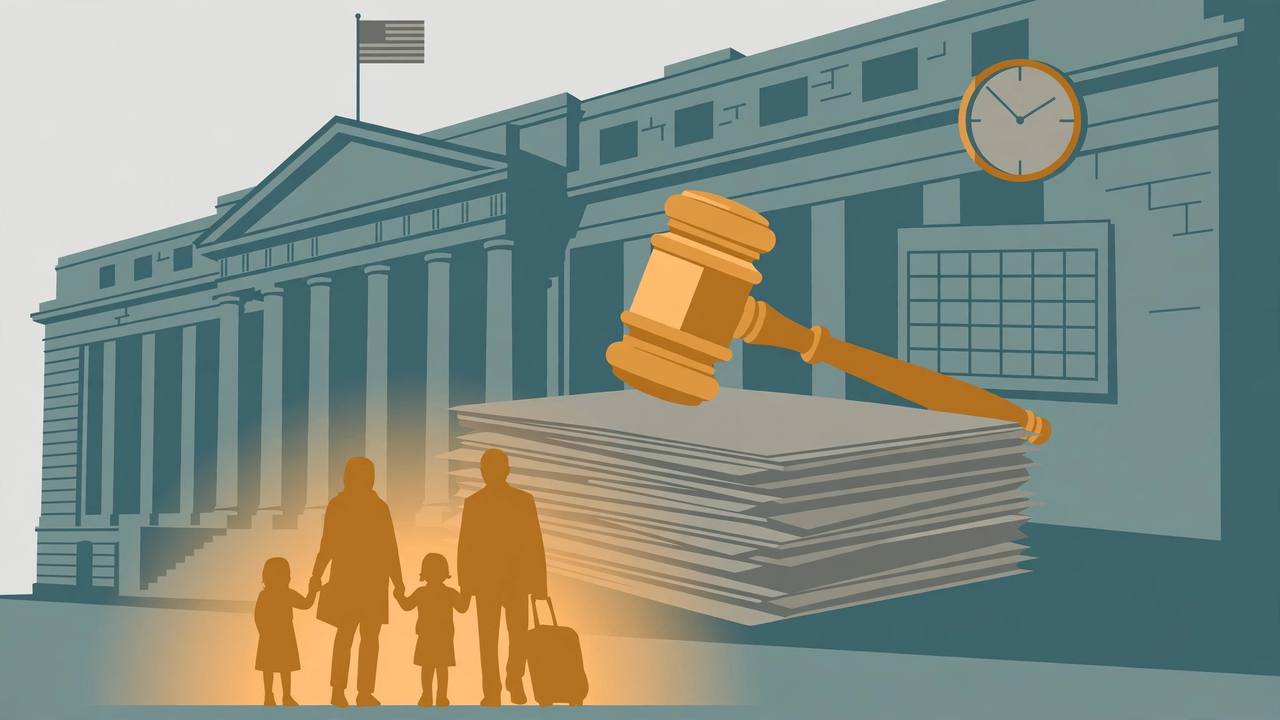
BOSTON — A federal judge on Tuesday, October 27, temporarily blocked President Donald Trump's administration from implementing a new rule that would cut the time refugees have to contest decisions to strip them of their legal status to 10 days, down from 30 days, Reuters reported. U.S. District Judge Julia Kobick in Boston issued the order in a lawsuit brought by refugee advocacy groups.
Source: Reuters
The order puts the rule on hold through November 6. Judge Kobick said the rule issued by U.S. Citizenship and Immigration Services (USCIS) should be put on hold to preserve the status quo until the case could be heard by a colleague — meaning the 30-day window stays in place for now, and the shorter 10-day deadline cannot be applied while the order stands.
The order is the first court decision in the case filed a day earlier. Read our earlier report on the lawsuit itself: Refugee Groups Sue Over Green Card Freeze, Mass Re-Vetting and 10-Day Termination Rule
A rule issued on October 14, a lawsuit filed on Monday
USCIS issued the rule on October 14, as part of the administration's wider immigration enforcement programme. Refugee advocacy groups filed their lawsuit on Monday, October 26, challenging both the 10-day rule and a plan for a broader review of refugees already in the United States, and they asked the court for an immediate order keeping the old deadline in place while the case proceeds. Judge Kobick's order, issued the next day, grants that breathing room temporarily — it is not a final ruling on whether the rule is lawful.
Erez Reuveni of Democracy Forward, a lawyer for the plaintiffs, said the decision “provides meaningful protection for people who were already facing termination notices” — a reference to refugees who have already been told the government intends to end their status and who would have had only days, under the new rule, to respond.
The government pushed back. USCIS spokesperson Zach Kahler, in a statement reported by Reuters, called the lawsuit a “frivolous attempt to disrupt the Trump administration's commitment to enforce our country's immigration laws as intended by Congress.” The Department of Homeland Security, which oversees USCIS, had estimated the new rule would affect as many as 186,000 refugees.
What the fight is about
Refugees are people admitted to the United States through the official refugee programme after screening abroad. Refugee status is a legal status: losing it can mean losing the right to live and work lawfully in the country and the path it provides toward a green card. When the government decides to terminate that status, the person is notified and given a window to contest the decision — to submit evidence and argument for why the termination is wrong. The October 14 rule would have shrunk that window from 30 days to 10. Advocacy groups argue, and the plaintiffs' lawyer's statement reflects, that people already holding termination notices would have had very little time to find legal help and assemble documents; the administration's position, in its spokesperson's words, is that the rule is part of enforcing immigration law as Congress intended.
For immigrant families across the United States — including Punjabi diaspora families in California, New York, New Jersey and other states who follow every change in immigration deadlines closely — the practical effect today is narrow but immediate: anyone facing a refugee-status termination keeps the longer 30-day response window at least until November 6, instead of the 10 days the rule would have imposed. Nothing in the order changes anyone's status itself; it freezes the deadline, not the underlying cases.
What happens next
The hold runs through November 6. Before or around that date, the case is expected to be heard by another judge — Judge Kobick issued the temporary order so the status quo would survive until a colleague could hear it. That hearing will decide whether the pause continues for longer while the full lawsuit is argued. The administration could also ask a higher court to lift the block sooner; Reuters did not report any such filing on Tuesday. If the block lapses without an extension, the 10-day rule could take effect at that point.
Under Judge Kobick's order, USCIS cannot implement the 10-day contest deadline while the order stands. The 30-day window that existed before the October 14 rule remains the operative deadline for refugees contesting termination of their status.